

JetBlue Airways Corporation stocks have been trading up by 15.63 percent after strong earnings and upbeat demand outlook drove optimism.
Key Takeaways For JBLU Traders
- Q3 2026 showed a strong revenue rebound for JBLU, with RASM up 18.4% year-over-year and system revenue up 21.1%, led by standout Fort Lauderdale performance.
- Despite a sharp fuel spike, JetBlue recaptured roughly 87% of higher fuel costs and improved adjusted operating margins, but still posted a Q3 EPS loss of -$0.68 and remains unprofitable in 2026.
- Management reaffirmed the JetForward plan, targeting sustained operating profitability in 2027 and at least $1 EPS with positive free cash flow in 2028.
- New BlueFirst first-class cabins and enhanced TrueBlue perks, including complimentary upgrades starting 2027/02/01, aim to lift unit revenues and deepen loyalty across JBLU’s network.
- UBS upgraded JBLU from Sell to Neutral after a steep selloff, citing solid near-term liquidity even as free cash flow likely stays negative until at least 2028; the stock rose about 6% to $2.51 on Q3 results.
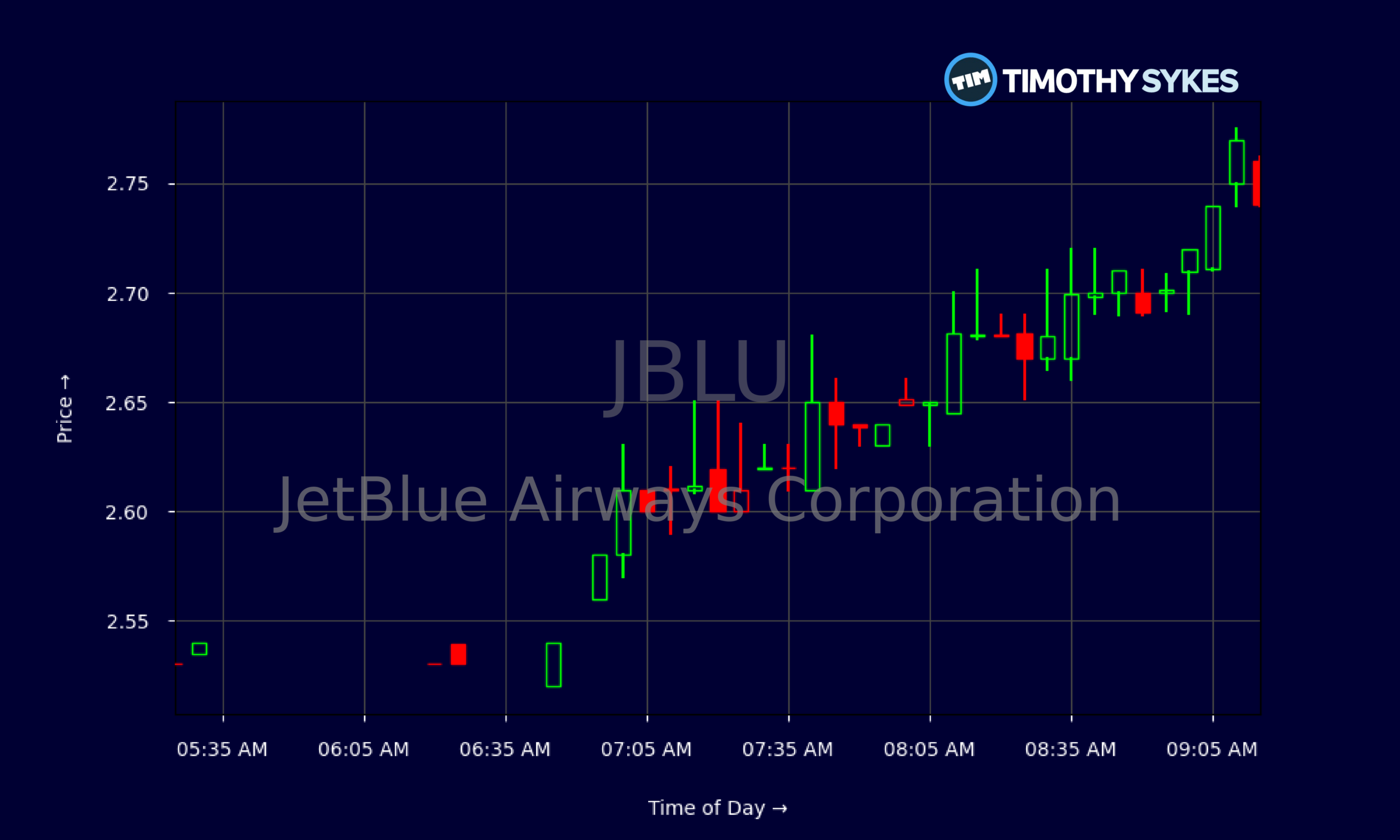
Live Update At 09:20:00 EDT: On Tuesday, October 27, 2026 JetBlue Airways Corporation stock [NASDAQ: JBLU] is trending up by 15.63%! Discover the key drivers behind this movement as well as our expert analysis in the detailed breakdown below.
Quick Financial Overview
For JBLU traders, the chart tells a tough but interesting story. In early October, JetBlue Airways Corporation was trading above $4. By 2026/10/26, the stock closed at $2.37, a brutal drawdown of around 40% in just a few weeks. That’s classic beaten-down turnaround territory.
The intraday tape shows JBLU grinding in the mid‑$2.50s to $2.70s with tight 5‑minute ranges. That kind of action often means shorts are comfortable, but dip buyers are quietly stepping in. It’s not capitulation volume, but it’s not euphoria either.
Fundamentals back up the “high risk, high volatility” label. JetBlue generated about $9.06B in trailing revenue, yet key profitability ratios are deep in the red: profit margin around -9.3%, pretax margin about -6.6%, and return on equity roughly -44%. Debt is heavy, with total debt-to-equity near 5.9 and a leverageratio over 10, while the current ratio sits at just 0.7.
More Breaking News
Valuation, though, is distressed. JBLU trades at about 0.15x sales and roughly 0.9x book value. For active traders, that combination—weak earnings, heavy leverage, but rock-bottom multiples—sets up a classic battleground stock where sentiment and news flow drive the next leg.
Why Traders Are Watching JBLU Now
JBLU just dropped a dense batch of news, and traders are trying to price the entire turnaround story in real time. On the operational side, Q3 2026 was a clear step up. Revenue per available seat mile (RASM) jumped 18.4% year-over-year and total system revenue climbed 21.1%. Fort Lauderdale, a core hub for JetBlue Airways Corporation, was a standout with nearly 15% RASM growth on more than 65% capacity growth. That shows real pricing power and resilient demand.
At the same time, fuel costs punched the company in the face. Average fuel price surged 57% to $3.91 per gallon. Yet JBLU managed to recapture about 87% of those fuel cost increases through better yields and revenue management, and still posted year-over-year adjusted operating margin improvement. That’s not nothing.
Even so, the bottom line remains ugly. Q3 EPS came in at -$0.68, and JetBlue is still loss‑making for 2026 with negative operating and pre‑tax margins plus elevated leverage. Free cash flow is solidly negative. UBS expects JBLU to stay free‑cash‑flow negative until at least 2028 and likely raise about $1B in debt in 2027 using unencumbered aircraft and an undrawn revolver.
Management’s answer is the JetForward plan. They’re guiding to further operating margin expansion in Q4 2026, aiming for sustained operating profitability in 2027 and at least $1 EPS with positive free cash flow in 2028. For traders, that’s a multi‑year catalyst map: if quarterly progress keeps lining up with that path, each earnings print can turn into a volatility event.
Layer on strategy moves: JBLU is launching BlueFirst, a new domestic first‑class product, with bookings now open for more than 30 routes starting December 2026, mainly on non‑Mint routes. The TrueBlue program will be enhanced from 2027/02/01 with complimentary space‑available BlueFirst upgrades for Mosaic members and new perks for JetBlue Premier cardholders. Plus, new daily Fort Lauderdale–Cali, Colombia service supports growth in a strong Latin America corridor. These moves all target higher unit revenues and deeper loyalty—key levers in a low‑margin airline game.
Conclusion
JBLU sits at the intersection of real operational progress and very real financial strain. On one hand, JetBlue Airways Corporation is growing RASM double digits, expanding in Fort Lauderdale, and rolling out revenue-enhancing products like BlueFirst, backed by richer TrueBlue and credit‑card economics. The market noticed: after Q3 results, JBLU shares rose about 6% to $2.51, a relief bounce that signals traders are willing to give the story some time.
On the other hand, the balance sheet and cash flow keep this firmly in turnaround land. Profitability metrics are negative, leverage is high, liquidity is being watched closely, and UBS still expects heavy cash burn through most of 2027 with potential for roughly $1B of new debt. That means any macro shock—fuel, demand, recession headlines—can hit JBLU harder than a clean, cash‑rich airline.
For active traders, that’s both the danger and the opportunity. Clear earnings dates, explicit 2027–2028 targets, and product launches like BlueFirst create defined catalysts. The low price and compressed valuation can fuel sharp short squeezes when news comes in better than feared, but breakdowns can be just as violent when the story disappoints. In this kind of highly volatile turnaround, the key is to think in terms of disciplined trade execution rather than lottery‑ticket mindset; As millionaire penny stock trader and teacher Tim Sykes, says, “Small gains add up over time; focus on building wealth gradually, not chasing jackpots.” That mindset aligns well with how many short‑term traders may choose to approach a choppy name like JBLU—scalping volatility, managing risk tightly, and avoiding oversized, all‑or‑nothing bets.
As Tim Sykes likes to say, “Volatile, beaten‑down names are where small traders can grow accounts fast—but only if you respect the risk, cut losses quickly, and trade the chart, not the hype.” JBLU fits that description right now. This analysis is for educational and research purposes only and is not investment advice, but for disciplined traders, JetBlue’s long road to $1 EPS is a story worth tracking chart by chart.
This is stock news, not investment advice. Timothy Sykes News delivers real-time stock market news focused on key catalysts driving short-term price movements. Our content is tailored for active traders and investors seeking to capitalize on rapid price fluctuations, particularly in volatile sectors like penny stocks. Readers come to us for detailed coverage on earnings reports, mergers, FDA approvals, new contracts, and unusual trading volumes that can trigger significant short-term price action. Some users utilize our news to explain sudden stock movements, while others rely on it for diligent research into potential investment opportunities.
Dive deeper into the world of trading with Timothy Sykes, renowned for his expertise in penny stocks. Explore his top picks and discover the strategies that have propelled him to success with these articles:
- Penny Stocks Trading Guide
- Best Penny Stocks Under $1 to Buy Today
- Top 8 Penny Stocks to Watch on Robinhood
Once you’ve got some stocks on watch, elevate your trading game with StocksToTrade the ultimate platform for traders. With specialized tools for swing and day trading, StocksToTrade will guide you through the market’s twists and turns.
Dig into StocksToTrade’s watchlists here:





Leave a reply