

TeraWulf Inc. stocks have been trading up by 7.51 percent following bullish sentiment on its expanding Bitcoin mining capacity.
Key Takeaways Traders Need To Know
- Morgan Stanley reiterated an Overweight on TeraWulf, lifted its target to $65, and called the recent pullback disconnected from contract value, implying roughly 392% upside from current WULF levels.
- Cantor Fitzgerald trimmed its target to $30 but kept an Overweight rating on TeraWulf, labeling WULF a potential “generational buy” once AI funding fears and data center headwinds ease.
- An amended Kentucky Power agreement doubles power at the Muskie Data Campus to 1 GW and accelerates phase two to 2029, setting up WULF’s site as a large-scale AI/HPC hub.
- Regulatory approval for a 482 MW deal at the Justified Data Campus underpins a $4.0–$4.5B AI data center project anchored by a 20‑year, ~401 MW lease with Anthropic.
- TD Cowen and Jones both launched coverage of TeraWulf with Buy ratings and $21 and $30 targets, respectively, leaning on AI demand and conservative assumptions around the leased data center portfolio.
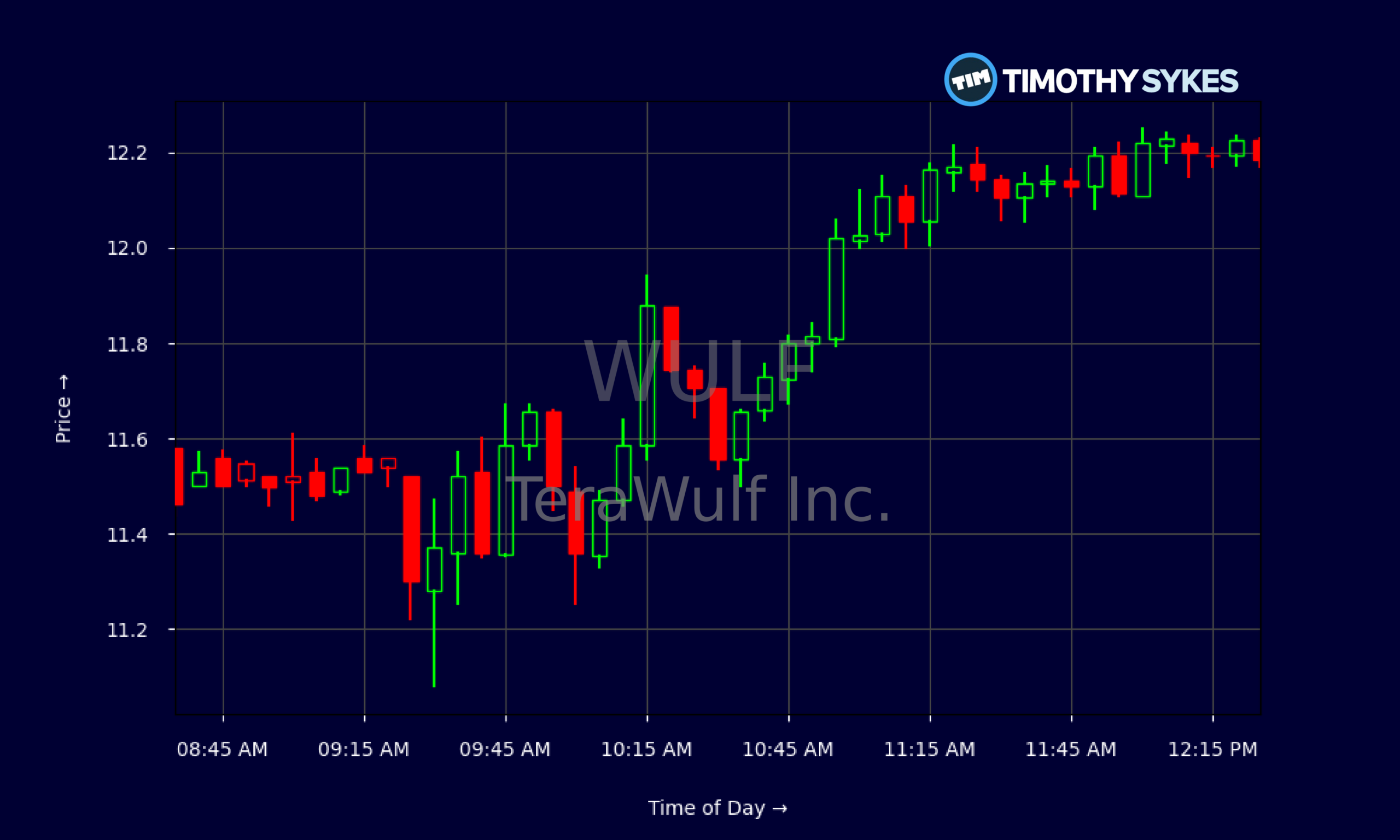
Live Update At 12:33:23 EDT: On Monday, October 26, 2026 TeraWulf Inc. stock [NASDAQ: WULF] is trending up by 7.51%! Discover the key drivers behind this movement as well as our expert analysis in the detailed breakdown below.
Quick Financial Overview
WULF has been trading like a rollercoaster, but the trend over the last few weeks is clear: volatility with a bullish lean. After sliding from the mid‑$15s in early 2026/10 to around $11.32 on 2026/10/23, TeraWulf bounced to $12.17 on 2026/10/26. That’s a solid rebound off recent lows, even if it’s still well below analyst targets.
Intraday on the latest session, WULF opened near $11.35 and pushed steadily higher through the morning, grinding from the low $11s into the low $12s with higher lows on the 5‑minute chart. That kind of controlled intraday climb, not a wild spike, tells traders real buyers are stepping in, not just chat-room chasers.
More Breaking News
Fundamentally, TeraWulf is still early‑stage. Revenue sits around $168.5M, but margins are deeply negative and net income is roughly -$939.9M. The company is plowing cash into growth, with about $1.09B in property and equipment spend and free cash flow around -$992.3M. Debt remains material but not extreme versus its $8.05B asset base, and current ratios under 1.0 highlight tight liquidity. For traders, that mix screams “high growth, high burn” — a setup where execution and funding updates can move WULF hard in either direction.
Why Traders Are Watching WULF Right Now
WULF is drawing unusual attention because the story is shifting from crypto‑linked infrastructure to contracted AI and high‑performance computing power at real scale. The biggest swing factor is Kentucky. At the Muskie Data Campus, TeraWulf amended its deal with Kentucky Power to boost contracted power from 500 MW to 1 GW and pull forward the second 500 MW phase to 2029. Commentary around the agreement also highlights that Muskie may eventually scale toward 2 GW, putting WULF in the conversation as a major U.S. AI/HPC power hub if it executes.
At the Justified Data Campus, WULF locked in regulatory approval for a 482 MW power agreement backing an estimated $4.0–$4.5B AI data center build. That project is anchored by a 20‑year, roughly 401 MW critical IT lease with Anthropic, plus options to extend up to 10 more years, with deliveries from late 2027 into early 2028. For traders, that long‑dated Anthropic lease is key. It is a contractual backbone that supports the bull case that WULF’s current market cap does not reflect the embedded future cash flow potential.
Wall Street is lining up behind that view. Morgan Stanley raised its target on TeraWulf to $65 and still thinks the recent pullback doesn’t match the value of its contracts and pipeline. Cantor Fitzgerald, even after cutting its WULF target to $30, still calls the stock a “generational buy” once funding worries and data‑center jitters cool off. TD Cowen and Jones add more fuel, with Buy ratings and $21 and $30 targets and commentary that the company’s leased data center portfolio is modeled with conservative assumptions. For active WULF traders, this combination of locked‑in power, marquee tenants, and clustered bullish coverage explains why dips keep attracting fresh attention.
Conclusion
For all the hype, WULF is not a clean, low‑risk story. TeraWulf’s own numbers show heavy losses, negative free cash flow near $1.0B, and a balance sheet stretched by rapid build‑out. Commentary notes the company is transitioning from build‑out to scaled execution, with a massive AI lease portfolio backed by expected investment‑grade credit, but it also flags meaningful execution and financing risk. In plain English: the contracts are big, the checks are bigger, and any stumble on timelines, costs, or capital access can punish the stock.
At the same time, the setup is exactly what momentum‑driven traders hunt. WULF is tying up 1 GW of contracted power at Muskie, 482 MW at Justified, and a 20‑year Anthropic lease that gives rare visibility in a speculative space. Analyst targets from $21 to $65 sit far above the current $12 zone, and upcoming events — like WULF’s Q3 2026 earnings call and continued filing flow — give a steady stream of potential catalysts.
The trading lesson here lines up with what Tim Sykes pounds into students: “Patterns repeat, but you can’t control the news — only your risk. Ride the momentum, but always be ready to cut losses fast when the story shifts.” As millionaire penny stock trader and teacher Tim Sykes says, “Be patient, don’t force trades, and let the perfect setups come to you.”. For WULF, the story right now is aggressive AI infrastructure growth, backed by contracts but paid for with real cash. Traders studying this name should track the charts, the Kentucky buildout, and every update on funding and execution — and treat the volatility as a tool, not a surprise.
This is stock news, not investment advice. Timothy Sykes News delivers real-time stock market news focused on key catalysts driving short-term price movements. Our content is tailored for active traders and investors seeking to capitalize on rapid price fluctuations, particularly in volatile sectors like penny stocks. Readers come to us for detailed coverage on earnings reports, mergers, FDA approvals, new contracts, and unusual trading volumes that can trigger significant short-term price action. Some users utilize our news to explain sudden stock movements, while others rely on it for diligent research into potential investment opportunities.
Dive deeper into the world of trading with Timothy Sykes, renowned for his expertise in penny stocks. Explore his top picks and discover the strategies that have propelled him to success with these articles:
- Penny Stocks Trading Guide
- Best Penny Stocks Under $1 to Buy Today
- Top 8 Penny Stocks to Watch on Robinhood
Once you’ve got some stocks on watch, elevate your trading game with StocksToTrade the ultimate platform for traders. With specialized tools for swing and day trading, StocksToTrade will guide you through the market’s twists and turns.
Dig into StocksToTrade’s watchlists here:





Leave a reply