
Isoray (DE) faces intensified selling pressure after negative sentiment on its core cancer-therapy prospects; stocks have been trading down by -27.43 percent.
Market Insights For Active CATX Traders
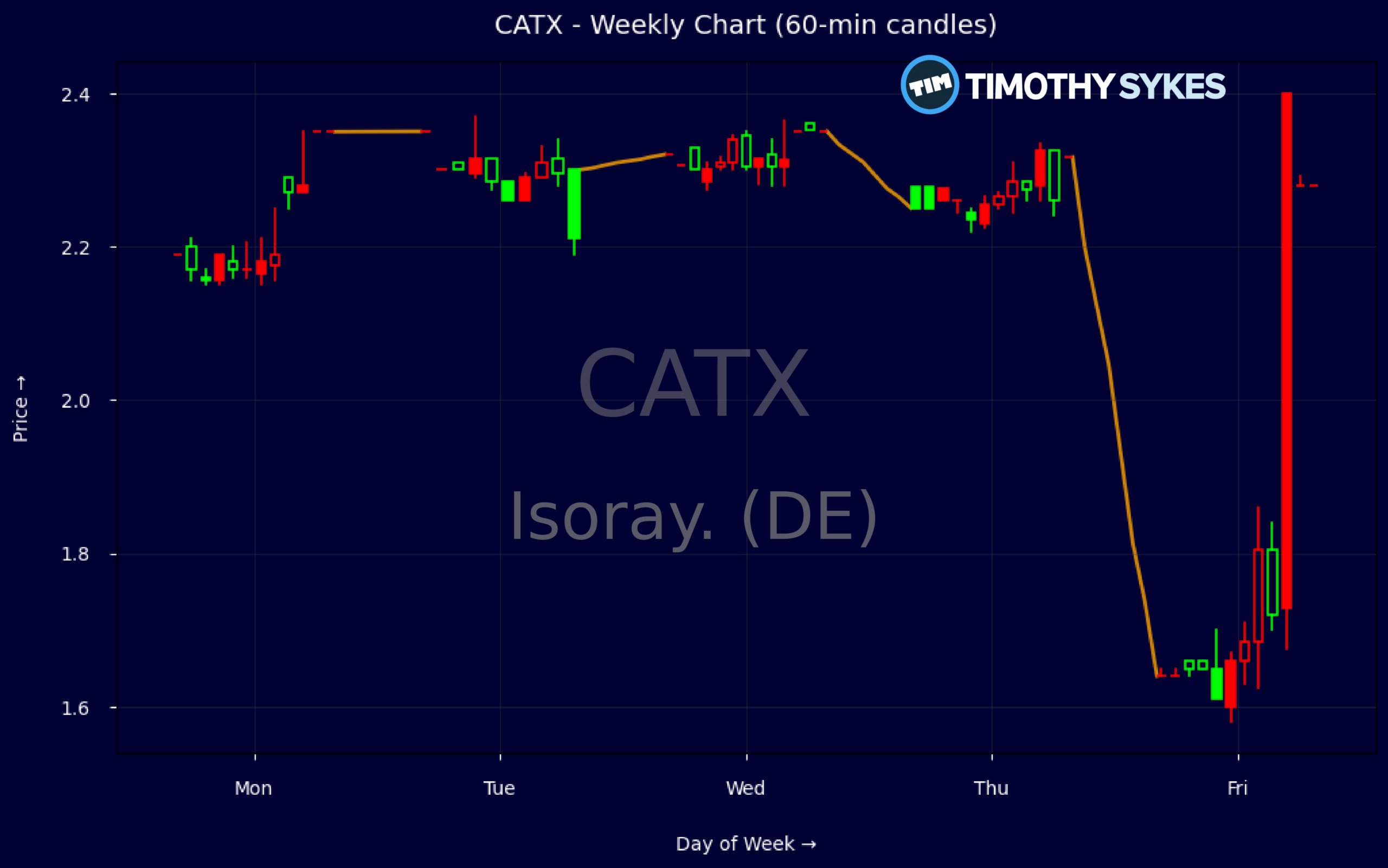
- Weekly action in CATX shows a sharp drop from the $2.30s into the mid-$1.60s, signaling heavy selling pressure.
- Intraday data confirms a wide-range move from the $2.40 area down toward $1.60, showing clear volatility and potential liquidity for short-term trades.
- Financials for Isoray. (DE) reveal tiny revenue but very large losses, which puts the focus on cash and balance sheet strength.
- A strong current ratio and low debt give CATX some runway, but negative cash flow keeps downside risk elevated.
Weekly Update Oct 19 – Oct 23, 2026: On Sunday, October 25, 2026 Isoray. (DE) stock [NYSE American: CATX] is trending down by -27.43%! Discover the key drivers behind this movement as well as our expert analysis in the detailed breakdown below.
Healthcare industry expert:
Analyst sentiment – negative
CATX is an early‑stage, pre‑commercial med‑tech name with negligible revenue ($81k in Q2; ~$0.9m TTM) and extreme negative margins (EBIT margin below -28,000%) driven by R&D intensity ($21.5m Q2). Cash burn is heavy (Q2 FCF -$34.8m) but the balance sheet is currently robust: $236.9m cash and investments, working capital ~$205m, minimal debt (D/E ~0.01), and equity of $323.9m (P/B ~0.94), giving ample but finite runway.
Technically, CATX has broken down sharply on the weekly tape, sliding from a tight 2.30–2.35 consolidation to a 1.61–1.64 close, signaling a decisive loss of support and likely accompanied by elevated downside volume. The dominant trend is now short‑term bearish within a broader distribution phase. The key actionable level is $1.70: below it, rallies are sellable; a sustained reclaim and hold above $1.70 on strong volume would be the first sign of a tradable rebound.
With no material news flow, CATX trades almost purely on trial expectations and liquidity conditions, unlike diversified, profitable Healthcare and Medical Equipment & Supplies peers. Versus sector benchmarks, it screens as high‑risk, binary‑outcome and deeply loss‑making, justified only as a speculative clinical‑data play. Near term, resistance sits at $1.70 then $2.30; support is thin near $1.50. Absent clear positive clinical or partnership catalysts, risk‑reward skews negative and capital should remain defensive.
More Breaking News
Quick Financial Overview
CATX, the ticker for Isoray. (DE), is trading under clear pressure. The weekly chart shows the stock moving from around $2.19 to the $2.35 area before breaking sharply lower to about $1.64. That shift from a tight range near recent highs into a steep drop tells traders the bid dried up quickly and sellers took control. For short-term traders, this kind of break often marks a transition from quiet consolidation into a more emotional, momentum-driven phase.
The intraday data backs that up. Price swung from roughly $2.40 at the high down toward $1.58 at the low of the day, closing close to $1.61. That is a very wide intraday range, which usually means strong emotion and good liquidity but also higher risk per trade. For CATX and Isoray. (DE), this kind of action can set up both bounce trades and continuation shorts, depending on how the next sessions open relative to this new lower zone.
On the fundamentals, the numbers are harsh. Revenue is only about $0.88M, but research and operating costs drive a quarterly net loss near $26.8M and an EBITDA around -$25.8M. Margins are deeply negative, asset and equity returns are strongly negative, and free cash flow for the recent quarter was about -$34.8M. The flip side is a large cash and short-term investment pile near $236.9M, working capital above $200M, light debt, and a current ratio around 6.6. For traders, that means CATX is a high-burn, high-cash story: the balance sheet buys time, but the income statement demands progress.
Conclusion
The recent drop in CATX from the low-$2 range into the mid-$1 zone changes the trading picture. What had been a stable consolidation near $2.20–$2.35 is now a broken level that may act as resistance on any bounce. Intraday swings between $2.40 and $1.58 show that Isoray. (DE) can move fast when sentiment shifts, which is attractive for day traders but punishing for anyone who mis-sizes risk.
Financially, Isoray. (DE) is a classic high-risk development story: minimal revenue, very heavy spending on research and operations, and steep losses across all profitability metrics. At the same time, CATX carries substantial cash and low leverage, giving the company room to keep funding that burn for a while. For traders, that mix often leads to long periods of range trading broken up by sharp repricing when the market updates its expectations. In this type of name, discipline and emotional control become critical to survival; as millionaire penny stock trader and teacher Tim Sykes, says, “Consistency is key in trading; don’t let emotions dictate your trades.” That mindset is especially important when volatility and sharp moves can tempt traders into chasing or panic-selling.
Right now, the key questions for CATX traders are simple: does the cash cushion keep dip buyers interested, or do the ongoing losses push price into a deeper downtrend? The weekly and intraday charts say volatility is here, and that both breakdowns and sharp squeezes are on the table. As I tell my students, “Your edge in names like CATX comes from respecting the volatility, defining your levels, and letting the tape, not your hopes, decide your trade.”
This is stock news, not investment advice. Timothy Sykes News delivers real-time stock market news focused on key catalysts driving short-term price movements. Our content is tailored for active traders and investors seeking to capitalize on rapid price fluctuations, particularly in volatile sectors like penny stocks. Readers come to us for detailed coverage on earnings reports, mergers, FDA approvals, new contracts, and unusual trading volumes that can trigger significant short-term price action. Some users utilize our news to explain sudden stock movements, while others rely on it for diligent research into potential investment opportunities.
Dive deeper into the world of trading with Timothy Sykes, renowned for his expertise in penny stocks. Explore his top picks and discover the strategies that have propelled him to success with these articles:
- Penny Stocks Trading Guide
- Best Penny Stocks Under $1 to Buy Today
- Top 8 Penny Stocks to Watch on Robinhood
Once you’ve got some stocks on watch, elevate your trading game with StocksToTrade the ultimate platform for traders. With specialized tools for swing and day trading, StocksToTrade will guide you through the market’s twists and turns.
Dig into StocksToTrade’s watchlists here:





Leave a reply