

Infosys Limited stocks have been trading down by -6.22 percent amid investor anxiety over weaker guidance and slowing global IT demand.
Key Takeaways For INFY Traders
- U.S. Labor Secretary revealed ongoing criminal investigations into large IT outsourcers including Infosys, sparking an immediate slide in New York trading.
- The U.S. Labor Department suspended Infosys from the Permanent Labor Certification (PERM) Program, a key tool for hiring and keeping foreign skilled workers.
- Infosys sits at the center of a broader H‑1B visa crackdown that threatens its onsite staffing model and may lift U.S. labor and compliance costs.
- Infosys ADRs recently fell 2.9%, leading South Asian decliners and underperforming a mostly flat Asia ADR market.
- Selling in INFY has tracked both broad Asian ADR weakness and company‑specific U.S. regulatory headlines.
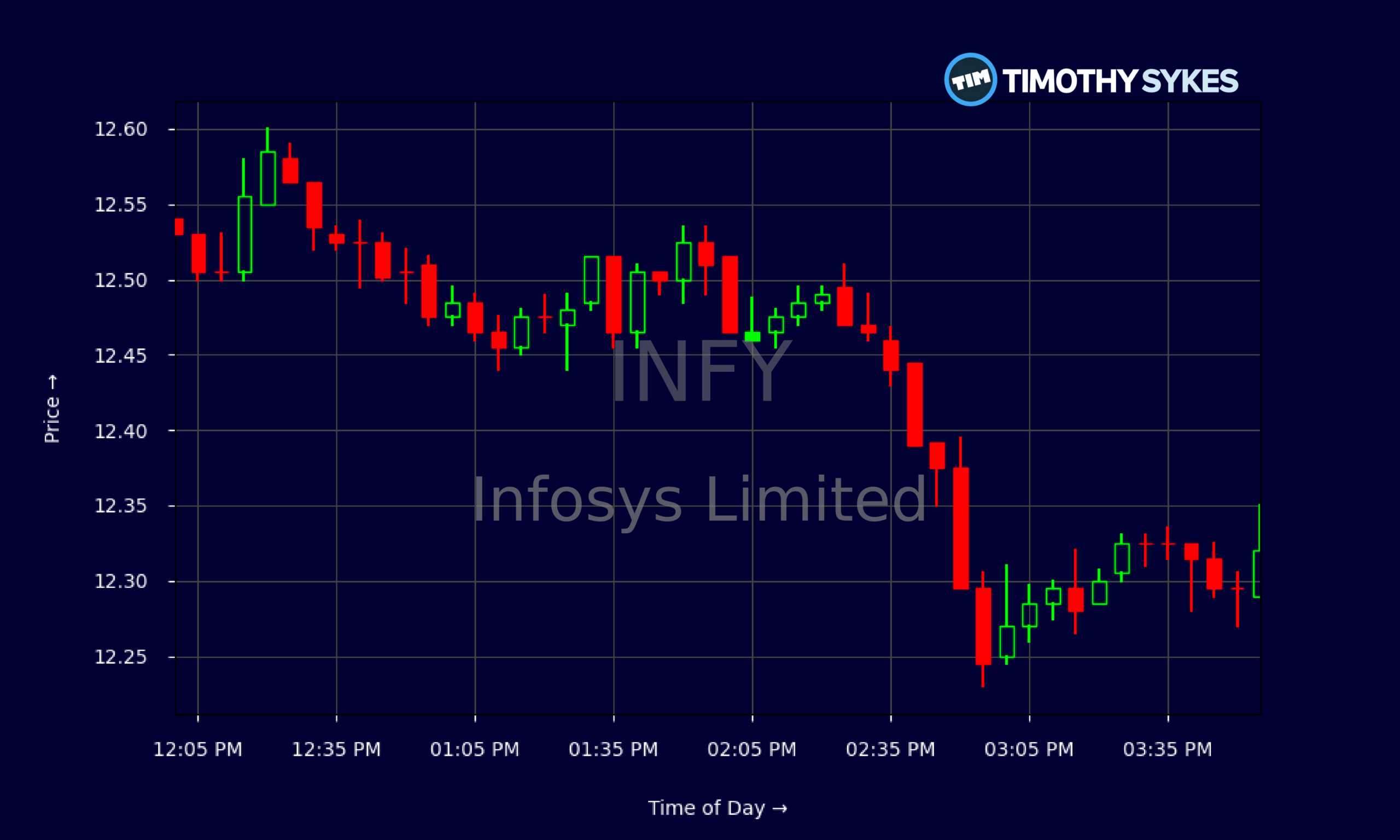
Live Update At 16:46:57 EDT: On Friday, October 23, 2026 Infosys Limited stock [NYSE: INFY] is trending down by -6.22%! Discover the key drivers behind this movement as well as our expert analysis in the detailed breakdown below.
Quick Financial Overview
INFY traders are juggling strong underlying numbers with a rising storm of headline risk. On the chart, Infosys ADRs have climbed from about $10.50 in late September to the $12–$13 zone in recent days, a gain of roughly 20%. That is a solid trend, but momentum has cooled, with the latest close around $12.35 after a sharp intraday spike to $13.30 and fast fade.
Intraday action shows INFY chopping tightly between $12.25 and $12.55 for most of the regular session, signaling indecision after recent news shocks. No clear breakout, no full‑on panic — just a tug of war between dip buyers and nervous holders.
More Breaking News
Fundamentals still look respectable. Infosys posted about $19.28B in revenue, with a pretax margin near 20.9%, and a price‑to‑earnings ratio around 13.4 — toward the low end of its 5‑year P/E range. Return on equity above 12% and a dividend yield near 3.9% give INFY a quality profile that many long‑term traders like. The balance sheet shows meaningful cash, moderate leverage, and roughly $9.01B in free cash flow. The problem is not the core business. The problem is the U.S. government.
Why Traders Are Watching INFY Now
The real story for INFY right now is not earnings, it is Washington. The U.S. Secretary of Labor has confirmed ongoing criminal investigations by the Department of Labor’s inspector general into several big IT outsourcing names, specifically naming Infosys alongside Cognizant, Wipro, and Capgemini. After that announcement, Infosys ADRs dropped in New York trading, showing how quickly regulatory headlines can hit the tape.
On top of that, the U.S. Labor Department has suspended Infosys from the PERM Program, which is one of the main ways Infosys builds and maintains its pipeline of foreign skilled workers in the U.S. For a company that runs a tight onsite‑offshore delivery model, that matters. It threatens to slow the flow of specialized talent into key client locations, or force Infosys to pay up for local hires and contractors.
Another U.S. crackdown focuses on alleged H‑1B visa abuses, where Infosys again appears as a named target along with Cognizant and Tata Consultancy Services. This is not a one‑off audit. It looks like a policy shift. Multiple stories tie the PERM suspension directly to ongoing federal investigations and to heavy use of foreign workers.
INFY traders need to view this as a slow‑burn risk. Margins that look fine today can compress if compliance costs jump, if bench staffing has to be reworked, or if project ramp‑ups in the U.S. get delayed. Recent sessions already show pressure: Infosys ADRs fell 2.9% in one move, led South Asian decliners on another day, and lagged a mostly flat Asia ADR basket. That’s the market starting to reprice regulatory overhang on top of normal macro noise.
Conclusion
For active traders, INFY is turning into a classic clash between fundamentals and headline risk. On one side, Infosys prints steady revenue, strong free cash flow, double‑digit returns on capital, and pays a near 4% dividend. On the other, the U.S. Labor Department has tied the company to multiple active investigations and yanked it from the PERM Program while also flagging broader H‑1B concerns. Those are not minor issues for a global outsourcer.
Short term, this usually translates into elevated volatility and choppy trading ranges. INFY has already shown it can drop nearly 3% on a single regulatory headline. At the same time, value‑oriented and yield‑focused traders may start fishing for entries when fear spikes, arguing that a P/E in the low teens already discounts a lot of bad news.
Whichever side you’re on, the playbook from the Tim Sykes community still applies: “Patterns repeat, but you have to respect the risks and always cut losses quickly.” Risk management is the core of that mindset. As millionaire penny stock trader and teacher Tim Sykes says, “The goal is not to win every trade but to protect your capital and keep moving forward.”. With INFY, that means mapping key support levels on the daily chart, tracking every new U.S. labor headline, and refusing to marry the stock. This article is for educational and research purposes only — use it as a starting point, not as advice, and let the price action confirm your thesis before putting real money on the line.
This is stock news, not investment advice. Timothy Sykes News delivers real-time stock market news focused on key catalysts driving short-term price movements. Our content is tailored for active traders and investors seeking to capitalize on rapid price fluctuations, particularly in volatile sectors like penny stocks. Readers come to us for detailed coverage on earnings reports, mergers, FDA approvals, new contracts, and unusual trading volumes that can trigger significant short-term price action. Some users utilize our news to explain sudden stock movements, while others rely on it for diligent research into potential investment opportunities.
Dive deeper into the world of trading with Timothy Sykes, renowned for his expertise in penny stocks. Explore his top picks and discover the strategies that have propelled him to success with these articles:
- Penny Stocks Trading Guide
- Best Penny Stocks Under $1 to Buy Today
- Top 8 Penny Stocks to Watch on Robinhood
Once you’ve got some stocks on watch, elevate your trading game with StocksToTrade the ultimate platform for traders. With specialized tools for swing and day trading, StocksToTrade will guide you through the market’s twists and turns.
Dig into StocksToTrade’s watchlists here:





Leave a reply