

Avalo Therapeutics Inc. stocks have been trading down by -7.65 percent following unfavorable clinical trial and regulatory update concerns.
What Traders Need To Know
- BTIG slashed its price target from $58 to $10 while keeping a Buy rating after weaker Phase 3 INTREPID data for a similar drug raised doubts about abdakibart’s upside.
- Guggenheim cut its rating to Neutral from Buy and removed its target after AbbVie’s weak but positive Phase 3 lutikizumab data reduced confidence in abdakibart as a monotherapy in hidradenitis suppurativa.
- H.C. Wainwright also moved to Neutral from Buy with no target after AbbVie’s modest lutikizumab efficacy, undermining belief in Avalo’s IL‑1 program.
- Shares plunged about 35% on a volume surge after Wedbush cut its target to $22 from $34, even while keeping an Outperform rating.
- Stock then dropped another ~9.8% on heavy volume after the H.C. Wainwright downgrade, signaling sustained selling pressure.
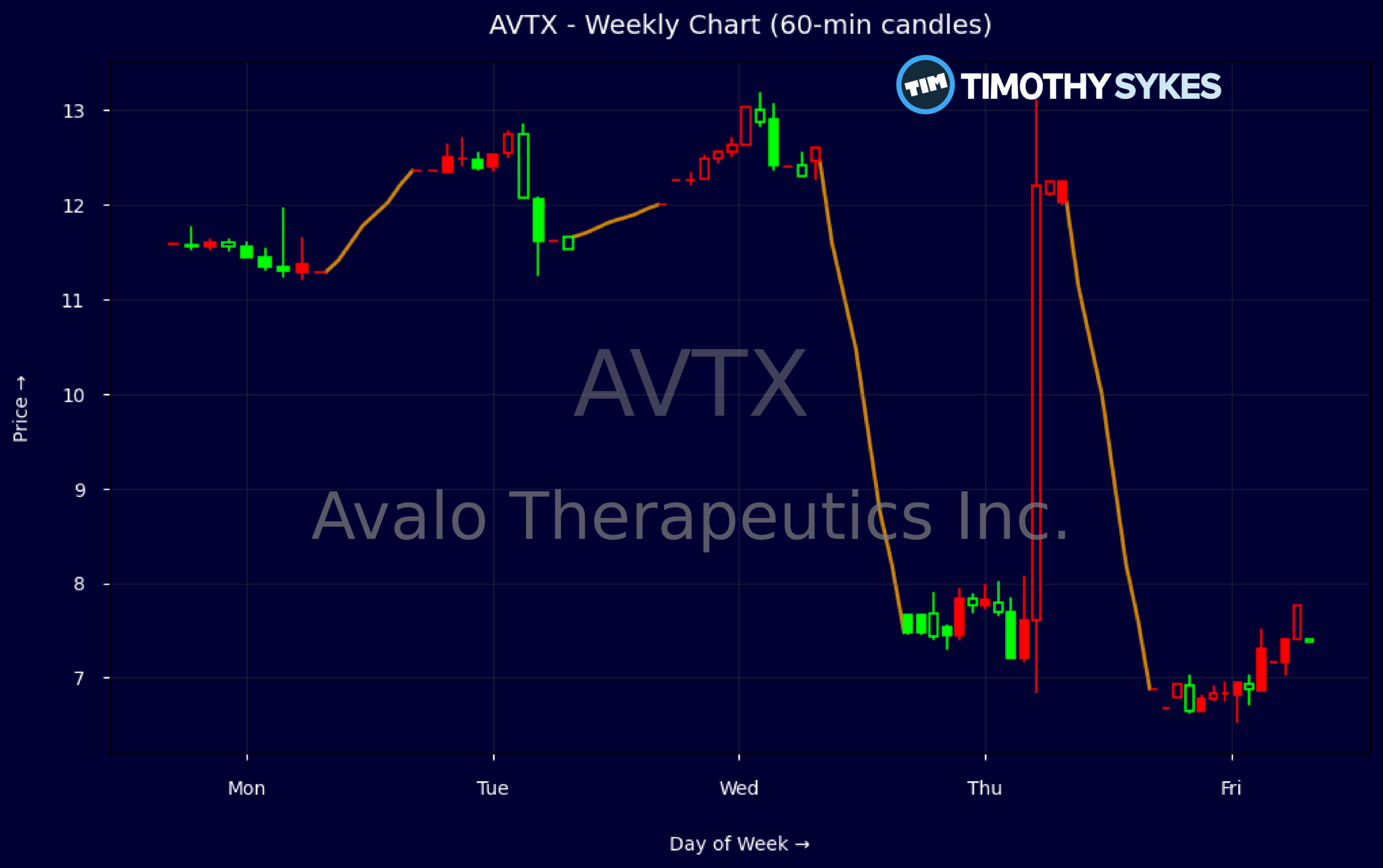
Weekly Update Oct 19 – Oct 23, 2026: On Saturday, October 24, 2026 Avalo Therapeutics Inc. stock [NASDAQ: AVTX] is trending down by -7.65%! Discover the key drivers behind this movement as well as our expert analysis in the detailed breakdown below.
Healthcare industry expert:
Analyst sentiment – negative
Avalo Therapeutics is an early‑stage, single‑asset–centric biotech with negligible revenue ($59k; revenue down ~85% over three years) and deeply negative profitability (pretax margin about -1,290%, ROE ~-53%). The balance sheet is currently a strength: ~$400m cash and equivalents, no debt, current ratio ~19x, and working capital of ~$387m following a large financing. Operating cash burn of ~$20m in the quarter implies a multi‑year runway, but economic value creation remains firmly negative.
Technically, AVTX has shifted from a parabolic upswing to an abrupt breakdown. The stock printed a spike high at $12.36 before failing to hold above $12 and collapsing intraday to the $7s, then closing near $6.88 on follow‑through selling, with heavy volume on 5‑minute candles confirming distribution rather than healthy consolidation. The dominant trend on the weekly tape is now down. The first actionable level is resistance at $7.75–8.00; below, support is thin until ~$6.00.
Recent downgrades from BTIG, Guggenheim, and H.C. Wainwright following weaker‑than‑hoped AbbVie lutikizumab data have materially impaired sentiment on Avalo’s IL‑1β program, cutting perceived peak sales and success probability for abdakibart. The stock is now underperforming healthcare and biotech benchmarks, which remain more diversified and less binary. With sentiment deteriorating and the chart broken, risk‑reward skews negative near term; fair value sits closer to $6–7, with resistance at $8 and major overhead at $10.
More Breaking News
Quick Financial Overview
Avalo Therapeutics Inc. (AVTX) just went through a violent repricing. Weekly data show the stock trading near $12 early in the period, then collapsing to the mid‑$7s, and finally closing around $6.88 by 2026/10/23. That sequence lines up with the Wedbush price‑target cut and follow‑on downgrades, which together drove a roughly 35% plunge followed by additional single‑day hits near 10% on heavy volume. For short‑term traders, this is textbook high‑beta biotech repricing after a major narrative shift.
Intraday, the 5‑minute candle shows a session where AVTX opened in the low‑$7s, briefly pushed toward $7.50, then washed out to the mid‑$6.50 area before bouncing to close near $6.93. That intraday range tells you dip‑buyers stepped in, but selling pressure still dominated the tape. For day traders, those sharp swings present opportunity, but they also flag elevated intraday risk.
On the fundamentals, Avalo Therapeutics Inc. is still an early‑stage, loss‑making biotech. Quarterly revenue sits around $0.059M and has been shrinking sharply over three and five years, while pretax margins near ‑1,290% and multiple negative return metrics confirm a cash‑burn story. The company does have a strong liquidity profile, with a current ratio near 19 and working capital above $300M, plus over $85M in cash and cash equivalents, giving it runway to keep funding abdakibart. But a sky‑high price‑to‑sales ratio above 12,000 highlights how much hope was embedded in the story before these data‑driven downgrades hit.
Conclusion
Avalo Therapeutics Inc. now trades in a very different landscape than it did just days ago. Multiple downgrades from Guggenheim and H.C. Wainwright, along with the sharp BTIG target cut, tell traders that the Street has materially reduced its confidence in abdakibart, even though the direct data came from AbbVie’s lutikizumab. When one comparator trial can wipe out a third of the market cap in a day, you are dealing with a pure sentiment and expectations trade. As millionaire penny stock trader and teacher Tim Sykes, says, “You must adapt to the market; the market will not adapt to you.” and that mindset is critical in a tape where fundamentals often take a back seat to shifting narratives and rapid repricing.
From here, AVTX is likely to trade as a volatility vehicle around any new clinical or strategic updates. The weekly chart shows a clear air‑pocket from the low teens into the high‑$6s, and the intraday action around $6.50–$7.50 marks out the first key battle zone between forced sellers and speculative buyers. Strong cash and low financial leverage give Avalo Therapeutics Inc. time, but they do not fix the core question the market is now asking: how much is abdakibart really worth if monotherapy in hidradenitis suppurativa proves only modest? For short‑term traders, this is a name to trade with tight risk controls, not blind conviction. As I tell my students, “In broken‑story biotechs like AVTX, you do not marry the stock — you date the volatility and let price action, not hope, call the shots.””,”scores”:{“risk-level”:”high”},”trade”:”false
This is stock news, not investment advice. Timothy Sykes News delivers real-time stock market news focused on key catalysts driving short-term price movements. Our content is tailored for active traders and investors seeking to capitalize on rapid price fluctuations, particularly in volatile sectors like penny stocks. Readers come to us for detailed coverage on earnings reports, mergers, FDA approvals, new contracts, and unusual trading volumes that can trigger significant short-term price action. Some users utilize our news to explain sudden stock movements, while others rely on it for diligent research into potential investment opportunities.
Dive deeper into the world of trading with Timothy Sykes, renowned for his expertise in penny stocks. Explore his top picks and discover the strategies that have propelled him to success with these articles:
- Penny Stocks Trading Guide
- Best Penny Stocks Under $1 to Buy Today
- Top 8 Penny Stocks to Watch on Robinhood
Once you’ve got some stocks on watch, elevate your trading game with StocksToTrade the ultimate platform for traders. With specialized tools for swing and day trading, StocksToTrade will guide you through the market’s twists and turns.
Dig into StocksToTrade’s watchlists here:




Leave a reply