
Intel Corporation stocks have been trading up by 3.64 percent after investors cheered its latest AI chip advancement.
Key Takeaways For INTC Traders
- Q3 adjusted EPS of $0.52 beat expectations near $0.40–$0.41 on slightly better‑than‑forecast $16.51B revenue, signaling improving execution at Intel.
- New Street raised INTC to Buy with a $125 target, arguing AI‑driven server CPU scarcity should boost data center revenues and foundry utilization.
- KGI, Evercore, and others raised or reaffirmed bullish calls on Intel stock, reinforcing a broadly positive Street stance despite some valuation tweaks.
- A multiyear Oracle Cloud Infrastructure deal locks in current and next‑gen Xeon support, strengthening INTC’s AI and data center visibility.
- The planned Classiq acquisition pushes Intel toward a full‑stack quantum platform, adding long‑term optionality beyond CPUs and GPUs.
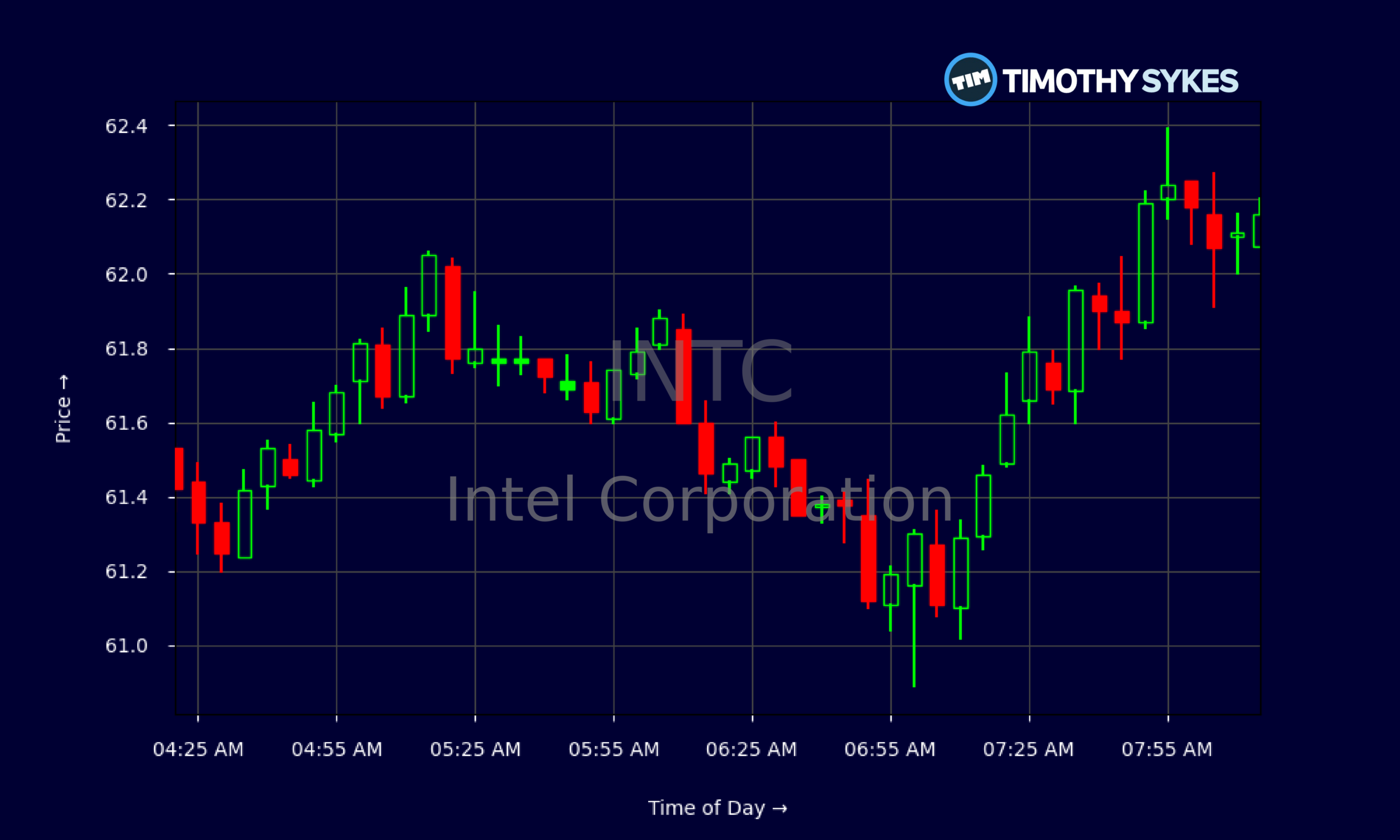
Live Update At 08:18:59 EST: On Tuesday, November 03, 2026 Intel Corporation stock [NASDAQ: INTC] is trending up by 3.64%! Discover the key drivers behind this movement as well as our expert analysis in the detailed breakdown below.
Quick Financial Overview
INTC is trading like a stock in the middle of a major reset. The daily chart shows a sharp break from the low‑$100s in early October down toward the high‑$50s by 2026/11/02. That’s a big drawdown in a few weeks, even after strong Q3 numbers, and it tells traders sentiment can flip fast in this name.
Earnings, however, are heading the other way. Intel’s Q3 revenue came in around $16.51B, up strongly year on year, and adjusted EPS of $0.52 beat the roughly $0.40–$0.41 range analysts expected. Data Center and AI revenue jumped 78% year over year, driving a 21% overall revenue gain, while the old PC client business stayed soft.
More Breaking News
Under the hood, INTC still carries turnaround scars. Profit margins over the last year are negative, and asset returns are in the red, even with a solid 38.6% gross margin. Cash flow is improving, with about $5.1B from operations and roughly $1.1B in free cash flow, but a $31.5B‑plus enterprise value and a rich price‑to‑sales multiple mean traders are paying up for the AI story. For active trading, that combination — falling price, improving numbers, and a leveraged capex plan — sets up a classic high‑volatility, news‑driven chart.
Why Traders Are Watching INTC Right Now
The INTC story today is all about AI, data centers, and whether this turnaround can stick. Q3 results gave the bull case fresh fuel. Intel beat on EPS, slightly topped revenue expectations, and highlighted better execution and process‑tech progress. For a name that lagged the AI party early, that sort of “no drama” quarter matters.
Wall Street has noticed. New Street upgraded Intel to Buy with a $125 target, leaning on a powerful thesis: agentic AI is driving a wave of server CPU demand, while multi‑year supply constraints create a CPU scarcity environment. In that setup, INTC’s expanding server capacity and foundry utilization become leverage points. If the company ships every Xeon it can build, the earnings swing can be big.
KGI lifted Intel from Neutral to Outperform with a $95 target, and Evercore ISI reaffirmed Outperform while shaving its target from $133 to $131. Layer that on top of a consensus overweight stance and a mean target near $120 when the stock was around $90, and you get a clear message — many pros now treat Intel as a real AI and data center contender, not just a sleepy PC name.
On the strategic side, the multiyear expansion with Oracle Cloud Infrastructure is a strong vote of confidence. Oracle is committing OCI to current and next‑gen Xeon, including Diamond Rapids, and syncing roadmaps with INTC for enterprise and agentic AI workloads. That kind of long‑dated alignment gives Intel more visibility on data center demand and underpins the turnaround narrative traders are leaning into.
At the same time, the planned Classiq acquisition shows Intel reaching beyond classical compute. By pairing its spin‑qubit hardware and quantum stack with Classiq’s algorithm‑synthesis platform, INTC wants to become a full‑stack quantum player and eventually ship Quantum Processing Units alongside CPUs, GPUs, and ASICs. It’s not a near‑term earnings driver, but it feeds the long‑duration growth story that momentum traders crave.
Risks remain. Freedom Broker cut its price target from $100 to $90, even while keeping a Buy, citing weak near‑term PC demand, a Fab 28 accident, and a margin‑dilutive product mix. Management is also flagging 2027 as a heavy capex year with likely negative free cash flow. RBC talks about strong AI demand now but warns of a possible slowdown in 1H 2027. For traders, that means sharp pullbacks on capex headlines or macro jitters are very much in play — and potentially tradeable.
Conclusion
Put it all together, and INTC sits at the crossroads of a powerful AI infrastructure cycle and a costly manufacturing rebuild. The tape shows a stock that ran hard into triple‑digit territory, then sold off into the $50s–$60s zone even as Intel delivered a clean Q3 beat and 21% revenue growth. That disconnect between price and progress is exactly where short‑term traders hunt for opportunity.
On the bullish side, Intel’s 78% Data Center and AI growth, the expanded Oracle cloud deal, and the quantum push with Classiq all support the idea that this is no longer just a PC recovery story. Multiple analyst upgrades — from New Street’s $125 call to KGI’s Outperform — reinforce that Wall Street is recalibrating how it values INTC’s AI and foundry potential.
On the caution side, negative trailing margins, heavy 2027 capex, and PC softness give bears real ammo. Volatility is the logical outcome. For active traders, that’s not a bug, it’s a feature — as long as you stay disciplined. As Tim Sykes likes to say, “The market doesn’t owe you anything — protect yourself first, trade the pattern second.” As millionaire penny stock trader and teacher Tim Sykes says, “It’s not about how much money you make; it’s about how much money you keep.” For anyone trading INTC’s wild swings, that risk‑first mindset matters more than chasing every move. This article is for educational and research purposes only, but the message is clear: with INTC, the patterns now revolve around AI momentum, execution consistency, and how the Street reacts to every new data point.
This is stock news, not investment advice. Timothy Sykes News delivers real-time stock market news focused on key catalysts driving short-term price movements. Our content is tailored for active traders and investors seeking to capitalize on rapid price fluctuations, particularly in volatile sectors like penny stocks. Readers come to us for detailed coverage on earnings reports, mergers, FDA approvals, new contracts, and unusual trading volumes that can trigger significant short-term price action. Some users utilize our news to explain sudden stock movements, while others rely on it for diligent research into potential investment opportunities.
Dive deeper into the world of trading with Timothy Sykes, renowned for his expertise in penny stocks. Explore his top picks and discover the strategies that have propelled him to success with these articles:
- Penny Stocks Trading Guide
- Best Penny Stocks Under $1 to Buy Today
- Top 8 Penny Stocks to Watch on Robinhood
Once you’ve got some stocks on watch, elevate your trading game with StocksToTrade the ultimate platform for traders. With specialized tools for swing and day trading, StocksToTrade will guide you through the market’s twists and turns.
Dig into StocksToTrade’s watchlists here:




Leave a reply