

Inovio Pharmaceuticals Inc. stocks have been trading up by 246.95 percent amid heightened optimism from its latest clinical progress.
Key Takeaways
- The FDA granted Inovio Pharmaceuticals accelerated approval for VOCERYQ, a DNA-based immunotherapy intended to reduce the frequency of surgical excisions in adults with recurrent respiratory papillomatosis, with commercial launch expected in Q1 2027 and continued approval contingent on confirmatory data.
- The company won an approximately $80.4M court judgment against VGXI and GeneOne for breaching a supply agreement related to scalable DNA plasmid manufacturing, including $61.8M in compensatory damages and $18.7M in fees and costs.
- The court rejected all counterclaims brought by VGXI and GeneOne against Inovio in the supply‑agreement dispute, removing a major legal overhang for the biotech.
- Management cautioned that the defendants’ weak financial condition may significantly limit the actual cash it can recover from the $80.4M judgment and that collection could be slow and uncertain.
Live Update At 07:32:38 EST: On Monday, November 02, 2026 Inovio Pharmaceuticals Inc. stock [NASDAQ: INO] is trending up by 246.95%! Discover the key drivers behind this movement as well as our expert analysis in the detailed breakdown below.
Quick Financial Overview
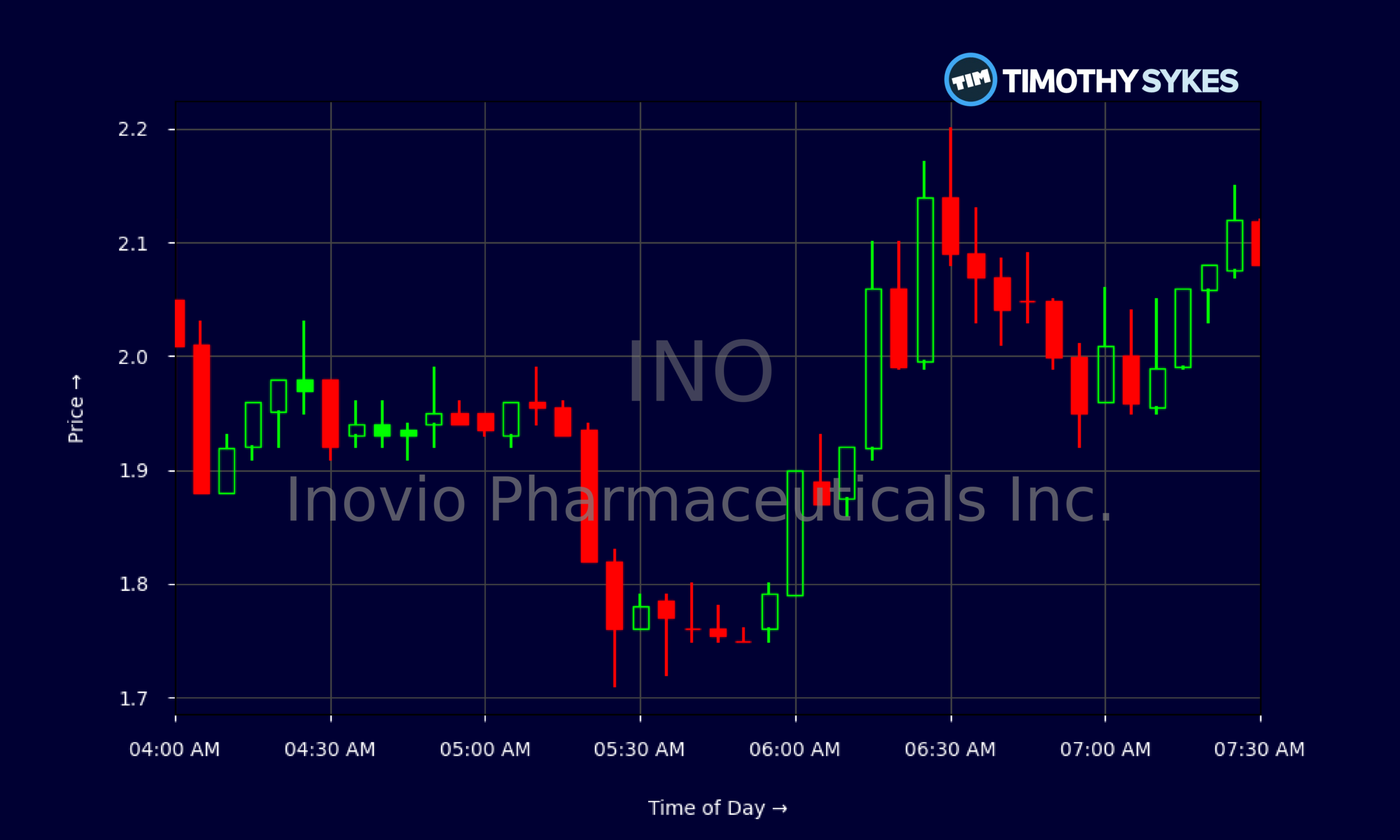
INO is trading like a classic high‑risk biotech — violent swings on relatively small price bands. Over the last couple of weeks, Inovio Pharmaceuticals has slid from around $1.15 to roughly $0.60, a drawdown of close to 50%. On the intraday tape, though, INO is printing far higher levels, with premarket and early‑session action clustered around $1.90–$2.20, showing aggressive gap‑and‑go behavior that active traders look for.
Fundamentals paint a fragile picture. Inovio Pharmaceuticals reported quarterly revenue of only about $65,000, down essentially 100% over three and five years. With a price‑to‑sales ratio near 1,819 and price‑to‑book around 27, INO is being valued almost entirely on future promise, not current earnings power.
More Breaking News
Losses are heavy. Net income from continuing operations came in near -$6.0M for the quarter, with EBITDA around -$17.9M. Return on equity sits deeply negative, and operating cash flow was roughly -$18.0M. The good news: Inovio Pharmaceuticals still held about $31.5M in cash at period end and roughly $36.7M including short‑term investments, with current assets nearly matching current liabilities. For traders, that means INO has some runway, but the company remains highly dependent on future deals, approvals, and capital raises.
Why Traders Are Watching INO Right Now
INO suddenly has real catalysts on the table, and that is what short‑term trading is built on. The biggest one: the FDA just granted Inovio Pharmaceuticals accelerated approval for VOCERYQ, a DNA‑based immunotherapy for adults with recurrent respiratory papillomatosis. This disease forces patients into repeated throat surgeries to remove growths. VOCERYQ is designed to cut down how often those surgeries are needed.
For a company like Inovio Pharmaceuticals, which has been stuck in the “promise” bucket for years, any move toward commercial revenue is huge. Accelerated approval means the FDA sees enough benefit to let VOCERYQ onto the market while confirmatory data is still being gathered. That gives INO a path to launch in Q1 2027. Traders should understand the trade‑off: regulatory risk is not gone — approval stays contingent on future results — but the story has leveled up from pure trial speculation to an actual product timeline.
Layered on top of that is the $80.4M court judgment Inovio Pharmaceuticals won against VGXI and GeneOne over a breached DNA plasmid manufacturing supply agreement. On paper, $61.8M in compensatory damages plus $18.7M in fees and costs is a serious win for a company with a $104.7M enterprise value. It also clears the narrative by knocking out all counterclaims against INO, which matters for sentiment.
But traders cannot just pencil in $80.4M of free cash. Inovio Pharmaceuticals is already warning that VGXI and GeneOne are in weak financial shape, so actual recovery may be slow and partial. Treat this legal win as potential upside, not guaranteed fuel for the balance sheet. The market tends to overshoot headlines like this; disciplined traders will watch how INO trades around key levels rather than chasing every spike.
Conclusion
INO is the kind of name that rewards prepared traders and punishes anyone winging it. The accelerated FDA approval for VOCERYQ finally gives Inovio Pharmaceuticals a defined commercial shot in a focused niche, while the $80.4M judgment against VGXI and GeneOne removes a long‑running legal cloud. Together, these events shift the story toward execution: can INO convert science and courtroom success into durable cash flows before its capital base thins out?
The charts show exactly how this kind of catalyst flow plays out. Inovio Pharmaceuticals has been slammed from above $1.10 to about $0.60 on the daily chart, yet intraday prints near $2.00 tell you how crowded the trade becomes when news hits. Wide ranges, fast moves, and plenty of trapped shorts and longs — that is textbook momentum terrain.
For active traders, the key with INO is to respect both sides of the story. VOCERYQ’s accelerated approval opens a real door, but confirmatory data and funding needs still hang over the ticker. The $80.4M judgment is a psychological boost, though actual collections are uncertain. As millionaire penny stock trader and teacher Tim Sykes says, “Be patient, don’t force trades, and let the perfect setups come to you.”. As Tim Sykes likes to say, “The market rewards preparation, not hope. Study the pattern, plan the trade, and always be ready to walk away.” This article is for educational and research purposes only and is not investment advice.
This is stock news, not investment advice. Timothy Sykes News delivers real-time stock market news focused on key catalysts driving short-term price movements. Our content is tailored for active traders and investors seeking to capitalize on rapid price fluctuations, particularly in volatile sectors like penny stocks. Readers come to us for detailed coverage on earnings reports, mergers, FDA approvals, new contracts, and unusual trading volumes that can trigger significant short-term price action. Some users utilize our news to explain sudden stock movements, while others rely on it for diligent research into potential investment opportunities.
Dive deeper into the world of trading with Timothy Sykes, renowned for his expertise in penny stocks. Explore his top picks and discover the strategies that have propelled him to success with these articles:
- Penny Stocks Trading Guide
- Best Penny Stocks Under $1 to Buy Today
- Top 8 Penny Stocks to Watch on Robinhood
Once you’ve got some stocks on watch, elevate your trading game with StocksToTrade the ultimate platform for traders. With specialized tools for swing and day trading, StocksToTrade will guide you through the market’s twists and turns.
Dig into StocksToTrade’s watchlists here:





Leave a reply