

Duolingo Inc. stocks have been trading up by 32.61 percent amid strong user growth and optimistic AI-driven monetization prospects.
Key Takeaways
- Q3 2026 revenue came in at $309M, modestly ahead of roughly $303M expectations, backed by 54.9M daily active users and 29% year-over-year DAU growth.
- Earnings of $0.54 per share missed the $0.57 consensus, showing profitability lagging even as top-line and engagement trends impressed.
- Management guided Q4 2026 revenue to $322M versus Street estimates of $314.55M and set FY26 revenue at $1.22B, both slightly above consensus.
- Major banks lifted DUOL price targets but stayed neutral, saying more upside depends on stronger monetization.
- A shareholder investigation and securities class action challenge DUOL’s monetization and AI content strategy, adding a legal overhang.
Live Update At 11:32:26 EST: On Wednesday, November 04, 2026 Duolingo Inc. stock [NASDAQ: DUOL] is trending up by 32.61%! Discover the key drivers behind this movement as well as our expert analysis in the detailed breakdown below.
Quick Financial Overview
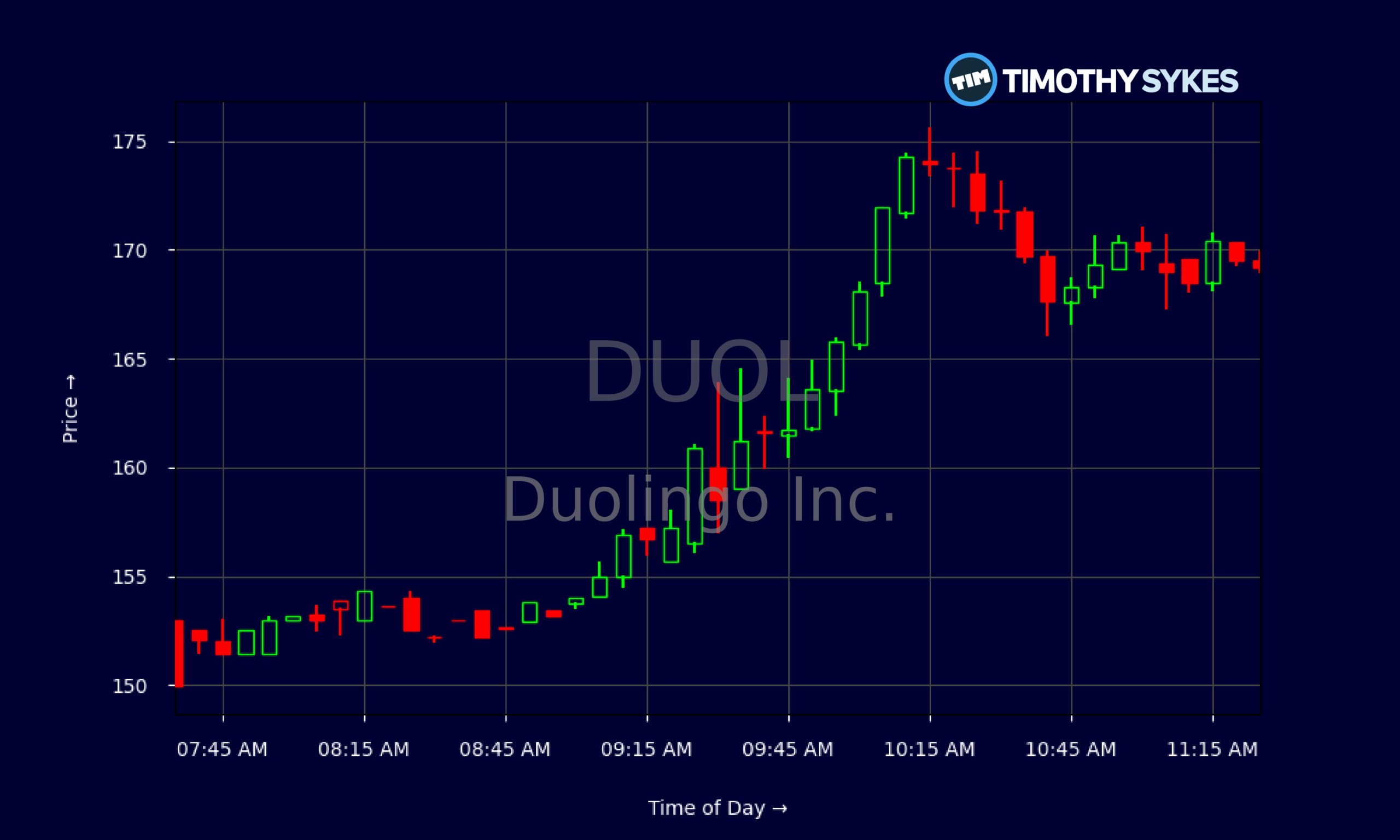
DUOL just printed the kind of growth numbers traders look for when hunting momentum. After closing at $128 on 2026/11/03, Duolingo stock exploded to a 169.14 close on 2026/11/04, with an intraday high of 175.56. That is a sharp post-earnings range expansion and a clear sign shorts got squeezed and late buyers chased.
Under the hood, DUOL is not just a story stock anymore. Over the last year, Duolingo generated about $1.04B in revenue, with a hefty 72.7% gross margin. Profitability is real: EBIT margin sits at 16.1%, and return on equity is an eye-catching 34.42%. For a growth platform, the balance sheet is clean, with a tiny 0.06 total debt-to-equity ratio and a current ratio of 2.7. DUOL is sitting on more than $1.18B in cash.
More Breaking News
Valuation is still rich but less crazy than earlier years. A price-to-sales ratio around 6.1 and a P/E near 17.7 tell traders the market is paying up for growth, but not at bubble levels seen in the past. For active trading, this mix of strong fundamentals, high margins, and a recent breakout move keeps DUOL firmly on watch lists.
Why Traders Are Watching DUOL After Q3
DUOL’s Q3 2026 report is a textbook example of why earnings season matters for trading. The headline was user growth: daily active users jumped 29% year over year to 54.9M. That kind of acceleration, at Duolingo’s scale, screams product-market strength. When a platform grows that fast without obvious promotion gimmicks in the numbers, momentum traders pay attention.
Revenue followed the user story. DUOL posted $309M in Q3 revenue, beating expectations around $303M. That is not a blowout, but in this market, a clean top-line beat tied to real engagement usually earns a re-rating. Management then doubled down by guiding Q4 revenue to $322M, well above the Street’s $314.55M, and laying out FY26 revenue of $1.22B versus $1.21B expected. The beats are modest, yet they show Duolingo is not slowing down.
The tape confirms that message. DUOL spent late October grinding between roughly $131 and $143. Post-print, it ripped from a 132.87 open on 2026/11/03 to a 169.14 close on 2026/11/04, breaking through prior resistance with heavy range and volatility. Intraday, the 2026/11/04 5‑minute chart shows a strong morning push from the mid‑150s into the mid‑170s before cooling off — classic earnings gap-and-run behavior.
Wall Street is reacting, but with a measured tone. Morgan Stanley bumped its DUOL price target from $125 to $140, and Goldman Sachs moved from $114 to $135. Both stuck with neutral stances, signaling that while Duolingo’s DAU machine looks powerful, the easy re-rating phase may be behind it. For traders, that means future big moves in DUOL are likely to track surprises in monetization, not just user growth.
Conclusion
For active traders, DUOL now sits at a critical junction where story, numbers, and risk all collide. On one side, Duolingo is putting up the kind of growth that justifies a premium: revenue beats, accelerating DAUs, strong guidance, fat gross margins, and a fortress balance sheet. The recent surge from the low $130s to the high $160s reflects that reality. When a stock clears resistance on earnings with expanding volume and volatility, trend traders stay locked in.
On the other side, DUOL is not without landmines. Earnings of $0.54 missed the $0.57 consensus, which keeps pressure on management to scale profit, not just users. More importantly, Duolingo faces a shareholder investigation and a securities class action over its monetization and AI content strategy, including claims of added user friction through ads and upsells and potential quality issues from rapidly generated AI lessons. Legal uncertainty like this can cap multiples and trigger sudden headline-driven pullbacks.
That is why disciplined trade planning matters. DUOL’s setup may attract breakout traders, but the smart move is to respect both the upside momentum and the downside headline risk. As Tim Sykes often says, “The market doesn’t care about your opinion, only your preparation and your rules.” As millionaire penny stock trader and teacher Tim Sykes says, “It’s not about how much money you make; it’s about how much money you keep.”. For anyone trading Duolingo stock, the edge comes from doing the homework, watching the levels, and being ready to cut losses fast if the story shifts.
This is stock news, not investment advice. Timothy Sykes News delivers real-time stock market news focused on key catalysts driving short-term price movements. Our content is tailored for active traders and investors seeking to capitalize on rapid price fluctuations, particularly in volatile sectors like penny stocks. Readers come to us for detailed coverage on earnings reports, mergers, FDA approvals, new contracts, and unusual trading volumes that can trigger significant short-term price action. Some users utilize our news to explain sudden stock movements, while others rely on it for diligent research into potential investment opportunities.
Dive deeper into the world of trading with Timothy Sykes, renowned for his expertise in penny stocks. Explore his top picks and discover the strategies that have propelled him to success with these articles:
- Penny Stocks Trading Guide
- Best Penny Stocks Under $1 to Buy Today
- Top 8 Penny Stocks to Watch on Robinhood
Once you’ve got some stocks on watch, elevate your trading game with StocksToTrade the ultimate platform for traders. With specialized tools for swing and day trading, StocksToTrade will guide you through the market’s twists and turns.
Dig into StocksToTrade’s watchlists here:





Leave a reply