

Applied Digital Corp. stocks have been trading up by 9.19 percent amid bullish sentiment on its AI data center expansion.
Key Takeaways APLD Traders Must Know
- Q1 revenue hit $341.9M versus roughly $116–124M expected, with EPS at $0.01 instead of the projected ($0.30) loss, powered by a 225% surge in AI-related services.
- Management guided Q3 revenue to $9.8–$10M and gross margins above 70%, signaling a shift toward higher-margin AI factory contracts.
- The company locked in access to up to 1 GW of power in Finland for a future AI data center campus starting 2028, targeting hyperscale AI customers.
- Street firms including Wells Fargo, Morgan Stanley, Roth Capital, and B. Riley remain positive on APLD, with multiple price target hikes and Buy or Overweight-style ratings.
- CEO Wes Cummins and President Jason Gechen Zhang bought about $6.6M of APLD stock in October 2026, prompting Smart Insider to tag it as its stock pick of the week.
Live Update At 14:02:13 EST: On Tuesday, November 03, 2026 Applied Digital Corp. stock [NASDAQ: APLD] is trending up by 9.19%! Discover the key drivers behind this movement as well as our expert analysis in the detailed breakdown below.
Quick Financial Overview
APLD has been trading like a high-beta AI proxy, and the tape shows it. Over the past couple of weeks the stock slid from the mid‑$20s to a recent close around $17.66, a sharp pullback that resets expectations but keeps APLD well above its summer base. Daily candles between 2026/10/09 and 2026/11/03 show wide ranges and repeated fades from the $20–$23 zone, a clear sign of traders taking quick profits into strength.
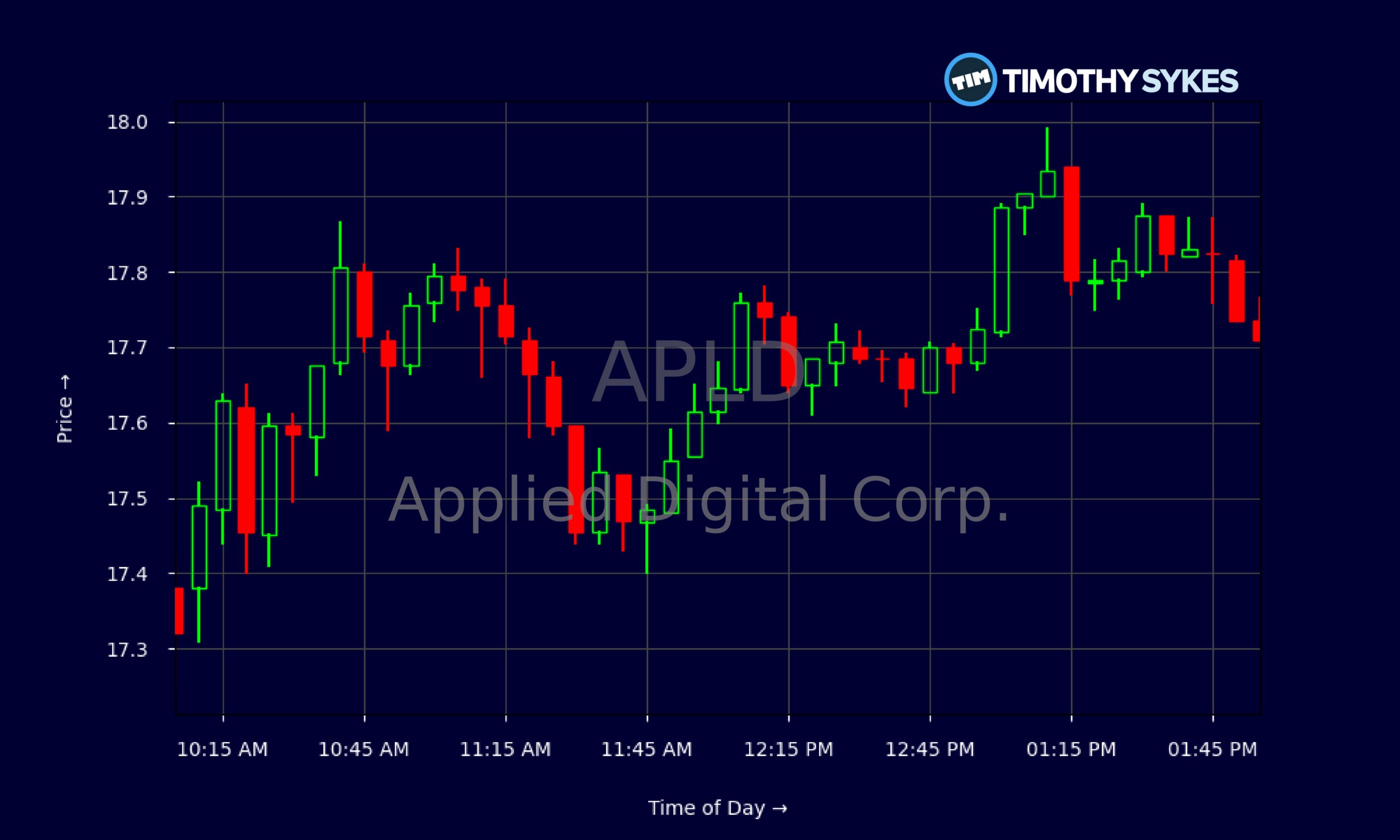
Intraday on 2026/11/03, APLD opened near $16.42 and grinded higher all day, holding higher lows and closing near the top of the range. The 5‑minute chart shows a steady staircase from the mid‑$16s premarket to the high‑$17s into the afternoon, with dips being bought instead of slammed. That’s classic post‑headline digestion after a big news run.
More Breaking News
Under the hood, APLD’s reported Q1 revenue of $341.9M versus $80.9M a year ago is explosive. Yet the company still posted a GAAP net loss of about $184M, reflecting heavy interest expense, build‑out costs, and stock‑based pay. Cash flow is deeply negative, with roughly $2.07B in capital expenditures in the latest quarter and free cash flow around negative $2.01B as APLD builds out its AI factory data centers. For traders, that mix — hyper growth, big losses, and high leverage — usually means high volatility and strong trend potential in both directions.
Why Traders Are Locked In On APLD Right Now
The reason APLD is suddenly on so many screens is simple: this was a monster fundamental surprise. Applied Digital’s Q1 print turned an expected deep loss into a slight adjusted profit, with EPS at $0.01 instead of a ($0.30) hole. Revenue blew past estimates, landing at $341.9M versus consensus in the low‑$100Ms, and up from $80.9M a year earlier. The key driver was a 225% year‑over‑year jump in services revenue, coming from tenant fit‑out work and GPU hardware tied to its ChronoScale platform.
This matters because it shows APLD is not just selling future capacity; it is monetizing now. The company is positioning its AI data centers as “factories” for hyperscale AI players, locking in long‑term leases while pulling high‑margin service dollars forward. Management’s Q3 guide — $9.8–$10M in revenue with gross margins above 70% — reinforces that the mix is shifting toward richer AI/HPC contracts rather than just bare‑bones hosting.
Wall Street has noticed. Wells Fargo bumped its APLD target to $55 and kept an Overweight rating, leaning on solid execution across a 1.4 GW build‑out and pointing to Meta‑linked leases and another 250 MW of higher‑yield capacity as future catalysts. Roth Capital reinstated coverage with a Buy and a $35 target, calling the setup “asymmetric” as APLD moves from signing leases to delivering power and rack space.
Even the cautious takes still lean green. B. Riley cut its target from $75 to $51 because higher rates raise financing costs, but it stayed at Buy and framed the recent pullback as a buying opportunity tied to APLD’s massive future pipeline. Morgan Stanley nudged its target to $41 and kept an Equal Weight stance, recognizing the value of APLD’s pipeline sites while flagging credit conditions as a cap on near‑term multiples. For active traders, that blend of bullish and cautious commentary is fuel for multi‑day swings around each new headline.
On the strategic side, APLD’s expansion story keeps building. The company secured access to up to 1 GW of power capacity in Finland for its first international AI factory campus, with initial power targeted for 2028. Management is already marketing the site to hyperscale AI customers but designed the structure to limit upfront capital, which is key given its already heavy debt load. Back in the U.S., APLD is partnering with Soluna on a 50 MW AI/HPC data center in Texas, where APLD will own 51% and its majority‑owned ChronoScale unit is lined up as the triple‑net tenant. That kind of JV lets APLD add capacity and revenue while leveraging partners’ sites and power contracts.
Sentiment adds another layer. After a 6% drop in one session, APLD bounced 3.4% premarket as traders reacted to the earnings beat and stronger year‑over‑year numbers. Then came the insider wave: President Jason Gechen Zhang bought 300,000 shares for about $5.66M, and CEO Wes Cummins added roughly $1.0M, taking his control to about 23.5M shares. Smart Insider labeled APLD its “stock pick of the week” with a strong positive signal after the combined $6.6M purchase near $18–$19. When the people running the company buy that aggressively into weakness, short‑term traders pay attention.
Conclusion
APLD now sits at the crossroads of three big themes: the AI data center land grab, the cost of capital in a higher‑rate world, and the classic high‑beta growth trade. On one side, the numbers are loud. Q1 revenue of $341.9M, triple‑digit growth versus last year, a surprise positive adjusted EPS, and guidance for 70%‑plus gross margins all point to a business that’s scaling its AI factory model fast. On the other side, APLD is spending heavily — more than $2.0B in quarterly capex — and carrying over $6.3B in long‑term debt on the balance sheet. That leverage is why some analysts, like B. Riley and Morgan Stanley, are trimming or tempering targets even while they acknowledge the upside.
For chart‑driven traders, that combination usually translates into wide ranges and sharp intraday moves. APLD’s recent slide from above $23 to the high‑teens, followed by a strong intraday grind back up, fits the profile of a momentum stock resetting after a big earnings shock. Positive Street coverage from Wells Fargo, Roth, and others, plus the 1 GW Finland deal and the Texas JV with Soluna, all provide a steady stream of potential catalysts.
But none of this is a guarantee. This article is for educational and research purposes only and is not trading advice. As Tim Sykes likes to say, “Patterns repeat, but only for traders who are prepared and disciplined enough to take advantage of them.” As millionaire penny stock trader and teacher Tim Sykes says, “Preparation plus patience leads to big profits.”, and that mindset is critical when you’re stalking volatile setups like APLD rather than blindly chasing moves. With APLD, that means respecting both sides of the story — the explosive AI‑driven growth and the real financing risk — and trading the price action, not the hype.
This is stock news, not investment advice. Timothy Sykes News delivers real-time stock market news focused on key catalysts driving short-term price movements. Our content is tailored for active traders and investors seeking to capitalize on rapid price fluctuations, particularly in volatile sectors like penny stocks. Readers come to us for detailed coverage on earnings reports, mergers, FDA approvals, new contracts, and unusual trading volumes that can trigger significant short-term price action. Some users utilize our news to explain sudden stock movements, while others rely on it for diligent research into potential investment opportunities.
Dive deeper into the world of trading with Timothy Sykes, renowned for his expertise in penny stocks. Explore his top picks and discover the strategies that have propelled him to success with these articles:
- Penny Stocks Trading Guide
- Best Penny Stocks Under $1 to Buy Today
- Top 8 Penny Stocks to Watch on Robinhood
Once you’ve got some stocks on watch, elevate your trading game with StocksToTrade the ultimate platform for traders. With specialized tools for swing and day trading, StocksToTrade will guide you through the market’s twists and turns.
Dig into StocksToTrade’s watchlists here:




Leave a reply