

CrowdStrike Holdings Inc. stocks have been trading up by 8.43 percent amid strong cybersecurity demand and bullish analyst upgrades.
Key Takeaways
- Nvidia partnership puts CrowdStrike’s Falcon Guardian AI directly into Nvidia’s OpenShell runtime now, with Nvidia Sentry in-silicon integration planned next, extending AI protection down to the chip level.
- Shares of CRWD popped 6.1% on the Nvidia news, signaling strong trader enthusiasm around the company’s AI-native security story.
- A wave of Wall Street firms, including Needham, BTIG, Freedom Broker, Citi, Mizuho, KeyBanc, and Truist, just raised price targets on CRWD into roughly the $265–$320 range.
- Needham says CrowdStrike’s Flex model is driving about a 40% uplift in annual recurring revenue on initial migrations, with more room from repeat Flex cycles.
- Management urged holders to ignore an unsolicited mini‑tender at $260 for 500,000 CRWD shares, saying traders should take no action.
Live Update At 16:47:11 EDT: On Friday, October 23, 2026 CrowdStrike Holdings Inc. stock [NASDAQ: CRWD] is trending up by 8.43%! Discover the key drivers behind this movement as well as our expert analysis in the detailed breakdown below.
Quick Financial Overview
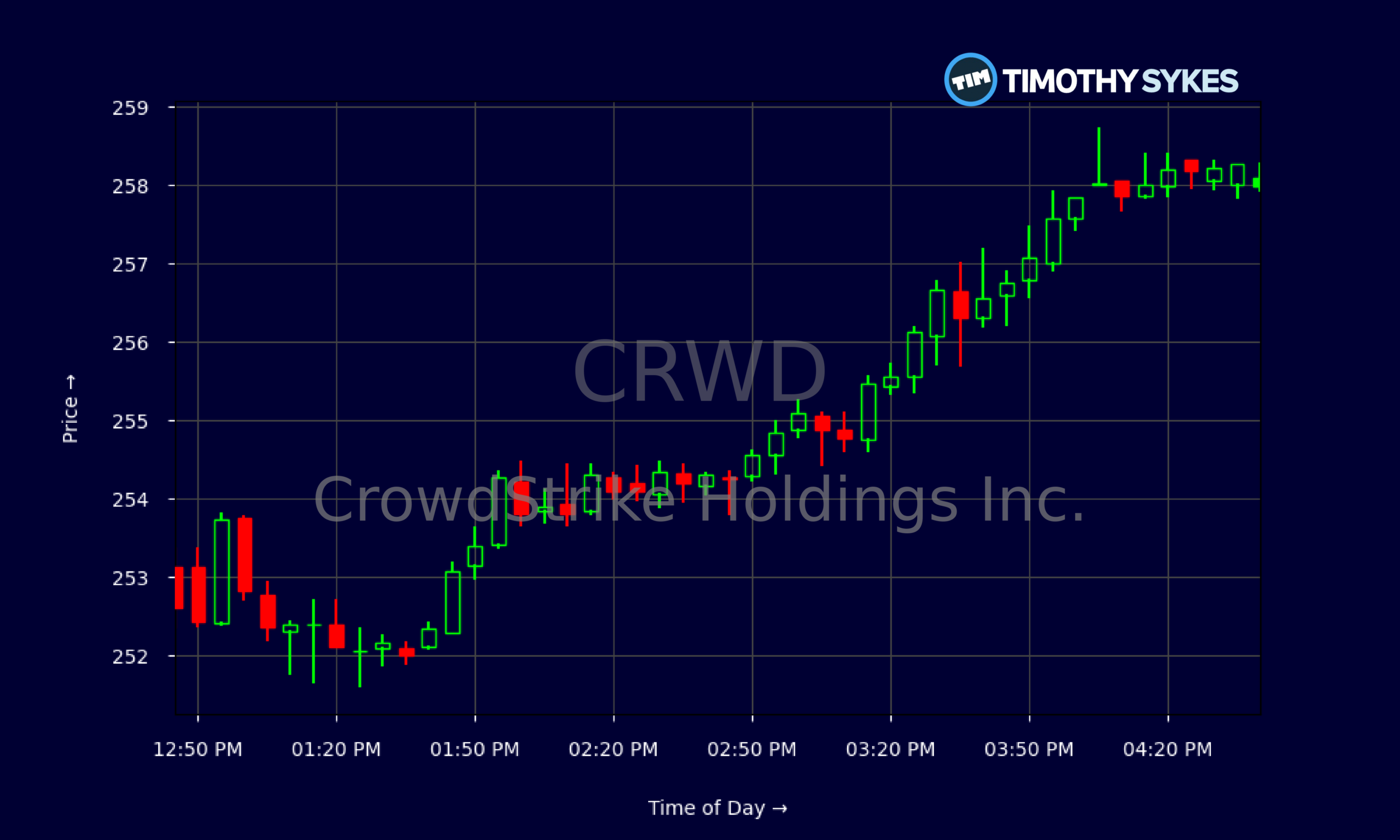
CRWD is trading like a pure growth name, and the numbers back that up. The stock just bounced from the low $220s to about $257.57 on 2026/10/23, with a strong green candle after several choppy sessions between $227 and $275. That 6.1% surge tied to the Nvidia collaboration shows traders are willing to chase strength when CrowdStrike delivers real AI catalysts.
Intraday action on the latest session shows steady grind rather than wild spikes. CRWD opened near $238, pushed through $240 by mid-morning, and then marched higher into the close, holding gains above $255 with only shallow pullbacks. That’s classic accumulation behavior, not a one-and-done news spike.
More Breaking News
Fundamentals tell the same “high-growth, premium multiple” story. CrowdStrike generated about $4.81B in revenue over the last year, with roughly 26.9% three‑year and 36.5% five‑year growth. Gross margin around 75% shows the Falcon platform scales well. Profit margins are still low, which is normal for a company reinvesting heavily, but free cash flow of roughly $376M last quarter and a current ratio of 1.6 mean CRWD is not starving for cash. Valuation is rich, with a P/E above 1,200 and price‑to‑sales over 52, so active traders have to respect both the upside momentum and the risk of sharp pullbacks.
Why Traders Are Watching CRWD Now
CrowdStrike is not just an endpoint security play anymore. With the new Nvidia deal, CRWD is pitching itself as the security layer for the entire AI stack. Falcon Guardian AI Detection and Response will run inside Nvidia’s OpenShell secure runtime, and longer term inside Nvidia Sentry at the in‑silicon level. That means CrowdStrike protection following AI workloads from software all the way down to the chip.
The market reaction was fast. CRWD ripped 6.1% higher after the announcement, and the follow‑through in the daily chart suggests traders see this as more than a headline. When Nvidia blesses your AI security code as part of its default stack, you are suddenly tied to every new GPU rack, every autonomous system, every data center rolling out those chips.
Wall Street is leaning into that narrative. BTIG hiked its CRWD target from $245 to $312, saying the Street is underestimating how fast AI security spending ramps and how much of that flows to platform names like CrowdStrike. Freedom Broker pushed its target to $320 as CRWD evolves from point endpoint tool to full cybersecurity platform, helped by strong uptake of the Falcon Flex subscription model.
Needham’s work around Flex is key for traders trying to size the opportunity. They are seeing about a 40% lift in annual recurring revenue on initial Flex migrations, with more expansion when customers “re‑Flex.” Truist, with a $300 target, and Citi, with a $295 target, echo the same theme: AI‑driven demand plus the Flex model equals a bigger CRWD revenue base and more leverage in the Falcon platform.
On top of that, CRWD is showing real‑world capability. Its work with the FBI to shut down over 40 North Korean laptop farms in Texas reminds traders this is not hype; CrowdStrike is touching national‑security‑level operations. Sector context helps too. Analysts now group CrowdStrike with Palo Alto Networks, Accenture, and Google as leaders in an AI‑ and quantum‑driven security upcycle, a backdrop that supports extended bull runs if the chart cooperates.
Conclusion
For active traders, CRWD sits at the sweet spot of two hot themes: AI and cybersecurity. The Nvidia collaboration pulls CrowdStrike closer to the hardware backbone of AI, embedding Falcon Guardian into Nvidia’s OpenShell today and Sentry hardware tomorrow. The stock’s recent move from the mid‑$220s to the high‑$250s, plus that 6.1% pop on the news, shows how quickly sentiment can flip when a catalyst hits.
At the same time, this is no low‑float penny play. CRWD carries a steep P/E and price‑to‑sales multiple, and that premium only works as long as revenue keeps compounding. The Flex model, which Needham says is pushing ARR up roughly 40% on migrations, and broad price‑target hikes into the $265–$320 range from firms like Mizuho, KeyBanc, BTIG, Truist, and others, suggest the Street thinks that growth runway is still wide open.
Traders also need to stay sharp around noise. CrowdStrike’s warning on the unsolicited Tutanota mini‑tender at $260 is a reminder to always read the fine print and not assume every offer is in your best interest. CRWD’s insider Form 4 filings simply confirm normal executive activity, not a clear signal by themselves.
As Tim Sykes likes to hammer home, “Patterns repeat, but only if you’re prepared.” As millionaire penny stock trader and teacher Tim Sykes, says, “It’s better to go home at zero than to go home in the red.”. In CRWD, the pattern is clear right now: strong news catalyst, sector tailwinds, bullish analyst revisions, and a chart reclaiming key levels. For traders, the job is to study the setup, manage risk tight, and remember this is education and research only—not a signal to buy or sell.
This is stock news, not investment advice. Timothy Sykes News delivers real-time stock market news focused on key catalysts driving short-term price movements. Our content is tailored for active traders and investors seeking to capitalize on rapid price fluctuations, particularly in volatile sectors like penny stocks. Readers come to us for detailed coverage on earnings reports, mergers, FDA approvals, new contracts, and unusual trading volumes that can trigger significant short-term price action. Some users utilize our news to explain sudden stock movements, while others rely on it for diligent research into potential investment opportunities.
Dive deeper into the world of trading with Timothy Sykes, renowned for his expertise in penny stocks. Explore his top picks and discover the strategies that have propelled him to success with these articles:
- Penny Stocks Trading Guide
- Best Penny Stocks Under $1 to Buy Today
- Top 8 Penny Stocks to Watch on Robinhood
Once you’ve got some stocks on watch, elevate your trading game with StocksToTrade the ultimate platform for traders. With specialized tools for swing and day trading, StocksToTrade will guide you through the market’s twists and turns.
Dig into StocksToTrade’s watchlists here:





Leave a reply