

CoreWeave Inc. faces heightened volatility as regulatory scrutiny on its AI data-center expansion weighs on sentiment, with stocks trading down by -6.57 percent.
Key Takeaways
- Morgan Stanley cut its CRWV price target to $70 from $99, keeping an equal-weight rating as financing uncertainty clouds future capacity build-out.
- Explosive CRWV revenue growth comes with about $52B in loans and lease obligations and distressed debt pricing, flagging elevated default and dilution risk.
- Co-founders have sold $3.3B of CoreWeave stock since the 2025 IPO, including $2.4B in 2026, deepening worries around leverage and credit quality.
- Shares of CRWV and other GPU data-center names have bounced even as Elon Musk says debt markets are “almost entirely shut off” to AI data centers without strong non-AI revenue.
- Wallstreetbets-driven trading has fueled sharp CRWV swings, with repeated 4–5% premarket drops and heavy social-media scrutiny after a sharp sell-off.
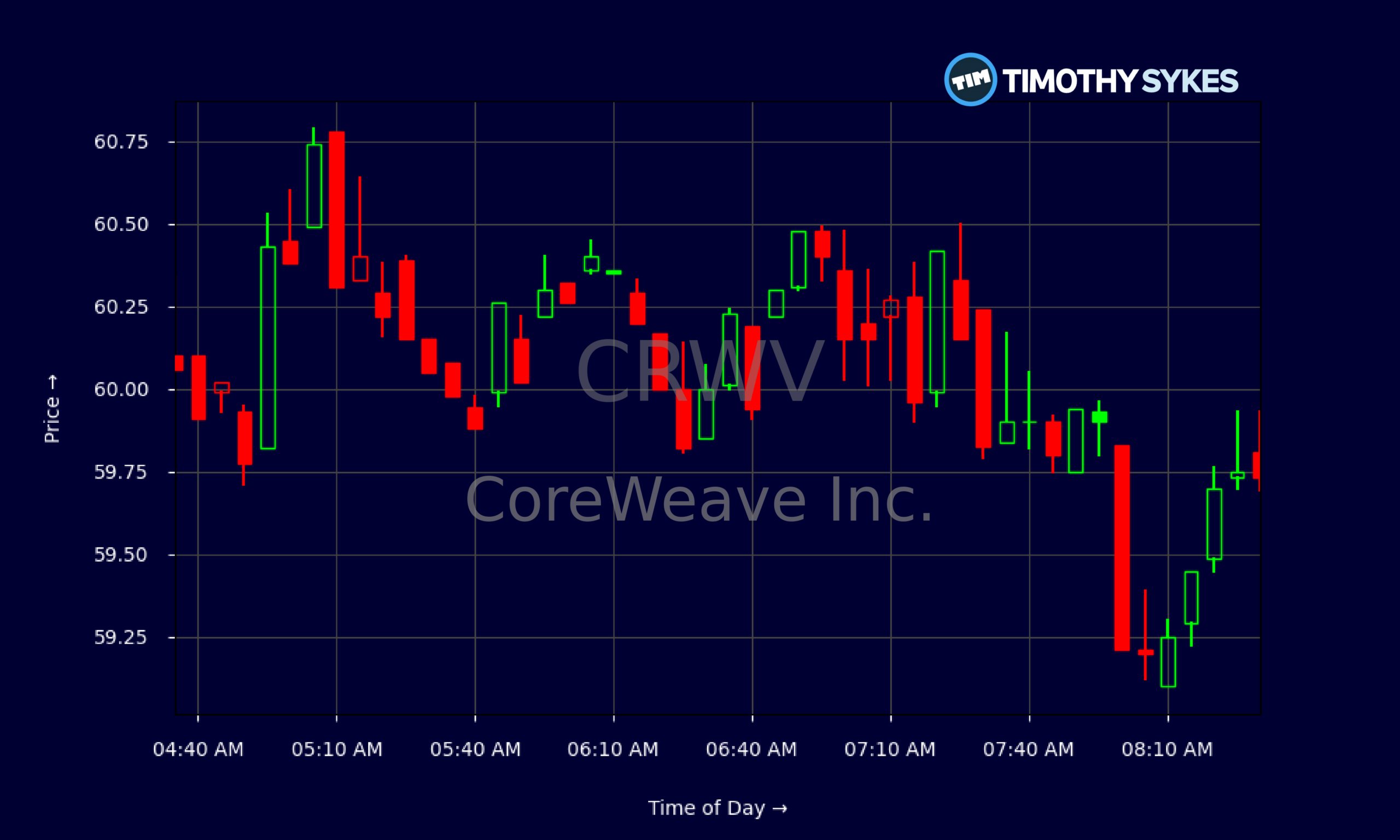
Live Update At 08:32:48 EDT: On Thursday, October 29, 2026 CoreWeave Inc. stock [NASDAQ: CRWV] is trending down by -6.57%! Discover the key drivers behind this movement as well as our expert analysis in the detailed breakdown below.
Quick Financial Overview
CRWV looks like a classic high-growth, high-risk AI infrastructure story. CoreWeave posted about $5.13B in revenue over the last year, with a huge 90.6% gross margin. That means most of every sales dollar is left after direct costs. But further down the income statement, the picture flips fast.
CoreWeave’s profit margins are deep in the red, with profit margin around -25%. CRWV is spending heavily on operating costs and interest, and net income for the latest quarter came in at -$626M. EBITDA was a positive $1.92B, showing strong cash earnings before debt costs, but the leverage is massive.
On the balance sheet, CoreWeave carries roughly $52B in loans and lease obligations, reflected in a total debt-to-equity ratio above 3 and a leverage ratio above 15. Interest coverage of just 2.4 times tells traders that earnings barely cover interest. Liquidity is tight too, with a current ratio of 0.5 and working capital around -$11.4B, so CRWV depends heavily on ongoing financing.
More Breaking News
The chart confirms the stress. Since early October, CRWV has slid from the high $80s into the low $60s, with multiple gap-down days. For short-term traders, this is a momentum name where balance-sheet risk now drives the narrative.
Why Traders Are Watching CRWV Volatility
CRWV has become one of the purest battleground names in the AI neocloud trade. On one side, CoreWeave holds a prime spot in the GPU data-center space with a massive AI workload backlog. On the other, the capital structure looks stretched to the limit.
Morgan Stanley’s move on 2026/10/23 to hold an equal-weight on CoreWeave but slash its price target from $99 down to $70 captured that tension. The bank credited CRWV’s execution and leading neocloud position yet focused on financing uncertainty and whether the company can actually deploy all that contracted capacity. For traders, that’s the market saying, “Great story, but show me the funding.”
Debt worries only get louder when you look at the 2026/10/21 analysis: around $52B in loans and lease obligations, very high net interest expense, and CRWV debt trading at distressed levels. Distressed pricing usually means bond traders are assigning serious default or heavy dilution risk to CoreWeave. Equity traders ignore that at their own peril.
Sentiment has also been hit by insider selling. On 2026/10/16, CRWV dropped 12% after reports the co-founders sold $3.3B of stock since the 2025 IPO, including $2.4B in 2026 alone. In a market already rotating out of high-growth tech, that kind of cashing out reads like a warning flare.
Layer on the social-media factor. CoreWeave has been swept up in Wallstreetbets-style trading, with a 5.9% surge one day followed by a 3.9% premarket slide the next, plus repeated 4–5% premarket drops around 2026/10/19–2026/10/20. Even when CRWV and peers bounced 1–4% in premarket on 2026/10/19, it looked more like a reflex pop than steady accumulation. Then on 2026/10/26, CRWV fell another 3.8% premarket after a 2.5% prior decline, showing sustained selling pressure.
At the same time, CoreWeave and other GPU data-center names managed gains on 2026/10/26 even as Elon Musk warned that debt markets have “almost entirely shut off” to AI data centers without strong non-AI revenue. That disconnect—price strength versus funding reality—is exactly what active CRWV traders are trying to time.
Conclusion
For active traders, CRWV is a textbook example of why you never fall in love with a story stock. CoreWeave’s revenue growth, fat gross margins, and AI GPU backlog look powerful on paper, and the neocloud positioning keeps drawing in momentum money. But the numbers behind CRWV’s balance sheet are just as powerful, and they lean the other way.
Roughly $52B in loans and lease obligations, distressed debt pricing, and an interest bill that chews through operating earnings leave CoreWeave with very little room for error. Morgan Stanley’s cut to a $70 target while staying equal-weight tells traders the upside case is now chained to funding risk, not just AI demand. The co-founders’ $3.3B in stock sales since the 2025 IPO only sharpens that focus, especially with CRWV trading as part of the Wallstreetbets high-beta basket.
From a trading-psychology angle, this is where discipline matters. CRWV offers big ranges and clean intraday moves around news, which can be ideal for prepared day traders and swing traders. But it also punishes anyone who overstays. As Tim Sykes likes to say, “Volatility is opportunity for prepared traders and a trap for lazy ones.” As millionaire penny stock trader and teacher Tim Sykes, says, “Small gains add up over time; focus on building wealth gradually, not chasing jackpots.”. CoreWeave fits that line perfectly—packed with AI hype, real revenue, and very real balance-sheet landmines. Use the volatility for education and research, set clear trading plans, and be ready to cut losses fast if CRWV’s credit story starts to break.
This is stock news, not investment advice. Timothy Sykes News delivers real-time stock market news focused on key catalysts driving short-term price movements. Our content is tailored for active traders and investors seeking to capitalize on rapid price fluctuations, particularly in volatile sectors like penny stocks. Readers come to us for detailed coverage on earnings reports, mergers, FDA approvals, new contracts, and unusual trading volumes that can trigger significant short-term price action. Some users utilize our news to explain sudden stock movements, while others rely on it for diligent research into potential investment opportunities.
Dive deeper into the world of trading with Timothy Sykes, renowned for his expertise in penny stocks. Explore his top picks and discover the strategies that have propelled him to success with these articles:
- Penny Stocks Trading Guide
- Best Penny Stocks Under $1 to Buy Today
- Top 8 Penny Stocks to Watch on Robinhood
Once you’ve got some stocks on watch, elevate your trading game with StocksToTrade the ultimate platform for traders. With specialized tools for swing and day trading, StocksToTrade will guide you through the market’s twists and turns.
Dig into StocksToTrade’s watchlists here:





Leave a reply