

Kodiak AI Inc. stocks have been trading up by 13.42 percent amid strong investor optimism from its latest AI technology breakthrough.
Key Takeaways
- Kodiak AI has selected Amazon Web Services as its primary cloud provider to support its autonomous driving system.
- The company will use AWS to power AI development efforts for its self-driving technology.
- Kodiak AI plans to leverage AWS for safety simulations related to its autonomous driving system.
- The partnership with AWS is intended to help Kodiak AI scale GPU capacity for its AI workloads.
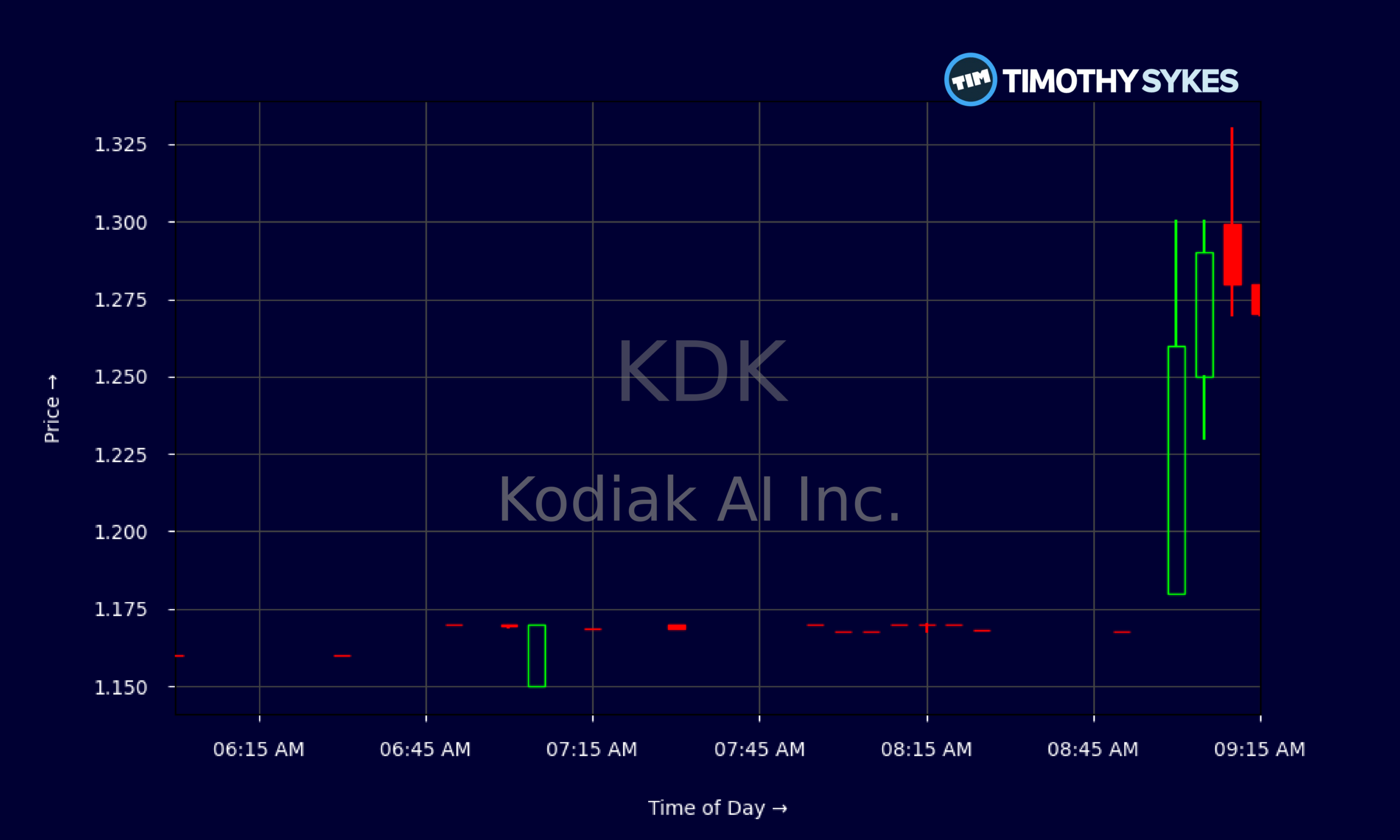
Live Update At 09:18:19 EDT: On Wednesday, October 28, 2026 Kodiak AI Inc. stock [NASDAQ: KDK] is trending up by 13.42%! Discover the key drivers behind this movement as well as our expert analysis in the detailed breakdown below.
Quick Financial Overview
Kodiak AI Inc., trading as KDK, is acting like a classic high-risk, story-driven small cap. The chart tells you right away this is not a stable, slow mover. Over recent sessions KDK has slid from the $1.70 area down toward $1.04–$1.12, a sharp drawdown that shows clear selling pressure and fading momentum.
For active traders, that pullback matters. KDK has been making lower highs since the mid-$1.80s earlier in the month, which sets up a short-term downtrend. The brief bounce to $1.22–$1.35 failed, with Kodiak AI rolling back over into the low $1s. That tells traders any pop is getting sold into quickly.
Under the hood, the fundamentals are early stage and very aggressive. Kodiak AI reported roughly $3.8M in revenue against massive losses and highly negative margins. KDK is burning cash, with free cash flow around -$38M and a stockholders’ equity deficit over $180M. The balance sheet is liquid for now, with a strong current ratio around 5.5 and over $46M in cash, but this is a company spending heavily to build out its platform, not one printing profits.
More Breaking News
For traders, KDK is a speculative volatility play, not a value story.
Why Traders Are Watching Kodiak AI’s AWS Deal
The latest headline catalyst is what keeps KDK firmly on watchlists. Kodiak AI has picked Amazon Web Services as its primary cloud provider, a key move for any company trying to build serious autonomous driving tech. When a small-cap AI name like KDK lines up with AWS, traders pay attention because it signals real infrastructure, not just hype.
Kodiak AI plans to lean on AWS to power AI development, run safety simulations, and scale GPU capacity. That matters. Training and testing autonomous systems demand huge compute power and rapid iteration. By locking in AWS, Kodiak AI can spin up resources quickly instead of sinking more capital into its own hardware footprint. For traders, this reduces some execution risk on the technology side.
The safety simulation angle is important too. Regulators and partners care deeply about validation, and robust simulation capability is a core selling point. If Kodiak AI uses AWS to accelerate that loop, KDK can push updates faster and refine its autonomous stack more aggressively.
At the same time, traders need to remember the tape. KDK’s price has been grinding lower even as this positive AWS news hits the tape. That often happens when a stock ran too far ahead of its fundamentals and then resets. For short-term traders, the combination of a strong narrative—autonomous driving plus AWS—and a beaten-down chart can set up sharp relief bounces if volume returns. But without sustained buying, KDK can stay heavy despite the headline.
Conclusion
KDK sits at the intersection of big story and brutal numbers. Kodiak AI is burning cash, posting steep operating losses, and carrying negative equity, while only generating a few million dollars in revenue. Yet it now has a marquee cloud partner in AWS to support its autonomous driving ambitions, from AI training to safety simulations and GPU scaling. That’s exactly the kind of contrast that creates trading opportunity.
For active traders, the playbook around KDK is simple but not easy. You track the chart first, then overlay the story. If Kodiak AI starts holding higher lows off the $1 area and volume spikes on green days tied to AWS headlines, momentum traders will circle back. If the stock keeps making new lows, it remains a watch-only name until the selling exhausts.
This is where discipline matters. As Tim Sykes loves to remind traders, “The market doesn’t care about your opinion, it only cares about your discipline.” As millionaire penny stock trader and teacher Tim Sykes says, “Be patient, don’t force trades, and let the perfect setups come to you.”. KDK and Kodiak AI fit that mindset perfectly. The AWS deal gives the ticker a real narrative edge, but traders still need to manage risk, cut losses fast, and let the price action—not the promise of autonomous driving—call the shots.
This is stock news, not investment advice. Timothy Sykes News delivers real-time stock market news focused on key catalysts driving short-term price movements. Our content is tailored for active traders and investors seeking to capitalize on rapid price fluctuations, particularly in volatile sectors like penny stocks. Readers come to us for detailed coverage on earnings reports, mergers, FDA approvals, new contracts, and unusual trading volumes that can trigger significant short-term price action. Some users utilize our news to explain sudden stock movements, while others rely on it for diligent research into potential investment opportunities.
Dive deeper into the world of trading with Timothy Sykes, renowned for his expertise in penny stocks. Explore his top picks and discover the strategies that have propelled him to success with these articles:
- Penny Stocks Trading Guide
- Best Penny Stocks Under $1 to Buy Today
- Top 8 Penny Stocks to Watch on Robinhood
Once you’ve got some stocks on watch, elevate your trading game with StocksToTrade the ultimate platform for traders. With specialized tools for swing and day trading, StocksToTrade will guide you through the market’s twists and turns.
Dig into StocksToTrade’s watchlists here:





Leave a reply