

CoreWeave Inc. stocks have been trading down by -2.63 percent amid reports of heightened competition in AI cloud infrastructure.
Key Takeaways
- Shares have tumbled after reports that CoreWeave co-founders sold $3.3B of stock since the 2025 IPO, deepening concern over leverage and credit risk.
- Morgan Stanley cut its CRWV price target to $70 from $99 while keeping an equal-weight rating, flagging growing financing uncertainty despite strong execution.
- CoreWeave shows explosive AI revenue and a massive GPU backlog, but roughly $52B of loans and lease obligations leave debt trading at distressed levels.
- CRWV has swung wildly in premarket trading, with Wallstreetbets-driven surges quickly followed by sharp pullbacks.
- The stock is now a key gauge for whether AI and neo-cloud leverage fears spill over into the broader high-growth tech trade.
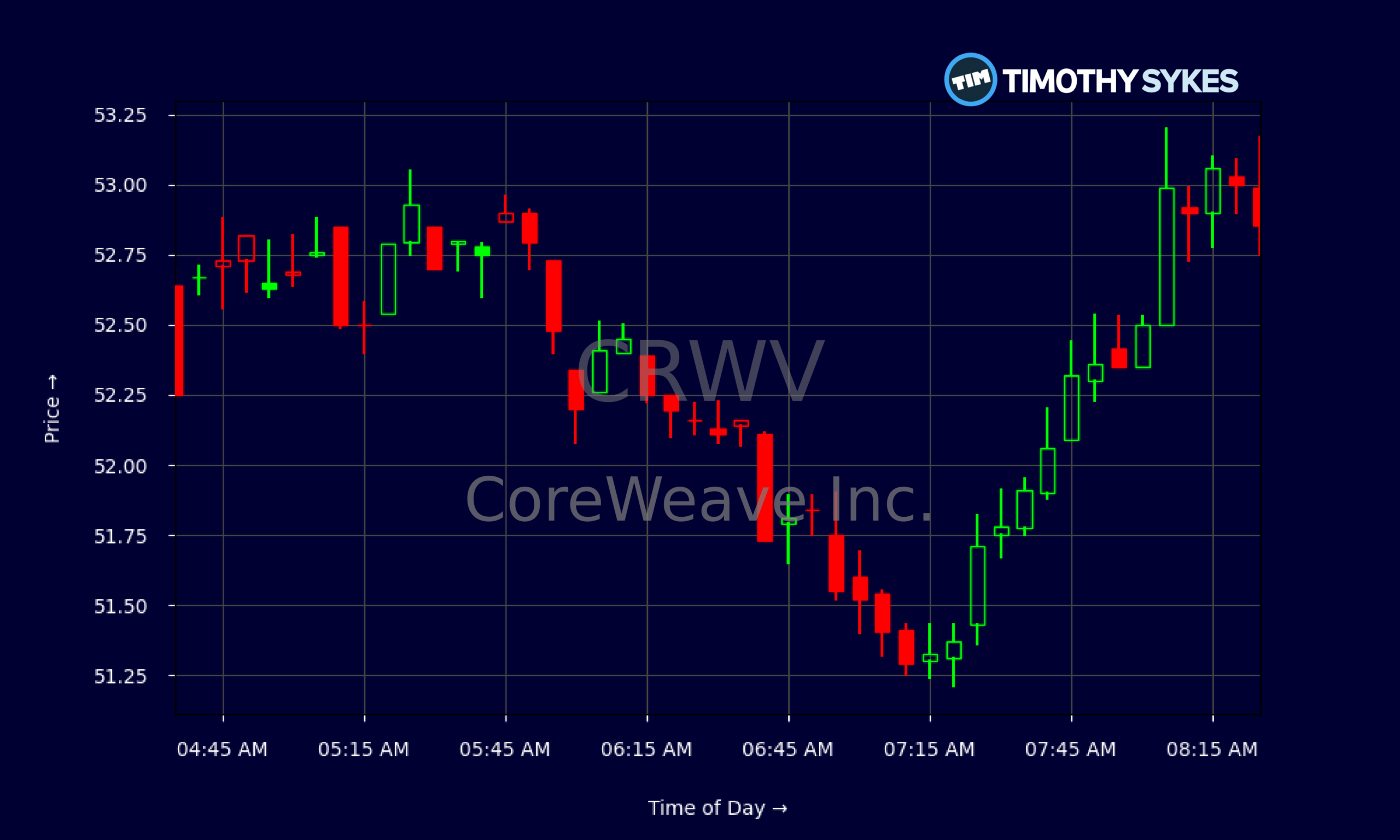
Live Update At 08:32:30 EDT: On Monday, October 26, 2026 CoreWeave Inc. stock [NASDAQ: CRWV] is trending down by -2.63%! Discover the key drivers behind this movement as well as our expert analysis in the detailed breakdown below.
Quick Financial Overview
CRWV has been on a steep downhill slide. From an early-October close near $88, CoreWeave shares have cracked into the mid-$50s, with the latest daily close around $54. That is a heavy drawdown in just a few weeks, and it tells traders that the easy momentum phase is over, at least for now.
Under the hood, CoreWeave is a classic high-growth, high-stress balance sheet story. Revenue sits around $5.13B, and gross margin is a massive 90.6%. CRWV is clearly selling scarce AI compute at premium pricing. But the income statement still shows a net loss of about $626M for the quarter and a negative profit margin north of 25%. The business throws off EBITDA, yet heavy interest expense and other charges flip the bottom line red.
More Breaking News
On the balance sheet, CoreWeave is carrying about $77.1B in assets, but roughly $72.0B in liabilities and leverage ratios are extreme. Total debt to equity is 3.29, the current ratio is just 0.5, and working capital is deeply negative. For traders, that combination – falling stock, tight liquidity, and high leverage – usually means headline risk stays elevated and pops can be short-lived.
Why Traders Are Watching CoreWeave CRWV
CRWV is turning into a real-time case study in how a hot AI story can collide with a stretched balance sheet. The company sits on a huge AI GPU backlog and booming demand, yet around $52B in loans and lease obligations are weighing on CoreWeave like a lead vest. Debt is reportedly trading at distressed levels, which tells traders that credit markets are already pricing in meaningful default or dilution risk.
Layer on top the insider selling narrative. Reports show CoreWeave’s three co-founders have unloaded about $3.3B of stock since the March 2025 IPO, including $2.4B in 2026 alone. The stock dropped roughly 12% after those headlines hit, with an earlier premarket slide of more than 5% as the sales first hit the tape. When leadership cashes out that aggressively, traders often read it as a strong signal that volatility – and possibly more downside – lies ahead.
At the same time, Wallstreetbets-style flows have turned CRWV into a momentum yo-yo. One session saw a 5.9% jump, only to be followed by a 3.9% premarket fade. Other days, CoreWeave trades down about 5% in premarket as part of a broader pullback in popular meme-style tech names. Brief rebounds of 1%–4% have popped up with other Wallstreetbets favorites, but these look like relief bounces inside a larger downtrend, not fresh legs of a bull run.
Morgan Stanley’s latest move adds another layer. The firm kept CoreWeave at equal-weight but cut its price target to $70 from $99, highlighting solid execution and a leading neocloud position while warning about financing uncertainty. That’s Wall Street speak for: the business is real, but the capital structure is now center stage. Traders in CRWV are no longer just betting on AI demand; they are trading a complex mix of growth, leverage, and sentiment.
Conclusion
For active traders, CoreWeave and ticker CRWV now sit at the crossroads of three powerful forces: explosive AI growth, heavy leverage, and hyperactive social-media-driven trading. The fundamentals show strong revenue and sky-high gross margins, yet large net losses, intense interest expense, and a roughly $52B debt and lease stack keep pressure on CoreWeave’s equity. When debt trades at distressed levels, equity usually trades like an option – big ranges, big risk.
The insider selling story only sharpens those edges. Co-founders cashing out $3.3B since 2025, alongside repeated news-triggered air pockets in the share price, tells traders to expect fast moves both ways. Morgan Stanley’s target cut to $70 underscores this shift from pure AI excitement toward hard questions about financing and the ability of CoreWeave to fund and deploy its contracted capacity.
For momentum hunters, CRWV’s intraday tape – tight five-minute swings around $52–53 premarket, and a broader trend from the $80s to the mid-$50s – is a textbook example of why risk management matters. As Tim Sykes likes to remind his community, “Volatility is opportunity, but only for traders who respect risk and cut losses fast.” As millionaire penny stock trader and teacher Tim Sykes, says, “Embrace the journey, the ups and downs; each mistake is a lesson to improve your strategy.”. CoreWeave fits that description perfectly right now: a high-flying AI name turned high-stakes trading classroom, strictly for those treating it as education and research, not a recommendation to buy or sell.
This is stock news, not investment advice. Timothy Sykes News delivers real-time stock market news focused on key catalysts driving short-term price movements. Our content is tailored for active traders and investors seeking to capitalize on rapid price fluctuations, particularly in volatile sectors like penny stocks. Readers come to us for detailed coverage on earnings reports, mergers, FDA approvals, new contracts, and unusual trading volumes that can trigger significant short-term price action. Some users utilize our news to explain sudden stock movements, while others rely on it for diligent research into potential investment opportunities.
Dive deeper into the world of trading with Timothy Sykes, renowned for his expertise in penny stocks. Explore his top picks and discover the strategies that have propelled him to success with these articles:
- Penny Stocks Trading Guide
- Best Penny Stocks Under $1 to Buy Today
- Top 8 Penny Stocks to Watch on Robinhood
Once you’ve got some stocks on watch, elevate your trading game with StocksToTrade the ultimate platform for traders. With specialized tools for swing and day trading, StocksToTrade will guide you through the market’s twists and turns.
Dig into StocksToTrade’s watchlists here:





Leave a reply