
CoreWeave Inc. stocks have been trading up by 7.35 percent following strong investor optimism around its AI infrastructure expansion.
Key Takeaways For CRWV Traders
- AI names, including CRWV, were hit in recent Nasdaq weakness, adding pressure on already nervous sentiment.
- CoreWeave is entering India with a multi‑billion‑dollar AI data center build‑out at AdaniConneX’s Taloja campus, targeting operations by mid‑2028.
- Nvidia’s CEO called CoreWeave financially stronger with a falling cost of capital and said Nvidia does not expect to provide support despite its roughly 10% stake.
- CoreWeave and Akamai integrated Perplexity’s SPACE software to defend against rogue AI agents, extending CRWV’s AI cloud security story.
- Shares slid more than 13% after news that CoreWeave’s three co‑founders sold $3.3B of stock since the March 2025 IPO, alongside worries about financing its heavy debt load.
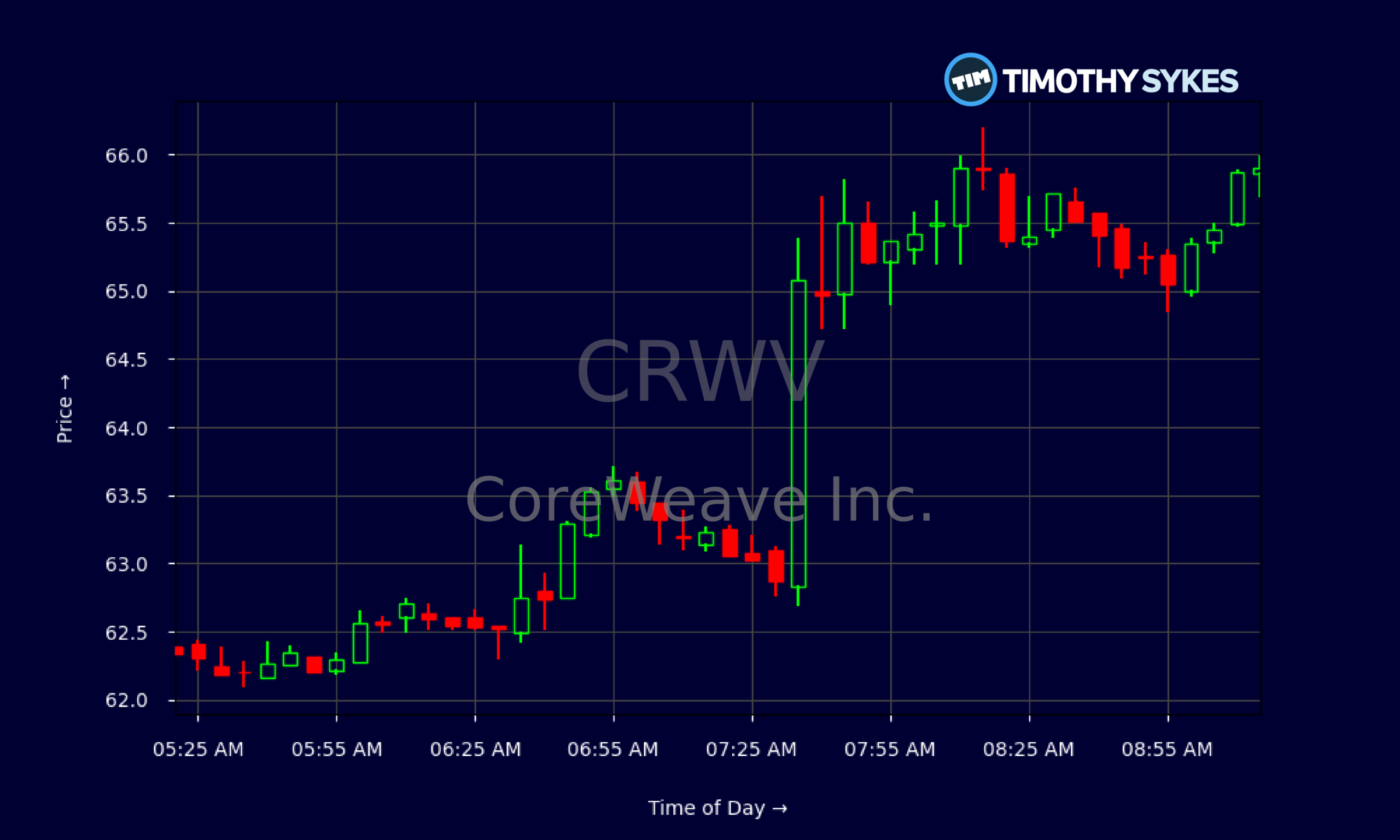
Live Update At 09:18:31 EDT: On Monday, October 19, 2026 CoreWeave Inc. stock [NASDAQ: CRWV] is trending up by 7.35%! Discover the key drivers behind this movement as well as our expert analysis in the detailed breakdown below.
Quick Financial Overview
CRWV has been trading like a rollercoaster. In late September, CoreWeave was closing near $90, with CRWV finishing 2026/09/24 around $90.13. Over the next few weeks, the stock slid hard, with recent daily closes near $61.39 on 2026/10/16. That is a steep drawdown in a short window, and exactly the type of volatility short‑term traders look for.
Intraday, CRWV is showing heavy two‑way action. Pre‑market prices oscillated in the low‑$60s, then stabilized in the mid‑$60s before the open, signaling active dip‑buying and fast profit‑taking. CoreWeave clearly remains on the radar of momentum traders.
On the fundamentals, CoreWeave generated about $5.13B in revenue, with a very high gross margin near 90%. That screams strong pricing power in its AI infrastructure business. But CRWV is not yet translating that into bottom‑line strength. Profit margins are negative, and free cash flow was roughly ‑$5.74B in the latest quarter, as CoreWeave pours cash into data centers and hardware.
More Breaking News
Leverage is heavy. Total debt to equity above 3x, a current ratio near 0.5, and significant long‑term obligations mean CRWV depends on constant funding. For traders, that balance between rapid growth and balance‑sheet stress explains why CRWV swings so violently on every new headline.
Why Traders Are Laser‑Focused On CRWV Right Now
CRWV sits in the crosshairs of nearly every major theme in today’s market: AI infrastructure, leverage, insider selling, and global expansion. That mix is creating explosive trading setups almost daily.
On the bullish side, CoreWeave just landed a major endorsement. Nvidia’s CEO described CoreWeave as financially stronger, with a falling cost of capital, and explicitly said Nvidia — which owns roughly 10% of CRWV — does not expect to provide financial support. For traders, that is a loud signal. If a core AI chip partner is relaxed about CoreWeave’s finances, some of the panic selling on debt headlines looks overstated.
CoreWeave also keeps stacking strategic deals. CRWV is teaming with AdaniConneX to build 240 MW of AI data center capacity in Navi Mumbai, expandable to 480 MW by around mid‑2028. That’s several billion dollars of planned spend and plants the CoreWeave flag in one of the fastest‑growing AI markets. When CRWV announced this India expansion, shares were modestly lower pre‑market, a hint that traders respect the opportunity but are worried about how the company will pay for such a massive build‑out.
On the tech side, CoreWeave and Akamai integrated Perplexity’s open‑sourced SPACE software into their clouds to defend against rogue AI agents. CRWV is trying to differentiate its AI cloud with security tools that matter to large customers. Near‑term revenue from SPACE is unclear, but it strengthens the story that CoreWeave is more than just raw compute.
At the same time, Nasdaq‑wide weakness in AI names and macro selling pressure have weighed on CRWV alongside Broadcom and other peers. Traders need to separate that sector drag from CoreWeave‑specific news when they study the chart.
Conclusion
For all the bullish headlines, CRWV’s tape still looks bruised. CoreWeave dropped more than 13% after reports that its three co‑founders sold roughly $3.3B of stock since the March 2025 IPO, including $2.4B in 2026 alone. Heavy insider selling like that usually hits sentiment hard. It feeds a simple question every short‑term trader asks: if the founders are cashing out, why should anyone else be loading up?
Debt worries add another layer. CoreWeave shares fell sharply on concerns about its ability to finance obligations, which matter when free cash flow is deeply negative and leverage is high. Yet ARK Innovation and ARK Next Generation Technology ETFs stepped in and bought additional CRWV on that weakness, showing some big‑name growth players are willing to lean into the volatility.
Meanwhile, CoreWeave aligned with other large issuers to object to having their shares listed for tokenized trading on OKXICE. That choice keeps CRWV in traditional market rails and signals a cautious stance toward experimental venues — not a big earnings driver, but one more data point for traders tracking governance behavior.
Put it all together and CoreWeave is a classic battleground name. CRWV offers huge AI growth potential through Nvidia ties, India expansion, and new security tools, but it’s chained to heavy capex, negative earnings, and headline‑driven swings. As Tim Sykes likes to say, “Volatile stocks are the best teachers — if you respect the risk and cut losses fast.” As millionaire penny stock trader and teacher Tim Sykes, says, “Consistency is key in trading; don’t let emotions dictate your trades.”. For traders studying CRWV, the key is to ride the momentum, not marry the story. This article is for educational and research purposes only and is not investment advice.
This is stock news, not investment advice. Timothy Sykes News delivers real-time stock market news focused on key catalysts driving short-term price movements. Our content is tailored for active traders and investors seeking to capitalize on rapid price fluctuations, particularly in volatile sectors like penny stocks. Readers come to us for detailed coverage on earnings reports, mergers, FDA approvals, new contracts, and unusual trading volumes that can trigger significant short-term price action. Some users utilize our news to explain sudden stock movements, while others rely on it for diligent research into potential investment opportunities.
Dive deeper into the world of trading with Timothy Sykes, renowned for his expertise in penny stocks. Explore his top picks and discover the strategies that have propelled him to success with these articles:
- Penny Stocks Trading Guide
- Best Penny Stocks Under $1 to Buy Today
- Top 8 Penny Stocks to Watch on Robinhood
Once you’ve got some stocks on watch, elevate your trading game with StocksToTrade the ultimate platform for traders. With specialized tools for swing and day trading, StocksToTrade will guide you through the market’s twists and turns.
Dig into StocksToTrade’s watchlists here:





Leave a reply