

BIO-key International Inc. stocks have been trading up by 12.06 percent following news of expanded biometric security partnerships.
Key Takeaways
- Strategic partnership with Dubai-based Al Majlis Group positions BKYI’s biometric IAM platform across priority government and private accounts in the UAE and Saudi Arabia.
- New Middle East government wins push BKYI to seven Gulf-region customers in six months, supported by integration partner VaporVM.
- A fresh government security agency contract sent BKYI shares up as much as 191% premarket and 78% intraday on heavy trading volume.
- FIDO Alliance certification for Passkey:YOU validates BKYI’s passwordless, phishing-resistant technology for enterprise and AI-governance use cases.
- Appointment of cybersecurity veteran Stephen Morrow to lead PortalGuard signals BKYI’s push to scale its Identity-Bound Biometrics platform.
Live Update At 08:32:38 EDT: On Friday, October 23, 2026 BIO-key International Inc. stock [NASDAQ: BKYI] is trending up by 12.06%! Discover the key drivers behind this movement as well as our expert analysis in the detailed breakdown below.
Quick Financial Overview
BKYI is trading like a classic high-volatility small-cap story stock. Over the recent sessions, BIO-key International Inc. ran from $1.68 on 2026/09/28 to intraday highs above $4.30 on 2026/10/13 before pulling back into the mid-$2s. That’s a huge range in a short window, and traders need to respect the risk.
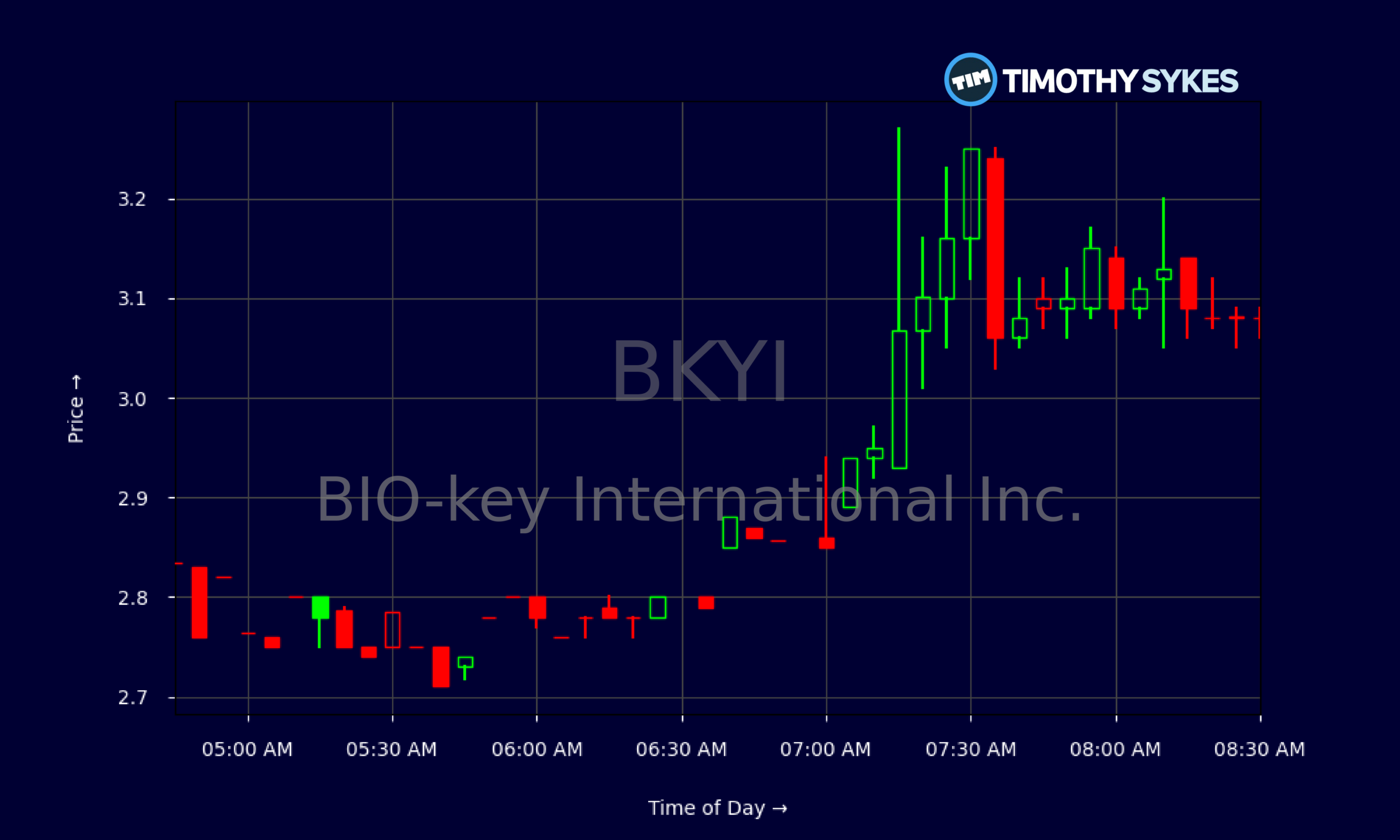
The daily chart shows BKYI squeezing hard on news days, then consolidating as momentum cools. Intraday, the 5‑minute tape around the latest move shows a premarket grind from roughly $2.80 into the low $3s, with multiple tests of $3.20–$3.25. That tells you momentum traders are active, but overhead supply is also real.
More Breaking News
Fundamentally, BKYI remains an early-stage, loss-making security name. Revenue over the last year was about $5.94M, but profitability metrics are deeply negative, with EBIT margin near ‑89% and return on equity below ‑100%. On the flip side, BIO-key International Inc. trades at a low price-to-sales multiple around 0.42 and a price-to-book near 0.65, which often attracts deep-value and speculative traders. The balance sheet is relatively light on debt, with total debt-to-equity at 0.2 and a current ratio of 1.3, giving BKYI some breathing room as it chases growth.
Why Traders Are Watching BKYI Right Now
The story around BKYI isn’t slow and steady. It’s acceleration. Over the last six months, BIO-key International Inc. has quietly stacked up seven new Gulf-region government customers for its PortalGuard IAM and biometric authentication suite, including a new Middle East government security agency and another undisclosed institution. For a micro-cap cybersecurity name, that pace of government adoption is meaningful.
One of the biggest catalysts for BKYI was the announcement of a new Middle East government security agency customer. That single headline was enough to send BKYI shares up as much as 191% in premarket trading and still up 78% intraday on heavy volume later that day. When a stock reacts like that, momentum traders notice. These are the types of moves where breakout buyers, short squeezes, and late chasers all collide.
Layered on top of the contracts, BKYI locked in a strategic partnership with Dubai-based Al Majlis Group to push its biometric identity and IAM platform across the UAE and Saudi Arabia, initially targeting select priority accounts. That’s textbook channel expansion into high-spending cybersecurity markets. Traders watching BKYI know that one strong regional partner can open doors to multiple government ministries, banks, and large enterprises.
BKYI also strengthened its technology story. The company’s Passkey:YOU authenticator received full FIDO Alliance certification, signaling that its passwordless, phishing-resistant solution meets global standards. That supports BIO-key International Inc.’s pitch in competitive tenders and aligns neatly with rising concerns over AI-driven identity fraud. Add in the appointment of cybersecurity veteran Stephen Morrow to lead PortalGuard, and traders see a management team trying to scale while the window is open.
Conclusion
BKYI is sitting at the intersection of three forces traders love to track: hot news flow, explosive charts, and a clear sector theme. BIO-key International Inc. is leaning into passwordless, biometric security just as governments and large enterprises in the Gulf accelerate digital transformation and lock down identity risk. The Al Majlis partnership, the run of new Middle East government wins, and FIDO certification for Passkey:YOU all feed a bullish narrative that traders are clearly willing to chase in the short term.
At the same time, the financials remind everyone this is still a high-risk, early-stage story. BKYI carries negative earnings, heavy losses relative to its revenue base, and relies on continued contract wins and tight execution to justify its recent spikes. That’s why veteran traders in the Tim Sykes community focus on price action, liquidity, and risk management rather than falling in love with any one ticker. As millionaire penny stock trader and teacher Tim Sykes, says, “Embrace the journey, the ups and downs; each mistake is a lesson to improve your strategy.”—a reminder that every trade in names like BKYI should be treated as part of an ongoing learning process, not a one-time bet.
As Tim Sykes likes to hammer home, “Discipline and meticulous goal-setting are the key to success.” For traders watching BKYI, that means treating every spike as a trading opportunity, not a guarantee, using clear plans, hard stops, and strict rules. This article is for educational and research purposes only, but the recent action in BIO-key International Inc. offers a live case study in how news catalysts, sector themes, and momentum trading can collide on a small, thinly traded name.
This is stock news, not investment advice. Timothy Sykes News delivers real-time stock market news focused on key catalysts driving short-term price movements. Our content is tailored for active traders and investors seeking to capitalize on rapid price fluctuations, particularly in volatile sectors like penny stocks. Readers come to us for detailed coverage on earnings reports, mergers, FDA approvals, new contracts, and unusual trading volumes that can trigger significant short-term price action. Some users utilize our news to explain sudden stock movements, while others rely on it for diligent research into potential investment opportunities.
Dive deeper into the world of trading with Timothy Sykes, renowned for his expertise in penny stocks. Explore his top picks and discover the strategies that have propelled him to success with these articles:
- Penny Stocks Trading Guide
- Best Penny Stocks Under $1 to Buy Today
- Top 8 Penny Stocks to Watch on Robinhood
Once you’ve got some stocks on watch, elevate your trading game with StocksToTrade the ultimate platform for traders. With specialized tools for swing and day trading, StocksToTrade will guide you through the market’s twists and turns.
Dig into StocksToTrade’s watchlists here:





Leave a reply