

AstraZeneca PLC stocks have been trading up by 6.85 percent on optimism driven by strong late-stage drug trial results.
What Traders Need To Know
- Phase III DeLLphi-305 data showed IMFINZI plus Amgen’s tarlatamab cut the risk of death by 58% versus IMFINZI alone in extensive-stage small cell lung cancer, with median survival reaching a record 21.1 months.
- The Phase III VOLGA trial found perioperative IMFINZI plus enfortumab vedotin significantly improved survival outcomes in muscle-invasive bladder cancer and secured FDA Priority Review.
- AstraZeneca’s CLDN18.2-targeting ADC Sone-Ve cut the risk of death by 42–53% versus standard therapies in advanced gastric/GEJ cancers, potentially covering up to about 60% of these patients.
- The Phase III SAFFRON trial showed TAGRISSO plus savolitinib outperformed chemotherapy in MET-driven, EGFR-mutated NSCLC after TAGRISSO progression, and a US NDA is already filed.
- Q3 results topped expectations with core EPS at $2.79 and revenue at $16.21B, supported by 7% revenue growth, 14% EPS growth, and a wave of late-stage oncology successes.
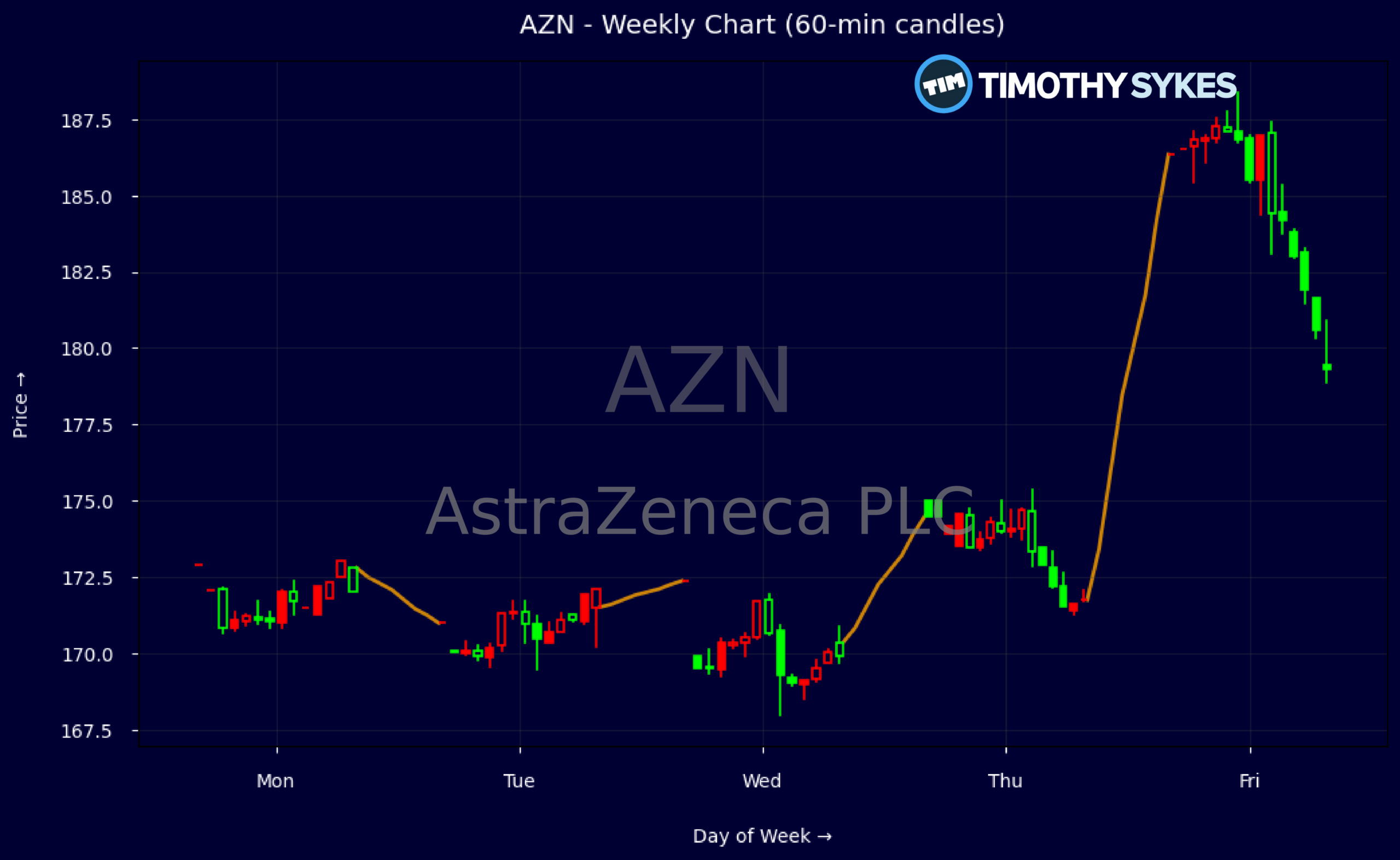
Weekly Update Oct 26 – Oct 30, 2026: On Sunday, November 01, 2026 AstraZeneca PLC stock [NYSE: AZN] is trending up by 6.85%! Discover the key drivers behind this movement as well as our expert analysis in the detailed breakdown below.
Healthcare industry expert:
Analyst sentiment – positive
AstraZeneca holds a top-tier global pharma position with £58.7B in revenue and robust high-value mix, as evidenced by an 81.9% gross margin and EBIT margin above 23%. Revenue CAGR of ~11% over three years and >30% over five underscores durable growth, while ROE near 22% and ROIC ~15–16% place returns well above the healthcare large-cap median. Leverage is moderate (total debt/equity 0.64; interest cover 11.9x), though sub-1.0 liquidity ratios warrant monitoring. Valuation at ~24x earnings and 4.1x sales embeds strong growth but remains reasonable versus premium oncology peers.
Technically, the weekly tape shows a clear short-term uptrend: closes have climbed from ~171 to ~186 over five sessions, with successive higher highs and higher lows. The sharp move from 174.99 to 186.35 suggests a breakout leg, likely supported by elevated volume around the Q3 beat and oncology data. Dominant trend is bullish above the 174–176 breakout zone, which now serves as key support. A concrete actionable level: buy pullbacks toward 178–180 with a stop below 174 and initial profit-taking into the 192–195 area.
Fundamentally and from news flow, AstraZeneca is outperforming sector benchmarks: multiple positive Phase III readouts (DeLLphi-305, VOLGA, SAFFRON, CLARITY-Gastric01) and Enhertu/ZEGFROVY approvals extend leadership in IO, ADCs, and targeted oncology versus large-cap pharma peers. Q3 revenue and EPS beats, plus reaffirmed double-digit EPS growth guidance, support a premium multiple. Versus global pharma P/E averages in the high-teens, AZN’s pipeline justifies upside; I see a 12-month fair value zone of 195–205, with strong support near 174 and resistance around 205.
More Breaking News
Quick Financial Overview
AstraZeneca PLC (AZN) is pairing strong clinical news flow with solid fundamentals. Q3 revenue of $16.21B and 7% year-on-year growth show that pipeline wins are feeding into the top line. Core EPS grew 14% to $2.79, which, together with a profit margin above 17% and EBIT margin of 23.3%, signals healthy operating leverage. Gross margin near 81.9% underlines the high-value nature of AZN’s oncology and specialty portfolio.
On the balance sheet, a total debt-to-equity ratio of 0.64 and interest coverage of 11.9 suggest manageable leverage, but a current ratio of 0.9 and quick ratio of 0.6 mean liquidity is tight rather than flush. Return on equity above 21% and ROIC around the mid-teens point to efficient capital use. Valuation is not cheap: a P/E near 24 and price-to-sales about 4.1 reflect the market already pricing in a premium growth story.
Price action confirms that traders are buying the oncology narrative. AZN’s weekly chart shows a sharp move from the low $170s to above $186, with the biggest jump coming after the Q3 beat, consistent with headlines of a 6–7% surge on the day. Intraday, the 5‑minute candle around the earnings move shows a spike from roughly $183.59 to a $188.39 high before settling near $186.65, classic momentum behavior on strong news. For now, the $185–$187 zone looks like the new battleground where short-term bulls and profit-takers will test each other.
Conclusion
This is stock news, not investment advice. Timothy Sykes News delivers real-time stock market news focused on key catalysts driving short-term price movements. Our content is tailored for active traders and investors seeking to capitalize on rapid price fluctuations, particularly in volatile sectors like penny stocks. Readers come to us for detailed coverage on earnings reports, mergers, FDA approvals, new contracts, and unusual trading volumes that can trigger significant short-term price action. Some users utilize our news to explain sudden stock movements, while others rely on it for diligent research into potential investment opportunities.
Dive deeper into the world of trading with Timothy Sykes, renowned for his expertise in penny stocks. Explore his top picks and discover the strategies that have propelled him to success with these articles:
- Penny Stocks Trading Guide
- Best Penny Stocks Under $1 to Buy Today
- Top 8 Penny Stocks to Watch on Robinhood
Once you’ve got some stocks on watch, elevate your trading game with StocksToTrade the ultimate platform for traders. With specialized tools for swing and day trading, StocksToTrade will guide you through the market’s twists and turns.
Dig into StocksToTrade’s watchlists here:





Leave a reply