
Tempus AI Inc. stocks have been trading up by 10.52 percent amid heightened optimism over its AI-driven healthcare advances.
Key Takeaways
- Multi‑year Bristol Myers Squibb deal makes the pharma giant one of Tempus AI’s largest licensors of de‑identified oncology data through 2031, anchored on the Lens AI platform.
- New five‑year, $55M Pathos agreement pushes Tempus AI into neurology with a large longitudinal dataset and a three‑party collaboration with Bristol Myers Squibb.
- Expanded Moderna and Merck collaboration locks TEM deeper into individualized cancer therapy workflows via next‑generation sequencing and sample logistics.
- Despite bullish partnerships, TEM dipped about 2.9% in pre‑market trading after the Moderna–Merck news, flagging execution and profitability worries.
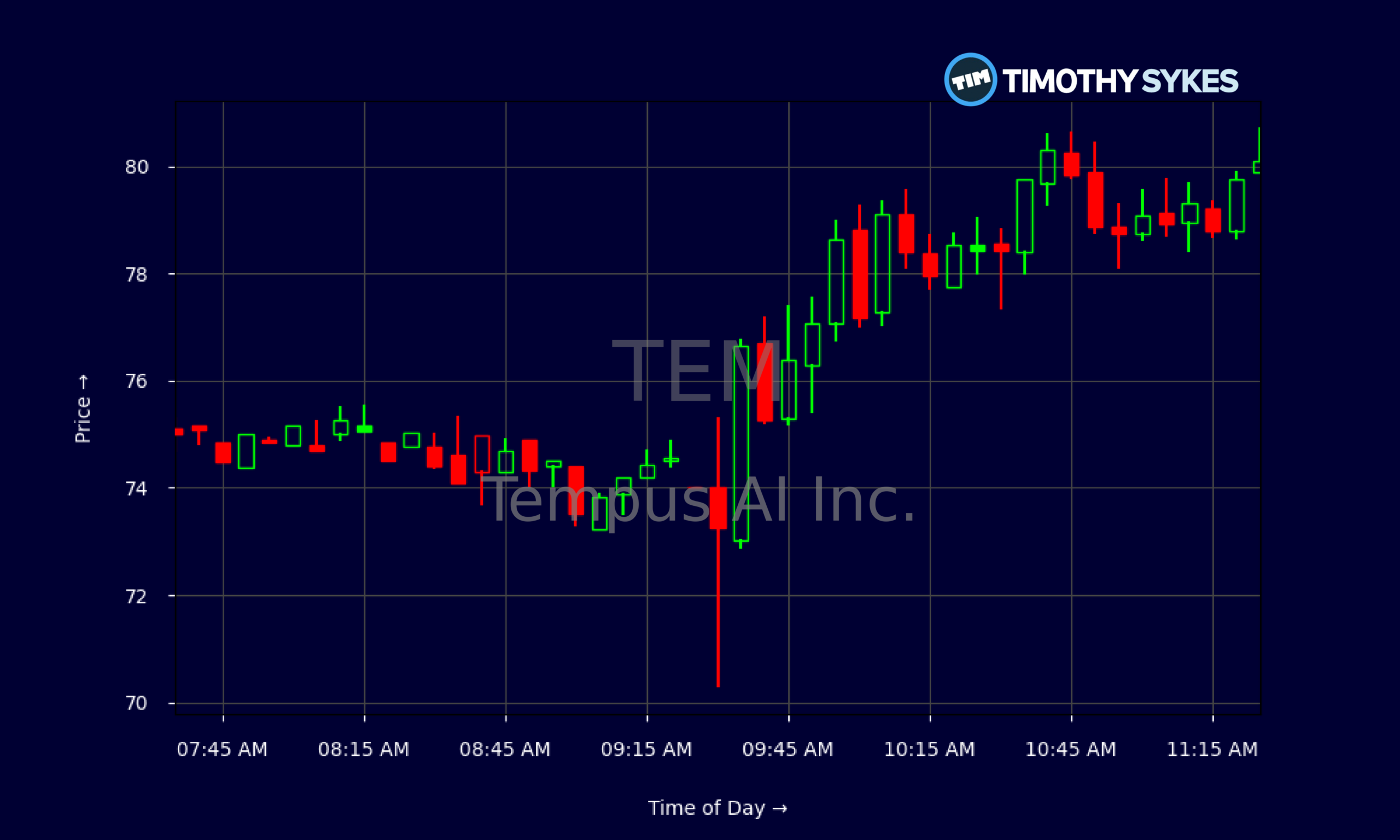
Live Update At 11:32:04 EST: On Monday, November 02, 2026 Tempus AI Inc. stock [NASDAQ: TEM] is trending up by 10.52%! Discover the key drivers behind this movement as well as our expert analysis in the detailed breakdown below.
Quick Financial Overview
TEM has been trading like a textbook momentum name. Over the last several sessions, Tempus AI Inc. climbed from the mid‑$60s to close near $79.95, a sharp bounce from the 2026/10/26 low around $64.03. That is a powerful grind higher, with higher lows stacking from 2026/10/20 onward, telling traders that dip buyers remain in control.
Intraday, TEM shows strong liquidity and wide intraday ranges. On the latest session, shares flushed at the open toward $70.30, then ripped to $80.70 before settling just under $80. For active traders, that $10 intraday range is gold — it offers clear levels to trade against and enough volatility for both breakouts and failed‑follow‑through setups.
More Breaking News
Under the hood, Tempus AI is still a growth story, not a profitability machine. Revenue sits near $1.27B, with a strong 73.5% gross margin but negative operating margins and free cash flow. TEM is priced like a high‑expectation platform play at roughly 9x sales and a rich price‑to‑book ratio. The balance sheet, however, shows solid liquidity with a current ratio around 3.3, giving Tempus AI some runway to keep funding growth while traders focus on execution against its expanding contract base.
Why Traders Are Watching Tempus AI Now
TEM is back in focus because Tempus AI just stacked several heavyweight pharma deals in rapid succession. The headline move is the multi‑year agreement with Bristol Myers Squibb that runs through 2031. BMS will license Tempus AI’s multimodal oncology data and tap its GPU‑enabled Lens AI platform to speed up drug discovery and clinical development. For traders, the key words are “through 2031” and “one of the largest licensors.” That screams visibility and scale.
This is not a one‑off contract. It deepens an existing relationship and positions Tempus AI Inc. as core infrastructure in BMS’s oncology engine. When a top‑tier pharma commits to that kind of long‑dated data licensing, it sends a strong signal that TEM’s datasets and AI stack have real staying power.
At the same time, Tempus AI is using its oncology backbone to break into neurology. The five‑year, $55M Pathos deal pays TEM to curate a de‑identified longitudinal dataset in neurological conditions, including hundreds of thousands of patients. Pathos will run the data through its Foundry AI platform for Alzheimer’s and other neurological drug development, with Bristol Myers Squibb again in the mix as part of a three‑party collaboration. Traders should read that as proof that the Tempus AI model is portable across disease areas.
On top of that, TEM expanded its multi‑year collaboration with Moderna and Merck around intismeran autogene, an individualized neoantigen therapy paired with KEYTRUDA. Tempus AI will manage tumor and blood sample logistics and provide next‑generation sequencing for design and manufacturing. The stock traded about 2.9% lower pre‑market after that headline, likely on near‑term cost and execution concerns, but the strategic setup ties TEM directly to a potential new wave of precision oncology products.
Conclusion
Put all this together and TEM is shaping up as a pure‑play bet on AI‑driven precision medicine data and services. Tempus AI is locking in long‑term, contracted revenue with Bristol Myers Squibb through 2031, pushing into neurology with a $55M Pathos agreement, and embedding itself deeper with Moderna and Merck on cutting‑edge individualized cancer therapies. On the chart, Tempus AI Inc. is acting like a momentum leader, with strong bounces from every pullback and big intraday swings that active traders hunt for.
The flip side is clear. TEM is still losing money at the operating line, running negative free cash flow, and carrying meaningful leverage. The market’s mild selloff after the Moderna–Merck expansion shows that traders are watching profitability and execution, not just headline partnerships. Any stumble in ramping these contracts, or delays in trials like intismeran autogene, can hit sentiment fast.
For disciplined traders, the opportunity is in the volatility and the catalysts. TEM now has a growing stack of multi‑year deals that can drive news flow, guidance updates, and sharp price moves. As millionaire penny stock trader and teacher Tim Sykes says, “You must adapt to the market; the market will not adapt to you.”. In the same spirit, he often reminds his students that “The market rewards prepared traders, not lazy dreamers.” With Tempus AI, that means knowing the key support and resistance levels, understanding how these Bristol Myers Squibb, Pathos, Moderna, and Merck deals affect the story, and being ready to react — not chase. This article is for educational and research purposes only and is not investment advice.
This is stock news, not investment advice. Timothy Sykes News delivers real-time stock market news focused on key catalysts driving short-term price movements. Our content is tailored for active traders and investors seeking to capitalize on rapid price fluctuations, particularly in volatile sectors like penny stocks. Readers come to us for detailed coverage on earnings reports, mergers, FDA approvals, new contracts, and unusual trading volumes that can trigger significant short-term price action. Some users utilize our news to explain sudden stock movements, while others rely on it for diligent research into potential investment opportunities.
Dive deeper into the world of trading with Timothy Sykes, renowned for his expertise in penny stocks. Explore his top picks and discover the strategies that have propelled him to success with these articles:
- Penny Stocks Trading Guide
- Best Penny Stocks Under $1 to Buy Today
- Top 8 Penny Stocks to Watch on Robinhood
Once you’ve got some stocks on watch, elevate your trading game with StocksToTrade the ultimate platform for traders. With specialized tools for swing and day trading, StocksToTrade will guide you through the market’s twists and turns.
Dig into StocksToTrade’s watchlists here:





Leave a reply