

AGNC Investment Corp. stocks have been trading up by 4.4 percent amid upbeat mortgage REIT sector sentiment and rate-cut hopes.
Key Takeaways For AGNC Traders
- Q3 economic return on tangible common equity was -12.7%, as a $1.45 drop in tangible book value per share outweighed $0.36 in dividends.
- Despite book value pressure, AGNC produced $0.37 in net spread and dollar roll income per share, running 7.9x at‑risk leverage with $6.3B of liquidity.
- Q3 non‑GAAP EPS of $0.37 matched estimates and improved from $0.35 a year earlier, with net interest income jumping to $402M versus a $380.6M forecast.
- AGNC posted Q3 revenue of $1.20B, beating the $1.06B FactSet consensus and reinforcing its earnings momentum.
- The company kept its $0.12 monthly dividend intact for October 2026, even as Piper Sandler cut its price target from $12 to $10 in a 7%+ mortgage‑rate environment.
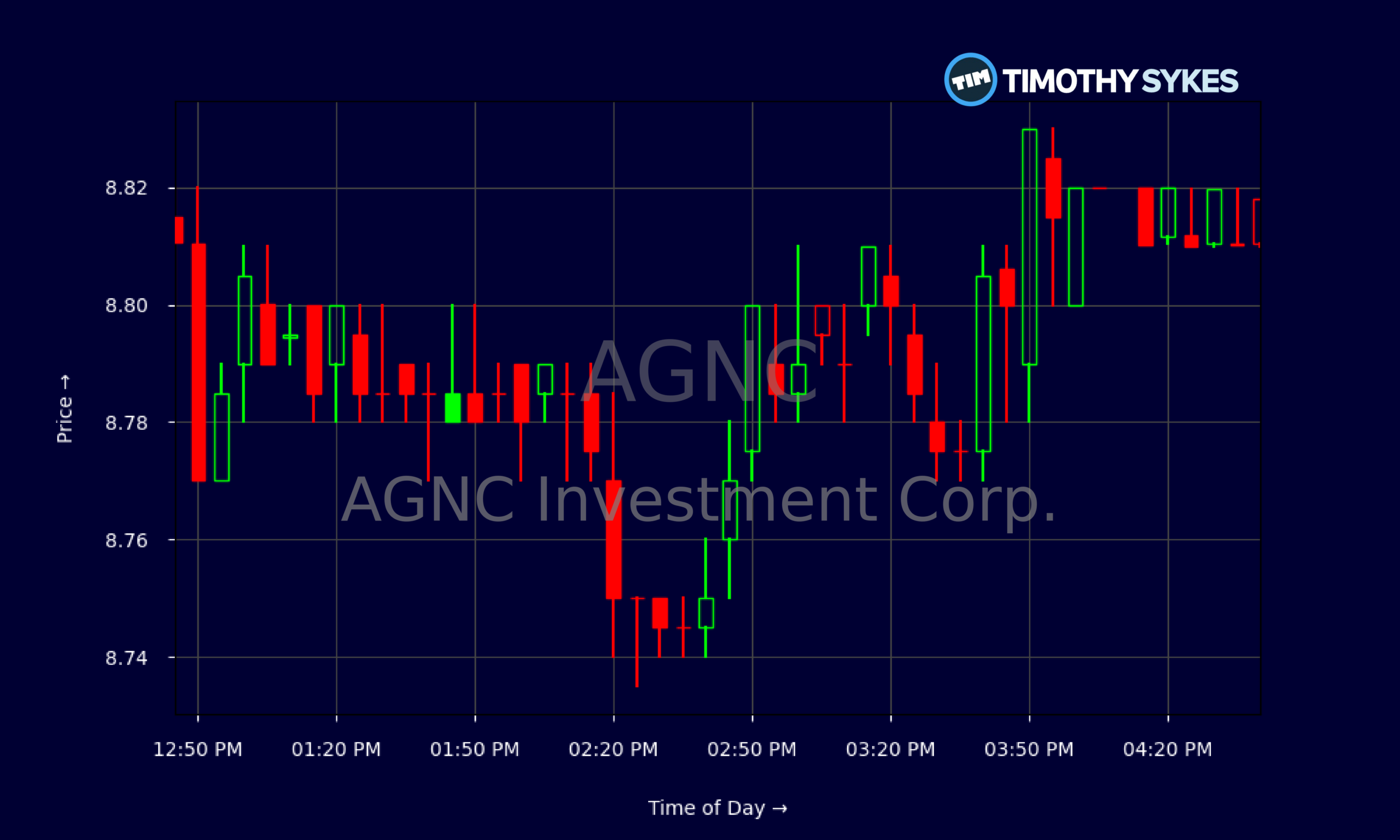
Live Update At 16:47:08 EDT: On Tuesday, October 20, 2026 AGNC Investment Corp. stock [NASDAQ: AGNC] is trending up by 4.4%! Discover the key drivers behind this movement as well as our expert analysis in the detailed breakdown below.
Quick Financial Overview
AGNC Investment Corp. has been trading in a tight but important range. Over the past few weeks, AGNC has faded from the $9.60 area down toward the mid‑$8s, with recent closes around $8.80. That drop means the stock now trades very close to its reported book value per share of $8.92, and just under its 1.02 price‑to‑tangible‑book ratio. For traders, AGNC is no longer a stretched premium story; it is behaving like a balance‑sheet tug‑of‑war.
On the income side, AGNC is showing strong numbers. Q3 revenue of $1.20B beat the $1.06B estimate, while non‑GAAP EPS of $0.37 came in flat versus consensus and ahead of last year’s $0.35. Net interest income of $402M topped expectations of $380.6M, signaling that AGNC is still milking the spread between its funding costs and agency MBS yields.
More Breaking News
The intraday tape tells the same story: controlled grind rather than wild momentum. AGNC spent most of the latest session between $8.75 and $8.83, with shallow dips quickly bought and rallies capped. For short‑term traders, that kind of range suggests coiled energy. The big question is whether the next catalyst pushes AGNC through $9 or dumps it back toward $8.50.
Why Traders Are Watching AGNC After Q3 Earnings
AGNC’s Q3 print gave traders exactly the kind of mixed setup that creates opportunity. On one hand, AGNC delivered what the Street wanted on earnings. Non‑GAAP EPS hit $0.37, up from $0.35 a year earlier, and in line with the lone analyst estimate. Revenue at $1.20B comfortably beat the $1.06B consensus. Net interest income of $402M cleared expectations of $380.6M. That tells traders AGNC’s core engine is still humming.
On the other hand, the balance sheet took a hit. AGNC reported a -12.7% economic return on tangible common equity as tangible book value per share dropped $1.45 in the quarter, only partly offset by $0.36 in dividends. For any mREIT, book value is the scoreboard. When it slides that hard, it signals serious stress from rate volatility and wider agency MBS spreads.
Yet AGNC is not trading like a wounded name on life support. The company generated $0.37 per share in net spread and dollar roll income and ran 7.9x at‑risk leverage, a level that is aggressive but typical for the model. Liquidity stands at $6.3B, equal to 57% of tangible equity, giving AGNC a sizable cushion to ride out further shocks.
Add in the fact that AGNC was just added to the S&P MidCap 400 and quickly raised $992M of common stock via its ATM program at a premium to tangible book. That is textbook mREIT playbook: use index‑driven trading liquidity and a stronger share price to fortify the balance sheet. Yes, there is dilution, but raising equity above book pushes per‑share book value higher than it would otherwise be.
Piper Sandler’s move fits this cross‑current narrative. The firm cut its AGNC price target from $12 to $10 as 7%+ mortgage rates and wide agency MBS spreads keep pressure on the whole sector, but it kept an Overweight rating and still views AGNC favorably versus peers. For traders, that says “macro pain, relative strength.”
Conclusion
AGNC Investment Corp. now sits at the intersection of strong income, damaged book value, and a brutal macro backdrop. The stock has slipped from the $9s into the high‑$8s, while the company still throws off a $0.12 monthly dividend — a $1.44 annualized rate that translates to a double‑digit yield at current prices. Management just reaffirmed that October 2026 payout, payable 2026/11/10 to shareholders of record on 2026/10/30, signaling confidence in cash flows despite the negative -12.7% economic return in Q3.
For active traders, AGNC is a classic “know what you’re playing” name. You are trading interest‑rate bets and spread volatility as much as you are trading the company. When the market believes rates have peaked and agency MBS spreads will tighten, AGNC often rips as book value stabilizes and leverage works in its favor. When rates spike, book value gets hit and the stock can unwind fast.
Right now, the chart shows a compressing range around tangible book, while the fundamentals show earnings power and dividend support fighting against rate‑driven book value erosion. That tension is exactly what short‑term traders look for: defined levels, strong catalysts, and clear risk.
Tim Sykes always says, “Trade like a sniper — wait for the best setups, then strike fast and keep your risk small.” As millionaire penny stock trader and teacher Tim Sykes, says, “Small gains add up over time; focus on building wealth gradually, not chasing jackpots.”. AGNC gives you the setup, but the discipline is on you. This coverage is for educational and research purposes only, so use it as a starting point to build your own trading plan, not as a shortcut.
This is stock news, not investment advice. Timothy Sykes News delivers real-time stock market news focused on key catalysts driving short-term price movements. Our content is tailored for active traders and investors seeking to capitalize on rapid price fluctuations, particularly in volatile sectors like penny stocks. Readers come to us for detailed coverage on earnings reports, mergers, FDA approvals, new contracts, and unusual trading volumes that can trigger significant short-term price action. Some users utilize our news to explain sudden stock movements, while others rely on it for diligent research into potential investment opportunities.
Dive deeper into the world of trading with Timothy Sykes, renowned for his expertise in penny stocks. Explore his top picks and discover the strategies that have propelled him to success with these articles:
- Penny Stocks Trading Guide
- Best Penny Stocks Under $1 to Buy Today
- Top 8 Penny Stocks to Watch on Robinhood
Once you’ve got some stocks on watch, elevate your trading game with StocksToTrade the ultimate platform for traders. With specialized tools for swing and day trading, StocksToTrade will guide you through the market’s twists and turns.
Dig into StocksToTrade’s watchlists here:




Leave a reply