
TeraWulf Inc. stocks have been trading up by 3.98 percent as bullish sentiment grows around its expanding bitcoin mining capacity.
Key Takeaways WULF Traders Need To Know
- Wall Street heavyweights Morgan Stanley and Cantor Fitzgerald both reaffirm bullish views on TeraWulf, with targets implying triple‑digit upside from current WULF levels.
- A new Kentucky Power deal doubles contracted capacity at the Muskie Data Campus to 1 GW and accelerates build‑out timing, anchoring WULF’s long‑term AI/HPC growth story.
- TD Cowen launched coverage on TeraWulf with a Buy rating, highlighting AI demand and a conservative 9% cap rate on WULF’s leased data center portfolio.
- As part of the Kentucky agreement, TeraWulf will fund $100M in winter bill credits and help finance a 760‑MW plant, trading near‑term cash for strategic power security.
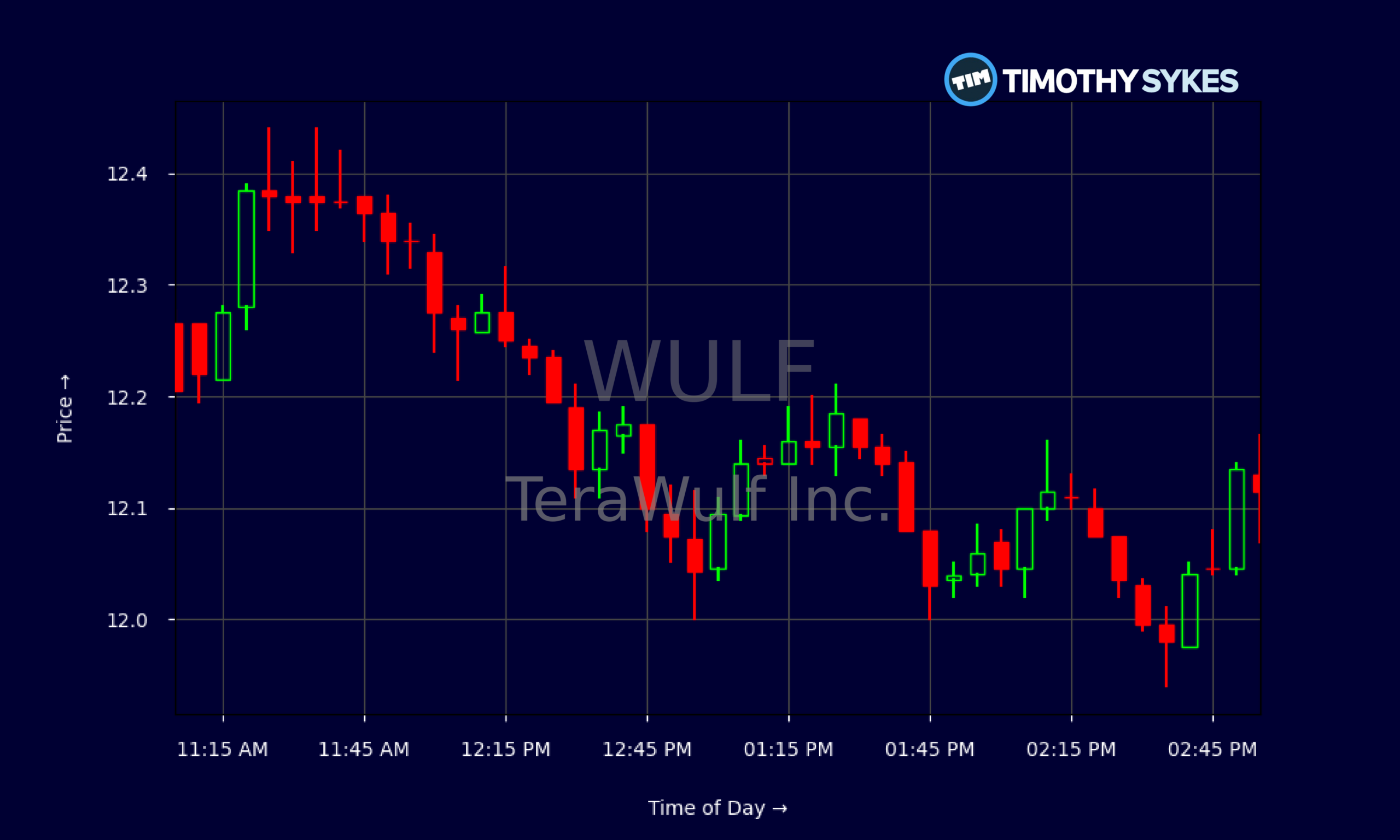
Live Update At 15:02:19 EDT: On Monday, October 19, 2026 TeraWulf Inc. stock [NASDAQ: WULF] is trending up by 3.98%! Discover the key drivers behind this movement as well as our expert analysis in the detailed breakdown below.
Quick Financial Overview
WULF has been on a wild ride. In late September, TeraWulf traded near $16. By 2026/10/16, it closed at $11.68, and most recently bounced to $12.145. That is a sharp drawdown followed by a choppy base. For short‑term traders, that kind of volatility is opportunity, but it also screams risk.
Intraday action shows WULF grinding in a tight band between roughly $11.90 and $12.40, with plenty of fake‑out moves both ways. This looks like consolidation after a heavy fade, not yet a clean trend reversal. When a stock like TeraWulf stops making fresh lows but cannot reclaim prior resistance around $13–$14, it often sets up for range trades and news‑driven spikes.
More Breaking News
Under the hood, TeraWulf is still a heavy cash burner. Quarterly revenue is about $44.77M, but net loss runs around $939.9M. Margins are deep in the red and free cash flow is roughly -$992.3M for the period. At the same time, WULF’s gross margin near 84% shows the core power‑to‑compute model has operating leverage if scaled correctly. Low debt‑to‑equity near 0.16 helps, but a high price‑to‑sales ratio near 41.6 means traders are paying up for future AI growth, not today’s earnings.
Why Traders Are Watching WULF Right Now
This is where the story gets interesting. While the WULF chart has bled from the mid‑teens into the low‑$12s, Wall Street has turned more vocal, not less. Morgan Stanley reiterated its Overweight rating on TeraWulf and lifted its target to $65, talking about nearly 392% upside from current levels. That is not a small tweak. It is a statement that the recent pullback does not match the contract value and growth pipeline WULF has lined up.
Cantor Fitzgerald added fuel to that fire. Even after cutting its TeraWulf target from $37 to $30, it still calls WULF a “generational buy,” pointing to 100%‑plus upside once AI funding fears and data‑center headwinds ease. For momentum traders, that kind of language matters. Not because analysts are always right, but because when several big desks point in the same direction, they can help reset sentiment and attract fresh trading flows.
On the ground, the Muskie Data Campus may be the real driver. WULF’s amended agreement with Kentucky Power doubles contracted power from 500 MW to 1 GW and pulls the second 500 MW phase into 2029. Over time, that site could scale toward 2 GW, making it a major AI and high‑performance computing hub. TeraWulf is even agreeing to fund $100M in winter bill credits and shoulder estimated financing costs for Kentucky Power’s planned 760‑MW combined‑cycle plant. Traders should read that as WULF paying upfront to lock in long‑term, large‑scale, politically palatable power — the lifeblood of AI data centers.
TD Cowen’s new Buy rating and $21 target rounds out the picture, arguing that a 9% cap rate on WULF’s leased portfolio is too conservative given Google‑backed Fluidstack support. Put together, these calls paint TeraWulf as a high‑risk, high‑potential AI infrastructure name, not just another leftover bitcoin miner.
Conclusion
For active traders, WULF now sits at the crossroads of narrative and numbers. The numbers say TeraWulf is early‑stage, unprofitable, and burning close to $1B in free cash flow while pouring more than $1.08B into property and equipment. Working capital is negative and liquidity tight, with a current ratio under 1. This is not a sleepy utility. It is a levered bet that massive AI and HPC demand will fill those data halls fast enough to justify premium valuations.
The narrative, however, is exactly what momentum traders hunt. WULF has multi‑gigawatt power lined up in Kentucky, a clear pivot toward AI‑driven digital infrastructure, and a lineup of bullish calls from Morgan Stanley, Cantor Fitzgerald, and TD Cowen. A scheduled Q3 2026 earnings call gives TeraWulf another stage to lay out timelines, contracts, and utilization — all key catalysts for future gap‑ups or gap‑downs.
In Tim Sykes’ world, the rules are simple: “Trade the ticker, not the story.” As millionaire penny stock trader and teacher Tim Sykes says, “It’s better to go home at zero than to go home in the red.”. For WULF, that means respecting the downtrend, watching volume, and treating every analyst note and Muskie campus update as a potential catalyst — not a guarantee. TeraWulf may offer big upside swings, but disciplined traders will remember the core playbook: study the chart, plan the trade, and cut losses fast when the story and the price action stop lining up.
This is stock news, not investment advice. Timothy Sykes News delivers real-time stock market news focused on key catalysts driving short-term price movements. Our content is tailored for active traders and investors seeking to capitalize on rapid price fluctuations, particularly in volatile sectors like penny stocks. Readers come to us for detailed coverage on earnings reports, mergers, FDA approvals, new contracts, and unusual trading volumes that can trigger significant short-term price action. Some users utilize our news to explain sudden stock movements, while others rely on it for diligent research into potential investment opportunities.
Dive deeper into the world of trading with Timothy Sykes, renowned for his expertise in penny stocks. Explore his top picks and discover the strategies that have propelled him to success with these articles:
- Penny Stocks Trading Guide
- Best Penny Stocks Under $1 to Buy Today
- Top 8 Penny Stocks to Watch on Robinhood
Once you’ve got some stocks on watch, elevate your trading game with StocksToTrade the ultimate platform for traders. With specialized tools for swing and day trading, StocksToTrade will guide you through the market’s twists and turns.
Dig into StocksToTrade’s watchlists here:





Leave a reply