
Vicor Corporation stocks have been trading up by 8.87 percent amid heightened optimism around its power solutions for AI infrastructure.
Key Takeaways
- Q3 2026 revenue growth guidance for Vicor jumped from roughly 10% to more than 30% in one quarter, powered by royalties from its first non‑exclusive Vertical Power Delivery (VPD) license.
- Wall Street is leaning bullish on VICR, with Roth keeping a $375 target and Needham lifting its target to $350 on the back of the upgraded VPD royalty outlook.
- VICR has traded like a rocket and a falling knife, with double‑digit percentage spikes followed by a 13.3% single‑day drop absent a clear new fundamental headline.
- A U.S. International Trade Commission investigation into alleged VPD patent infringement could either expand Vicor’s royalty base or introduce legal and timing risk to the story.
- Early October insider sales by CEO Patrizio Vinciarelli and another senior executive added a note of caution, even as Vinciarelli still controls about 8.5 million Vicor shares.
Live Update At 16:47:03 EDT: On Tuesday, October 20, 2026 Vicor Corporation stock [NASDAQ: VICR] is trending up by 8.87%! Discover the key drivers behind this movement as well as our expert analysis in the detailed breakdown below.
Quick Financial Overview
VICR has been trading like a classic momentum name, but the underlying numbers show why traders are glued to this tape. Vicor generated $143.4M in quarterly revenue and $49.8M in net income, implying strong profitability for a mid‑cap hardware and IP name. Gross margin sits at 56.6%, with EBIT margin at 17.6%, giving the company plenty of operating leverage as royalty dollars stack on top of its core module sales.
On the balance sheet, Vicor is almost debt‑free. Total debt to equity is around 0.01, with a current ratio of 13.3 and a quick ratio of 10.5. That tells traders the company is not under financial stress; it is playing offense, not survival. Returns on equity north of 20% and solid return on assets back up the quality narrative.
More Breaking News
The flip side is valuation. VICR trades at a rich price/earnings ratio above 80 and price/sales near 26. Those numbers scream “growth expectations.” For active traders, that means any disappointment on VPD royalties or AI demand can trigger sharp downside, while positive guidance tweaks can keep fueling aggressive upside spikes.
Why Traders Are Watching VICR’s VPD Royalty Engine
The core of the VICR story right now is simple: Vertical Power Delivery royalties are changing the math. In late 2026/09, Vicor first raised its Q3 2026 guidance from nearly 10% sequential revenue growth to more than 20%, pointing directly at a new non‑exclusive VPD license. Days later, management pushed that guide again to more than 30% sequential growth as royalty expectations rose further.
For traders, that kind of back‑to‑back guidance hike is a clear signal. Vicor is not just selling power modules into high‑performance computing and AI servers anymore; it is monetizing its patent stack. The first non‑exclusive VPD deal with an AI OEM appears to include catch‑up payments, which helps explain the surge in near‑term revenue. The big question for VICR is how much of this royalty ramp is recurring versus one‑time.
Wall Street is noticing. Roth Capital reiterated a Buy on VICR with a $375 target, while Needham also reiterated Buy and raised its target to $350 after the second guidance boost. Both tie their optimism to the same VPD royalty driver that traders are trading around.
At the same time, Vicor is flexing its IP muscle. The U.S. International Trade Commission opened an investigation into VPD modules and systems that allegedly infringe a Vicor patent. Vicor is asking for a Limited Exclusion Order and cease‑and‑desist orders that could block imports of infringing systems and effectively force OEMs and hyperscalers to sign licenses—potentially at higher royalty rates as the case advances. That makes VICR a hybrid AI‑hardware and legal‑catalyst trade, where ITC headlines can move the stock as much as earnings.
Conclusion
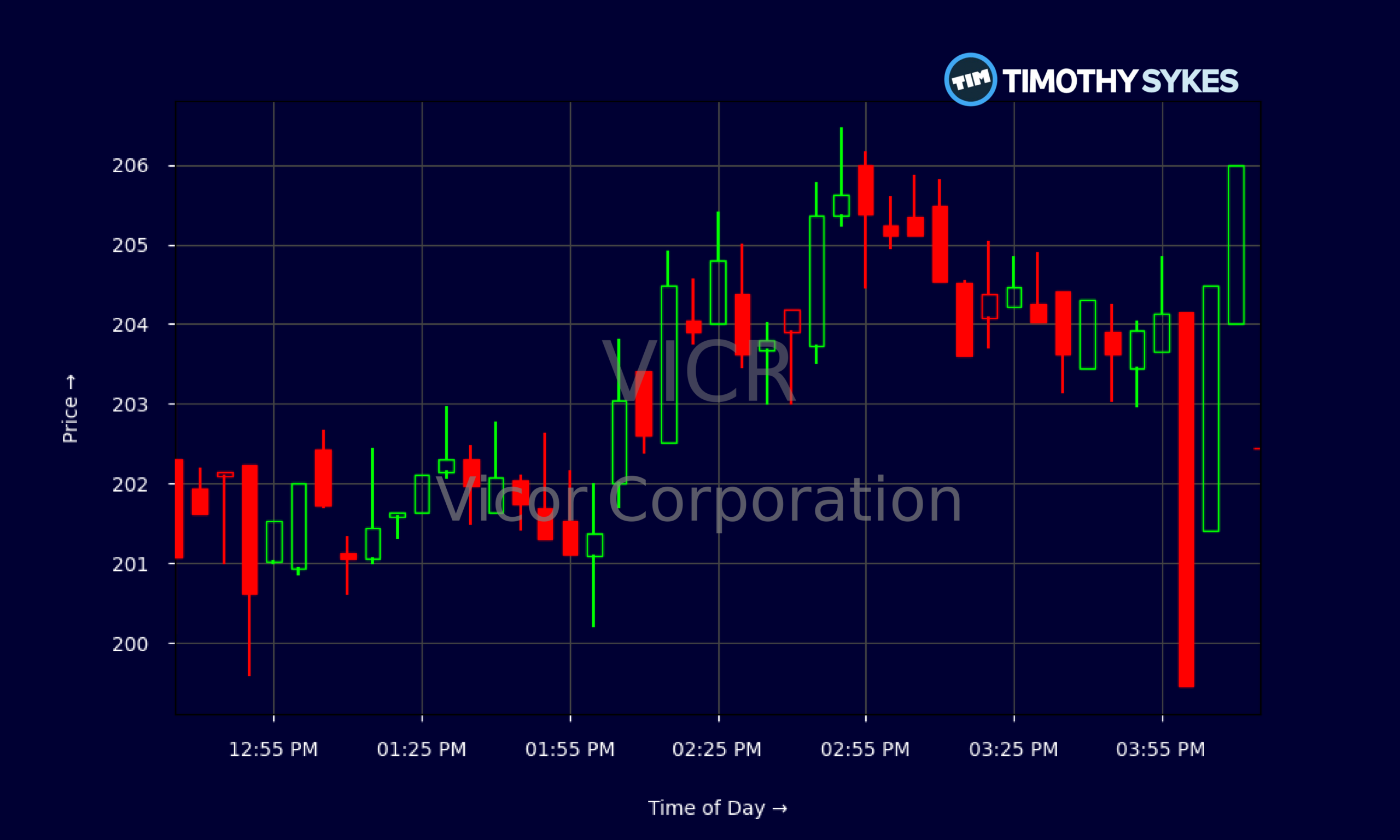
The tape shows exactly how emotional VICR trading has become. Around the VPD guidance hikes, Vicor shares ripped higher, with multiple sessions logging 10–14% intraday gains and a move to roughly $319.77. Then came the air pocket: on 2026/10/15, VICR dropped 13.3% to about $212.76 in a single session, without a fresh fundamental shoe visibly dropping. The daily chart from the high $200s down into the low $200s looks like a rollercoaster, and the 5‑minute action around $200–$205 shows tight intraday battles between dip buyers and profit‑takers.
Layer on the insider activity. CEO Patrizio Vinciarelli sold 20,000 VICR shares for about $6.3M near $297.89, while another senior insider sold just over 3,000 shares for roughly $972,000. Vinciarelli still controls around 8.5 million shares, so this is far from an exit—but active traders do pay attention when leadership sells into strength.
The bigger narrative remains the same: Vicor is trying to turn its VPD patents into a high‑margin royalty stream, enforced through the ITC if needed. That supports the premium multiples but also raises the stakes around each legal and guidance update. As Tim Sykes likes to hammer home, “Volatility is opportunity, but only if you respect risk and cut losses quickly.” As millionaire penny stock trader and teacher Tim Sykes, says, “It’s better to go home at zero than to go home in the red.”. For VICR, the setup is tailor‑made for disciplined momentum trading—aggressive, data‑driven, and always ready for the next headline. This article is for educational and research purposes only and is not investment advice.
This is stock news, not investment advice. Timothy Sykes News delivers real-time stock market news focused on key catalysts driving short-term price movements. Our content is tailored for active traders and investors seeking to capitalize on rapid price fluctuations, particularly in volatile sectors like penny stocks. Readers come to us for detailed coverage on earnings reports, mergers, FDA approvals, new contracts, and unusual trading volumes that can trigger significant short-term price action. Some users utilize our news to explain sudden stock movements, while others rely on it for diligent research into potential investment opportunities.
Dive deeper into the world of trading with Timothy Sykes, renowned for his expertise in penny stocks. Explore his top picks and discover the strategies that have propelled him to success with these articles:
- Penny Stocks Trading Guide
- Best Penny Stocks Under $1 to Buy Today
- Top 8 Penny Stocks to Watch on Robinhood
Once you’ve got some stocks on watch, elevate your trading game with StocksToTrade the ultimate platform for traders. With specialized tools for swing and day trading, StocksToTrade will guide you through the market’s twists and turns.
Dig into StocksToTrade’s watchlists here:





Leave a reply