

Workday Inc. stocks have been trading up by 6.73 percent after strong earnings and upbeat AI-driven growth guidance.
Key Takeaways For WDAY Traders
- Q2 beat showed adjusted EPS of $2.75 on $2.65B revenue, with Workday AI driving over 25% of new ACV and powering more than 5,500 AI customers.
- Needham backs Workday with a Buy after Silver Lake deal headlines, pointing to potential takeover value of $240–$250 versus the recent spike to $206.45.
- Oppenheimer lifted its Workday target to $220, flagging strong agentic AI traction, stable demand, and progress toward FY27 profit goals.
- Management reaffirmed Workday’s FY27 capex plans and guided FY28 subscription growth near 11% with margin expansion, while refusing to discuss private equity interest.
- A fresh $4.0B Workday buyback adds technical support as traders navigate volatile AI and M&A speculation.
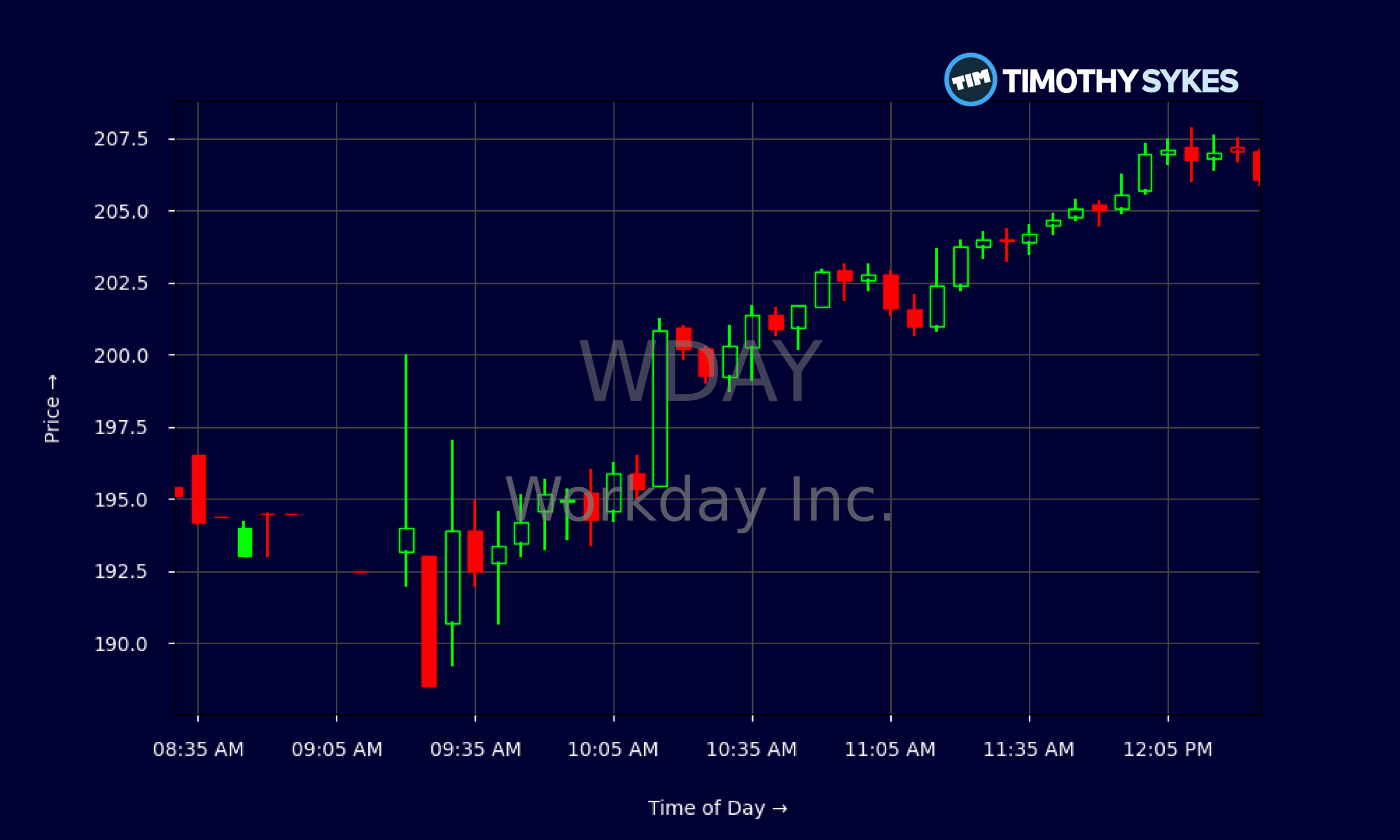
Live Update At 12:32:17 EDT: On Friday, August 28, 2026 Workday Inc. stock [NASDAQ: WDAY] is trending up by 6.73%! Discover the key drivers behind this movement as well as our expert analysis in the detailed breakdown below.
Quick Financial Overview
WDAY has turned into a fast-moving trading vehicle over the last few weeks. The daily chart shows the stock ripping from the mid‑$160s in early August to a close of $206.59 on 2026/08/28. That’s a powerful trend, driven first by Silver Lake buyout chatter and then by a clean Q2 beat.
Earnings-wise, Workday posted Q2 FY27 revenue of about $2.65B and adjusted EPS of $2.75 versus $2.61 expected. For a software name, those are solid beats. Under the hood, Workday is running at roughly $9.55B in annual revenue with fat 75.8% gross margins and a 17.5% EBITDA margin. Profitability is real, not story‑stock fluff.
More Breaking News
Valuation is rich. WDAY trades at roughly 4.8x sales and a P/E near 59, which prices in steady double‑digit growth and ongoing AI traction. The 5‑minute chart for the latest session shows a strong trend day: a gap up from around $190 to near $196 at the open, then a grind higher above $200 and a midday push over $207 before a slight fade. That intraday pattern tells traders dip‑buyers are still in control, but taking profits into spikes.
Why Traders Are Watching WDAY Now
This is exactly the kind of setup active traders love: real numbers, real catalysts, and real volatility. Workday just delivered a textbook catalyst on 2026/08/27, beating Q2 expectations with $2.75 adjusted EPS and $2.65B in revenue. What matters is why. Management says AI now drives more than 25% of new annual contract value, with over 5,500 customers using its AI agents. That’s not hype; that is usage.
At the same time, WDAY is the center of takeover speculation. Reports say private equity giant Silver Lake is in talks to acquire Workday. On that headline, the stock sprinted from roughly $175 to $206.45, an 18% jump. Needham stayed bullish with a Buy rating and placed potential deal value in the $240–$250 range. Baird also bumped its target to $215, baking in some takeover optionality.
But this is not a one‑way street. After a 26% rally, Deutsche Bank and BTIG stepped in with valuation‑based downgrades, even while Deutsche raised its price target to $220. Jefferies lifted its target to $205 but kept a Hold, openly questioning Workday’s next growth leg once the easy AI and cloud wins are behind it. A law firm investigation tied to the buyout chatter adds another wildcard, reminding traders that hot M&A storylines often attract legal and governance scrutiny.
Against that noise, the broader analyst backdrop stays constructive. Oppenheimer pushed its WDAY target up to $220, and Bank of America to $205, while Street consensus still sits lower in the $180s. Then Workday layered on a new $4.0B share repurchase program, signaling management thinks the stock is worth defending at these levels. For momentum and event‑driven traders, that combination—earnings strength, AI growth, deal rumors, buybacks, and mixed analyst takes—creates a rich, tradable tape.
Conclusion
For traders who live on catalysts, WDAY is offering a full menu right now. You have a clean Q2 beat, visible AI momentum, and clear guidance: Workday reaffirmed about $270M in FY27 capex, targeted FY28 subscription revenue growth around 11%, and pointed to at least a two‑point improvement in non‑GAAP operating margin next year. That tells the market the core business is strong even if Silver Lake walks away.
You also have serious capital return. The new $4.0B buyback sits on top of an already active repurchase pace, which showed up in the latest cash‑flow report with roughly $1.34B spent on stock in the quarter. That type of bid can matter when WDAY whipsaws on headlines about private equity talks or law firm investigations.
Still, the chart and valuation say this is no “set and forget” name. A near‑60 P/E and a big run from the $160s mean any disappointment—on AI growth, deal probability, or guidance—can hit fast. As Tim Sykes likes to remind traders, “the market doesn’t reward hope; it rewards preparation and discipline.” As millionaire penny stock trader and teacher Tim Sykes says, “The goal is not to win every trade but to protect your capital and keep moving forward.”. With WDAY, that means mapping your levels, knowing your catalysts, and being ready to cut losses quickly if the story shifts.
This breakdown is for educational and research purposes only, meant to help traders understand the moving parts around Workday right now—not to tell anyone what to do with their money.
This is stock news, not investment advice. Timothy Sykes News delivers real-time stock market news focused on key catalysts driving short-term price movements. Our content is tailored for active traders and investors seeking to capitalize on rapid price fluctuations, particularly in volatile sectors like penny stocks. Readers come to us for detailed coverage on earnings reports, mergers, FDA approvals, new contracts, and unusual trading volumes that can trigger significant short-term price action. Some users utilize our news to explain sudden stock movements, while others rely on it for diligent research into potential investment opportunities.
Dive deeper into the world of trading with Timothy Sykes, renowned for his expertise in penny stocks. Explore his top picks and discover the strategies that have propelled him to success with these articles:
- Penny Stocks Trading Guide
- Best Penny Stocks Under $1 to Buy Today
- Top 8 Penny Stocks to Watch on Robinhood
Once you’ve got some stocks on watch, elevate your trading game with StocksToTrade the ultimate platform for traders. With specialized tools for swing and day trading, StocksToTrade will guide you through the market’s twists and turns.
Dig into StocksToTrade’s watchlists here:





Leave a reply