

Transocean Ltd (Switzerland) gained as offshore drilling contract wins and rising oil sentiment pushed stocks up by 3.01 percent.
Key Takeaways For RIG Traders
- Transocean added about $1.1B in firm backlog in Norway, including a new ~$62M Transocean Norge contract with A/S Norske Shell and a multi‑rig Equinor deal.
- The company secured roughly $550M of new firm backlog for ultra‑deepwater drillships Deepwater Proteus and Deepwater Conqueror in the U.S. Gulf, with multi‑year work starting in 2027.
- Brazil’s competition authority granted unconditional approval for the Valaris–Transocean business combination, clearing the path for closing in Q4 2026.
- Transocean upsized and extended its revolving credit facility to $750M and redeemed $165M of 8% notes, trimming about $22M in annual interest expense and boosting financial flexibility.
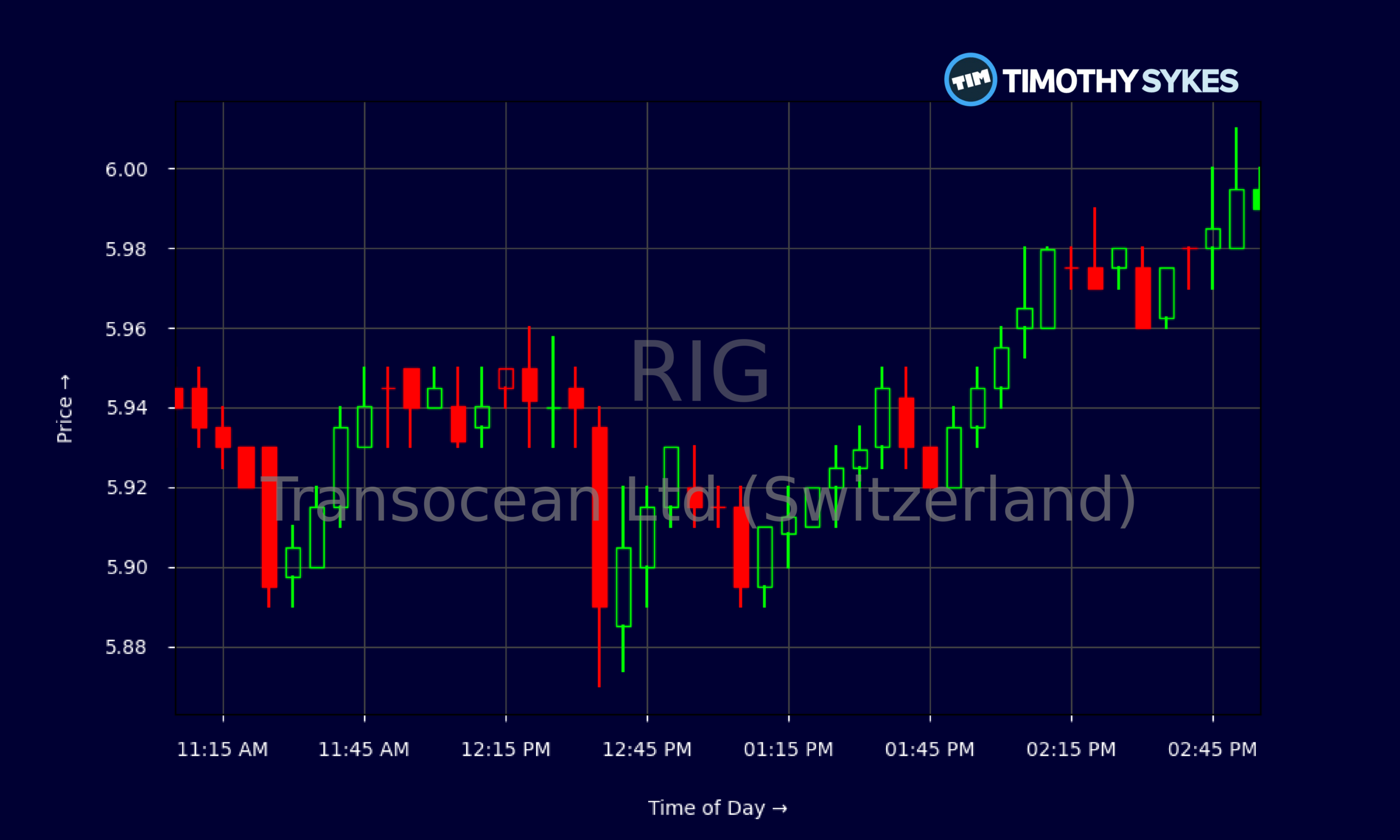
Live Update At 15:02:44 EDT: On Wednesday, October 21, 2026 Transocean Ltd (Switzerland) stock [NYSE: RIG] is trending up by 3.01%! Discover the key drivers behind this movement as well as our expert analysis in the detailed breakdown below.
Quick Financial Overview
Transocean Ltd (Switzerland), ticker RIG, is trading like a slow‑grinding uptrend. Over the last few weeks, RIG has climbed from around $5.17 into the just‑under‑$6 range, closing most recently near $5.995. The daily chart shows higher lows from late September 2026 through 2026/10/21, a constructive pattern traders watch for continuation moves.
Intraday, RIG has been tightly coiled. The 5‑minute tape shows a narrow range between roughly $5.90 and $6.01 for much of the session, with repeated pushes to the $6 area but no convincing breakout yet. That kind of action often signals accumulation — buyers stepping in on dips — but also clear overhead supply right at round‑number resistance.
Fundamentally, Transocean is still cleaning up from a tough down‑cycle. The company generated about $3.97B in annual revenue, yet margins on a trailing basis remain negative, with profit margin around ‑40%. Even so, the latest quarterly numbers tell a different story. In Q2 2026, RIG posted $966M in revenue, $312M in EBITDA, and $170M in net income, plus solid operating cash flow of $236M and free cash flow of $212M.
More Breaking News
RIG trades at roughly 1.49x sales and only 0.74x book value, with a current ratio of 1.6 and total debt‑to‑equity of 0.61. For active traders, that mix — improving cash generation, discounted valuation, and a tightening chart near $6 — sets up a name that can move sharply when headlines hit.
Why Traders Are Watching RIG Right Now
RIG is back in the spotlight because the company is finally stacking real, visible work on its books. Transocean just added roughly $1.1B in firm backlog tied to Norway. That includes a new ~$62M, 120‑day, two‑well contract for the Transocean Norge rig with A/S Norske Shell and final Equinor approval that converts a previously announced ~$1.0B multi‑rig harsh‑environment semisubmersible agreement into firm backlog. For traders, “firm backlog” means future revenue that is now locked in, not just a hopeful LOI.
On top of Norway, RIG secured another ~$550M of firm backlog for its ultra‑deepwater drillships Deepwater Proteus and Deepwater Conqueror in the U.S. Gulf of Mexico. Those multi‑year campaigns start in 2027 and roll directly from current work, which matters. Direct continuation reduces idle time between contracts and supports stronger dayrates, two levers that flow straight into margin and cash flow.
The tape has already reacted to these wins. When the Transocean Norge deal hit, RIG traded about 0.7% higher pre‑market in a weak energy tape. The U.S. Gulf contracts moved the stock more than 1% pre‑market even as oil benchmarks softened. That tells traders the market is rewarding company‑specific catalysts and is focused on contract momentum rather than just chasing crude.
In parallel, Transocean cleared a major overhang: Brazil’s competition authority gave unconditional approval to the Valaris–Transocean combination. With all regulatory boxes essentially checked and closing guided for Q4 2026, traders can shift from “Will this deal happen?” to “How big can RIG be post‑merger?” In a consolidated offshore space, scale can support pricing power and higher utilization — key drivers for any longer‑term bull thesis in RIG.
Finally, the balance‑sheet angle is turning from pure risk to something more balanced. RIG amended and restated its main credit facility, extending the revolver maturity from 2028 to 2031 and increasing commitments to $750M. The facility was oversubscribed, a constructive signal from lenders. At the same time, Transocean fully redeemed $165M of 8% Aquila Notes, shaving about $22M off annual interest costs. For traders, these moves do not remove leverage risk, but they do show management actively pushing out maturities, cutting interest drag, and creating room to integrate Valaris and ride the next up‑cycle.
Conclusion
For active traders, RIG is now a story of tightening technicals backed by real fundamental catalysts. The stock sits just under the $6 level after weeks of grinding higher, with intraday action showing repeated tests of resistance. That type of setup can fail hard or break clean — which is exactly why disciplined traders should be paying attention to Transocean’s order flow and upcoming headlines.
On the fundamentals, Transocean has lined up about $1.1B of new firm backlog in Norway and roughly $550M in the U.S. Gulf, extending earnings visibility well into 2027. Add in Q2 2026 free cash flow of $212M and fresh access to a $750M revolver running through 2031, and RIG looks far different from the distressed offshore stories many traders remember from the last downturn. The Brazilian green light for the Valaris deal removes a major uncertainty and sets up Q4 2026 as a key window for merger closing news and synergy talk.
That said, none of this is a free lunch. RIG still carries heavy debt, returns on capital are only just turning the corner, and offshore drilling remains a cyclical, headline‑driven business. As Tim Sykes likes to remind his students, “The market doesn’t care about your opinion, only your discipline — cut losses quickly and never fall in love with a stock.” As millionaire penny stock trader and teacher Tim Sykes, says, “The goal is not to win every trade but to protect your capital and keep moving forward.”. For anyone trading RIG, that means respecting your charts, knowing your levels around $6 and beyond, and using the backlog and merger headlines strictly as catalysts — not excuses to ignore your risk rules. This article is for educational and research purposes only and is not investment advice.
This is stock news, not investment advice. Timothy Sykes News delivers real-time stock market news focused on key catalysts driving short-term price movements. Our content is tailored for active traders and investors seeking to capitalize on rapid price fluctuations, particularly in volatile sectors like penny stocks. Readers come to us for detailed coverage on earnings reports, mergers, FDA approvals, new contracts, and unusual trading volumes that can trigger significant short-term price action. Some users utilize our news to explain sudden stock movements, while others rely on it for diligent research into potential investment opportunities.
Dive deeper into the world of trading with Timothy Sykes, renowned for his expertise in penny stocks. Explore his top picks and discover the strategies that have propelled him to success with these articles:
- Penny Stocks Trading Guide
- Best Penny Stocks Under $1 to Buy Today
- Top 8 Penny Stocks to Watch on Robinhood
Once you’ve got some stocks on watch, elevate your trading game with StocksToTrade the ultimate platform for traders. With specialized tools for swing and day trading, StocksToTrade will guide you through the market’s twists and turns.
Dig into StocksToTrade’s watchlists here:




Leave a reply