

TeraWulf Inc. stocks have been trading down by -7.94 percent amid bearish sentiment following critical cryptocurrency market outlook headlines.
Key Takeaways
- GPU data-center names, including TeraWulf’s WULF, logged share gains as traders piled into the AI infrastructure theme.
- High-profile warnings say debt markets have “almost entirely shut off” to AI data centers without strong non-AI revenue.
- Morgan Stanley flagged financing and capacity-deployment uncertainty for peer CoreWeave, underscoring sector-wide funding risk.
- WULF now sits in a sweet-but-risky spot: tied to AI growth, yet dependent on heavy capital spending and steady access to cash.
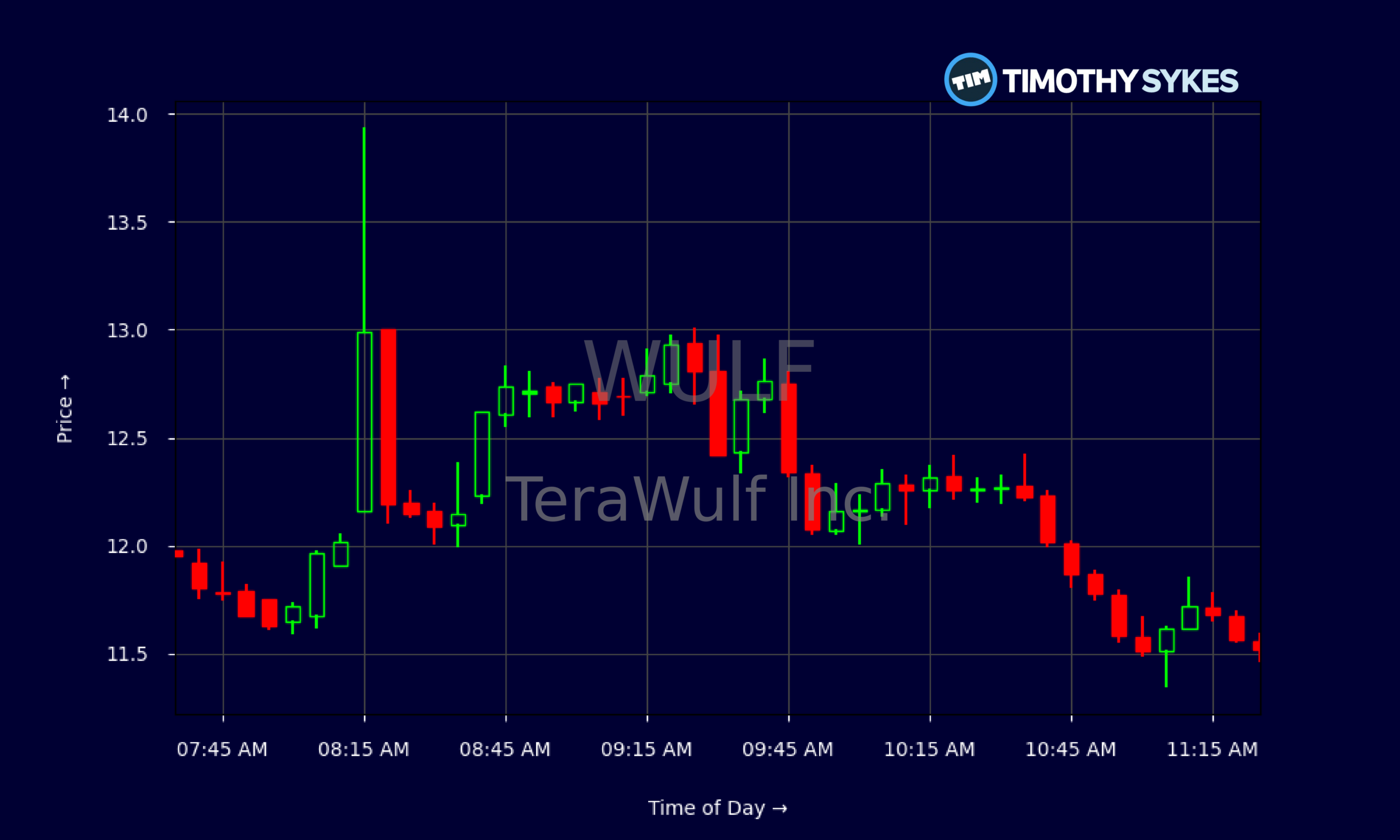
Live Update At 11:32:13 EST: On Wednesday, November 04, 2026 TeraWulf Inc. stock [NASDAQ: WULF] is trending down by -7.94%! Discover the key drivers behind this movement as well as our expert analysis in the detailed breakdown below.
Quick Financial Overview
TeraWulf Inc. and its WULF stock sit right in the middle of the AI data-center gold rush. The company is growing revenue fast, with about $168.5M in sales and strong gross margins near 84.3%. That tells traders WULF can charge healthy prices for its power and infrastructure.
But the bottom line is another story. WULF is still deep in the red, posting a quarterly net loss close to $940.8M and an EBIT margin worse than -1,000%. Those extreme negative margins show the build-out phase is burning cash hard. Free cash flow is roughly -$992.3M over the recent period, backed by massive capital expenditures over $855.6M and big spending on property and equipment.
More Breaking News
On the balance sheet, WULF lists about $2.62B in cash and short-term investments, which gives the company a real war chest. Yet total liabilities around $7.9B and a thin current ratio of 0.8 highlight pressure on near-term liquidity. For traders, WULF is a classic high-volatility, high-capex AI infrastructure play: strong top-line momentum and assets, offset by heavy losses and constant funding needs.
Why Traders Are Watching WULF In The AI Buildout
WULF has become a go-to ticker for traders looking to ride the AI data-center wave. The latest news shows Neocloud and GPU data-center operators like Nebius, IREN, Applied Digital, TeraWulf, and CoreWeave all posting share gains. That tells you money is still hunting exposure to high-power GPU infrastructure, and WULF is squarely in that lane.
At the same time, the backdrop is getting tougher. Elon Musk warned that debt markets have “almost entirely shut off” to AI data centers that lack serious non-AI revenue. For a capital-intensive operator like TeraWulf, that’s not background noise. WULF depends on constant access to capital to keep building, cooling, and powering GPU clusters. When credit tightens, only the strongest balance sheets and clearest paths to cash flow survive.
Morgan Stanley spotlighted financing and capacity-deployment uncertainty at CoreWeave, but traders should read that as a warning label on the whole group, WULF included. If a well-known GPU data-center peer faces questions about funding and build-out timing, the market will ask those same questions of TeraWulf.
Price action backs up the “reward with a warning” theme. Daily data show WULF swinging between the low-$11s and mid-$13s over recent sessions, with fast intraday reversals. Today’s open near $12.81 and fade to around $11.57 show how quickly bids can vanish once momentum stalls. Traders who specialize in volatility and liquidity are watching WULF because it checks both boxes: it tracks AI headlines and it moves in big, tradeable ranges.
Conclusion
For active traders, WULF is a prime example of the modern AI-infrastructure story: big promise, big spending, and big swings. TeraWulf has strong gross margins and a large asset base, but its negative returns on equity and assets, along with nearly $1B in recent free-cash-flow burn, remind everyone that this is still a build-first, profit-later model.
The sector news reinforces that duality. WULF is riding the same bullish flow that lifted Neocloud and other GPU-focused names, yet those gains sit on top of a funding environment that has turned cautious. When debt markets “almost entirely shut off” for weaker AI data centers, as Musk described, the market starts sorting winners from future dilutions very quickly. WULF’s $2.62B cash position helps, but traders should assume the company’s large capex plans will keep funding risk in play.
That’s why disciplined trading matters here. WULF offers clean volatility, tight intraday ranges, and clear levels for short-term setups, but it also carries real balance-sheet and execution risk. As millionaire penny stock trader and teacher Tim Sykes, says, “Small gains add up over time; focus on building wealth gradually, not chasing jackpots.”. As Tim Sykes likes to tell his students, “I’m not here to predict the future, I’m here to react to what the market shows me and protect my downside.” WULF fits that mindset perfectly: trade the AI momentum, respect the funding overhang, and cut losses fast when the story stops matching the chart. This article is for educational and research purposes only and is not investment advice.
This is stock news, not investment advice. Timothy Sykes News delivers real-time stock market news focused on key catalysts driving short-term price movements. Our content is tailored for active traders and investors seeking to capitalize on rapid price fluctuations, particularly in volatile sectors like penny stocks. Readers come to us for detailed coverage on earnings reports, mergers, FDA approvals, new contracts, and unusual trading volumes that can trigger significant short-term price action. Some users utilize our news to explain sudden stock movements, while others rely on it for diligent research into potential investment opportunities.
Dive deeper into the world of trading with Timothy Sykes, renowned for his expertise in penny stocks. Explore his top picks and discover the strategies that have propelled him to success with these articles:
- Penny Stocks Trading Guide
- Best Penny Stocks Under $1 to Buy Today
- Top 8 Penny Stocks to Watch on Robinhood
Once you’ve got some stocks on watch, elevate your trading game with StocksToTrade the ultimate platform for traders. With specialized tools for swing and day trading, StocksToTrade will guide you through the market’s twists and turns.
Dig into StocksToTrade’s watchlists here:





Leave a reply