
TeraWulf Inc. stocks have been trading up by 6.27 percent amid upbeat sentiment on its expanding Bitcoin mining capacity.
Key Takeaways
- Morgan Stanley says WULF’s pullback clashes with its contract value and catalysts, flagging nearly 392% upside to a $65 target.
- Cantor Fitzgerald trimmed its WULF target to $30 but still calls it a potential “generational buy” once AI funding fears and data center headwinds clear.
- A revised Kentucky Power deal doubles Muskie Data Campus capacity to 1 GW by 2029, while TeraWulf funds $100M in winter bill credits and key plant financing costs.
- Regulatory approval for a 482 MW power pact underpins TeraWulf’s Justified Data Campus in Kentucky, backing a $4.0–$4.5B AI data center project anchored by a long‑term Anthropic lease.
- TD Cowen launched coverage on WULF at Buy with a $21 target, arguing its current 9% cap rate on leased data centers looks too conservative given Google‑backed Fluidstack support and the AI boom.
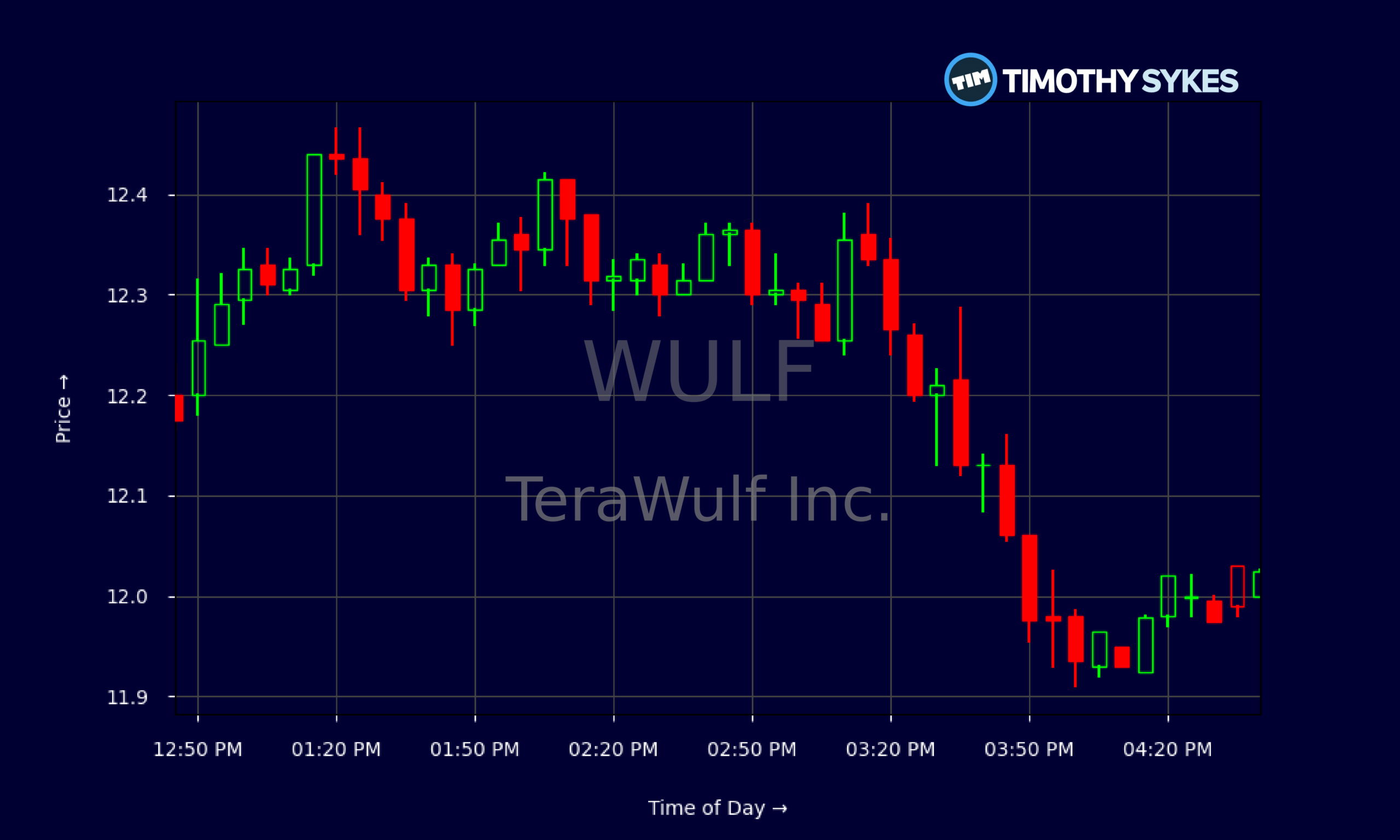
Live Update At 16:48:37 EDT: On Monday, October 26, 2026 TeraWulf Inc. stock [NASDAQ: WULF] is trending up by 6.27%! Discover the key drivers behind this movement as well as our expert analysis in the detailed breakdown below.
Quick Financial Overview
WULF has been a rollercoaster on the chart. The stock closed at 11.98 on 2026/10/26, down from mid‑October highs above 15, showing a sharp pullback of roughly 20% in a couple weeks. Daily candles reveal wide ranges and heavy intraday swings, prime territory for short‑term trading.
Intraday on the latest session, WULF bounced between roughly 11.08 and 12.46, then settled just under 12. That tight close after a wide range hints at active tug‑of‑war between longs and shorts. For momentum traders, this kind of compression after volatility often precedes the next big move.
Fundamentals show a classic high‑growth, early‑stage profile. TeraWulf generated about $168.5M in revenue over the trailing period, with huge year‑over‑year growth but very negative margins and heavy losses. The company posted roughly -$940M in quarterly net loss and free cash flow around -$992M, driven by massive capital spending on data centers and power infrastructure.
More Breaking News
Leverage is meaningful but not extreme, with total debt to equity at 0.16 and long‑term debt near $4.02B against $2.62B in cash and short‑term investments. For traders, that mix screams high risk, high reward: big balance‑sheet bets, big potential, and big volatility if execution wobbles.
Why Traders Are Watching WULF Right Now
The story around TeraWulf has shifted from pure crypto mining to becoming an AI and high‑performance computing power house, and the news flow backs that up. WULF locked in regulatory approval for a 482 MW power agreement tied to its Justified Data Campus in Kentucky, a project sized at roughly $4.0–$4.5B in initial AI data center build. That site is anchored by a 20‑year, roughly 401 MW critical IT lease with Anthropic, with deliveries planned to start between late 2027 and early 2028, and the lease is backed by expected investment‑grade credit. For traders, that means TeraWulf isn’t just promising demand; it has long‑dated, contracted usage with a known AI name.
At the same time, WULF’s Muskie Data Campus is scaling up fast on paper. An amended agreement with Kentucky Power doubles contracted electric demand from 500 MW to 1 GW and pulls forward the second 500 MW phase to 2029. That effectively positions Muskie as a large‑scale AI and HPC hub, with commentary noting potential expansion to 2 GW over time. The catch is that TeraWulf agreed to fund $100M in winter bill credits for local customers and cover estimated financing costs for Kentucky Power’s planned 760 MW combined‑cycle plant at Big Sandy. Those are big checks, which traders must weigh against the long‑term upside.
Analysts are leaning bullish despite the spending. Morgan Stanley reiterated an Overweight and lifted its WULF target to $65, arguing the recent pullback doesn’t match the company’s contract value or growth pipeline. Cantor Fitzgerald trimmed its target to $30 yet still labeled WULF a potential “generational buy” with 100%+ upside once AI funding worries and data‑center sentiment calm down. TD Cowen and Jones both initiated with Buy ratings and double‑digit targets, while commentary highlights WULF’s AI lease portfolio, including Google‑backed Fluidstack support, as a key driver of multiple expansion.
For active traders, that mix—aggressive infrastructure build, visible AI contracts, and strong Street backing—creates a classic story: huge opportunity, but execution and financing risk that can drive big price swings both ways.
Conclusion
Put it all together, and WULF sits at a pivotal point. The stock has sold off from the mid‑teens to the high‑11s even as TeraWulf locks in massive power deals and long‑term AI leases. The Justified Data Campus and Muskie Data Campus give WULF multi‑year visibility on megawatt demand, from Anthropic’s 20‑year commitment to the 1 GW Kentucky Power framework. Yet those same projects require billions in capital, careful regulatory navigation, and flawless execution on tight timelines.
Analyst targets tell you how wide the range of outcomes is. Morgan Stanley’s $65 fair‑value view implies nearly 392% upside from current levels. Cantor’s reduced $30 target still points to triple‑digit percentage gains. TD Cowen’s $21 and other coverage around $30+ reinforce the idea that, on paper, WULF is trading at a steep discount to its contracted AI infrastructure story.
But traders in the Tim Sykes world don’t blindly trust targets or hype. They read filings like the recent Form 8‑K, watch the tape, and respect the risk. TeraWulf’s negative margins, heavy free‑cash‑flow burn, and high price‑to‑sales multiple underline that this is not a “safe” name; it’s a momentum and catalyst vehicle.
That’s where discipline comes in. As Tim Sykes loves to say, “The market doesn’t care about your opinion, only your plan.” As millionaire penny stock trader and teacher Tim Sykes says, “Preparation plus patience leads to big profits.”. For WULF, that plan means mapping key catalyst dates, watching how price reacts to news on funding and build‑out progress, and cutting losses fast if the story stops matching the chart. This article is for educational and research purposes only and is not trading advice, but for traders who specialize in volatility, WULF is one to keep on the screen.
This is stock news, not investment advice. Timothy Sykes News delivers real-time stock market news focused on key catalysts driving short-term price movements. Our content is tailored for active traders and investors seeking to capitalize on rapid price fluctuations, particularly in volatile sectors like penny stocks. Readers come to us for detailed coverage on earnings reports, mergers, FDA approvals, new contracts, and unusual trading volumes that can trigger significant short-term price action. Some users utilize our news to explain sudden stock movements, while others rely on it for diligent research into potential investment opportunities.
Dive deeper into the world of trading with Timothy Sykes, renowned for his expertise in penny stocks. Explore his top picks and discover the strategies that have propelled him to success with these articles:
- Penny Stocks Trading Guide
- Best Penny Stocks Under $1 to Buy Today
- Top 8 Penny Stocks to Watch on Robinhood
Once you’ve got some stocks on watch, elevate your trading game with StocksToTrade the ultimate platform for traders. With specialized tools for swing and day trading, StocksToTrade will guide you through the market’s twists and turns.
Dig into StocksToTrade’s watchlists here:





Leave a reply