
SK hynix Inc. stocks have been trading up by 2.9 percent after upbeat AI chip demand news boosted investor optimism
Key Takeaways
- Shares of SKHY surged more than 7% after SK hynix posted higher Q3 earnings and revenue, confirming strong operational momentum in the current AI memory upcycle.
- The company is weighing a massive 16 trillion won ($12B) special dividend tied to its Kioxia stake, with SKHY trading up over 3% premarket on the headline.
- Flash-memory spin-off Solidigm is lining up a potential US IPO that may raise about $10B at up to a $100B valuation, signaling a major value-unlock effort.
- Samsung and SK Hynix are upgrading China fabs to more advanced memory nodes while working through US export controls and license requirements.
- Rosenblatt reiterated its Buy rating on SK Hynix, calling the CXMT-driven memory selloff overdone and arguing that DRAM demand is structurally improving.
Live Update At 08:18:51 EST: On Tuesday, November 03, 2026 SK hynix Inc. stock [NASDAQ: SKHY] is trending up by 2.9%! Discover the key drivers behind this movement as well as our expert analysis in the detailed breakdown below.
Quick Financial Overview
SKHY has been trading like a high‑beta AI proxy, and the chart backs that up. From 2026/10/09 to 2026/11/02, SKHY swung from a recent high near 173 to a close around 147.71, a pullback of roughly 15% from the peak but still well above October lows near 136. That’s a classic strong uptrend with a healthy shakeout.
The daily candles show big range days around 2026/10/28–2026/10/29, right when SK hynix reported higher Q3 earnings and revenue and the stock ripped more than 7%. SKHY briefly tagged the mid‑160s before profit‑taking kicked in and pushed it back toward the high‑140s.
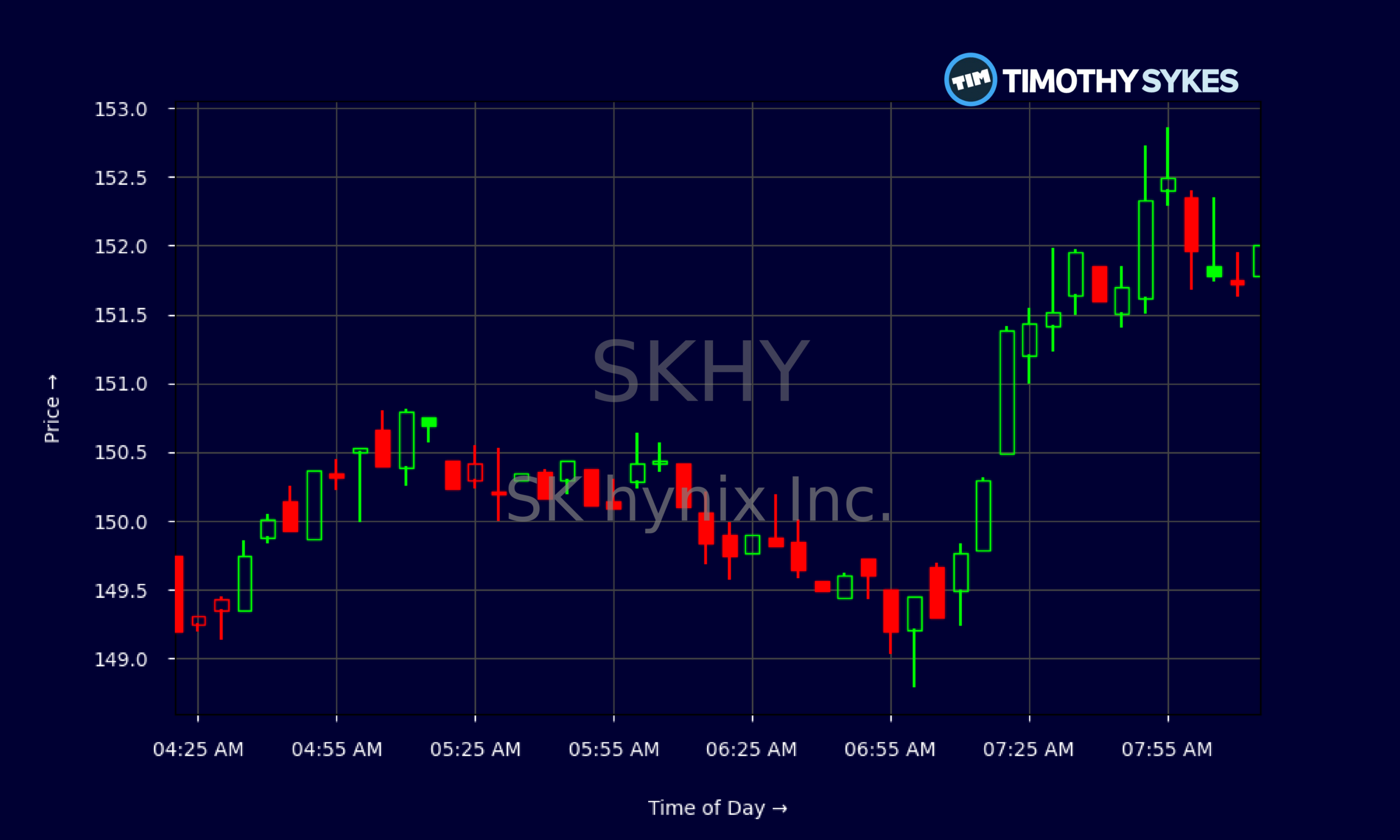
Intraday, SKHY is now consolidating tightly between roughly 149 and 152 in premarket and early trading, a classic coil after a big move. For active traders, that tight range after strong news often sets up the next leg, up or down, depending on which side breaks.
More Breaking News
On the fundamentals, SK hynix is throwing off serious numbers. Revenue runs around ₩97.1T, with a low price‑to‑earnings ratio near 3.76 and price‑to‑sales over 17, signaling that traders are paying up for future AI‑driven growth, not current-cycle earnings alone. ROIC near 73.54% and a solid leverage profile tell traders this is a scaled, profitable memory leader with room to keep swinging.
Why Traders Are Watching SKHY Right Now
SKHY is front and center on traders’ screens because SK hynix just delivered the one‑two punch this market rewards: a real earnings beat plus a strong AI story. Shares jumped more than 7% after the company posted higher Q3 earnings and revenue on 2026/10/28, confirming that the memory upcycle tied to AI is not just hype. When a name like SKHY gaps and runs that hard on numbers, momentum traders pay attention.
The news flow around SK hynix has been stacked. Management is considering a roughly 16 trillion won ($12B) special dividend funded by gains from its Kioxia investment. That’s a huge potential capital return, and the stock was up more than 3% premarket on the headline. For event‑driven traders, SKHY now has a clear near‑term catalyst: any formal decision or update on that payout.
At the same time, SK hynix is trying to unlock value through its Solidigm spin‑off. Solidigm is preparing a possible US IPO next year targeting about $10B in proceeds and up to a $100B valuation. SKHY traders read that as a move to surface hidden value in the NAND/flash segment and sharpen the company’s competitive edge.
On the strategic front, SK Hynix and Samsung are upgrading their China factories to push more advanced NAND chips, aiming squarely at surging AI‑related demand and competition from China’s Yangtze Memory. That reinforces the bull case that SKHY sits in the critical supply chain for AI data centers and high‑end devices. The wrinkle is US export controls and licensing requirements, which introduce headline risk. Any delay or restriction on equipment approvals can spark volatility in SKHY, even if the longer‑term direction still points toward growth.
Layer on top of that deeper ties with AMD—SK Hynix is cited as a key memory partner for AMD’s AI products, with leadership talks supporting AMD’s data center roadmap—and macro demand signals like Microsoft’s 60GB‑hungry laptop AI model, and you get the bigger picture. SKHY is riding a structural shift where every new AI workload wants more memory. That’s the story momentum traders are trying to ride.
Conclusion
For active traders, SKHY right now is a classic mix of strong trend, heavy catalysts, and real volatility. The stock’s 7%+ jump on Q3 earnings showed that SK hynix is executing in this AI memory wave, not just riding sentiment. The consideration of a $12B special dividend from its Kioxia gains adds a powerful potential trigger, while the planned Solidigm US IPO and China fab upgrades give SKHY a steady pipeline of headlines.
But this is not a smooth ride. Export‑control risk around those China fabs, execution questions on the Solidigm IPO, and ongoing competition chatter—like CXMT’s DDR5 RDIMM plans—can all punch the stock intraday. That’s why traders must respect the price action. Tight consolidation zones around 150 after big swings into the 160s and 170s can break hard either way.
One thing that helps short‑term confidence is sentiment from the Street. Rosenblatt reiterating a Buy on SK Hynix and calling the CXMT‑driven selloff overdone tells traders that at least some pros see the pullbacks as opportunity, not the end of the move.
The bigger message for anyone trading SKHY is discipline. As millionaire penny stock trader and teacher Tim Sykes, says, “The goal is not to win every trade but to protect your capital and keep moving forward.”. As Tim Sykes loves to remind his students, “The market doesn’t owe you anything — your edge comes from preparation, pattern recognition, and cutting losses quickly.” For SKHY, that means studying the chart, knowing the catalysts, and treating each setup as a trade, not a promise. This article is for educational and research purposes only and is not advice for any specific trading activity.
This is stock news, not investment advice. Timothy Sykes News delivers real-time stock market news focused on key catalysts driving short-term price movements. Our content is tailored for active traders and investors seeking to capitalize on rapid price fluctuations, particularly in volatile sectors like penny stocks. Readers come to us for detailed coverage on earnings reports, mergers, FDA approvals, new contracts, and unusual trading volumes that can trigger significant short-term price action. Some users utilize our news to explain sudden stock movements, while others rely on it for diligent research into potential investment opportunities.
Dive deeper into the world of trading with Timothy Sykes, renowned for his expertise in penny stocks. Explore his top picks and discover the strategies that have propelled him to success with these articles:
- Penny Stocks Trading Guide
- Best Penny Stocks Under $1 to Buy Today
- Top 8 Penny Stocks to Watch on Robinhood
Once you’ve got some stocks on watch, elevate your trading game with StocksToTrade the ultimate platform for traders. With specialized tools for swing and day trading, StocksToTrade will guide you through the market’s twists and turns.
Dig into StocksToTrade’s watchlists here:





Leave a reply