

Oracle Corporation stocks have been trading up by 12.85 percent amid strong cloud growth headlines boosting investor confidence
Key Takeaways For ORCL Traders
- Shares of ORCL jumped more than 4% after Oracle rolled out a broad slate of AI upgrades for Oracle Cloud Infrastructure and spotlighted new AI security and data platforms.
- A deep collaboration with OpenAI will embed ChatGPT and Codex across Oracle applications and OCI, with ORCL trading up roughly 4.8% as traders bet on higher‑value enterprise AI workflows.
- Oracle will host Google’s Tensor Processing Units on OCI from 2027, making ORCL the only hyperscale cloud outside Google with TPU access and widening its AI compute menu.
- Snowflake AI Data Cloud will become a first‑party service on Oracle Cloud Infrastructure, letting customers run Snowflake and Oracle together with unified billing and universal credits.
- Management plans to deploy $1B over four years into the Oracle partner ecosystem to scale AI‑driven services and accelerate cloud and software distribution through channel alliances.
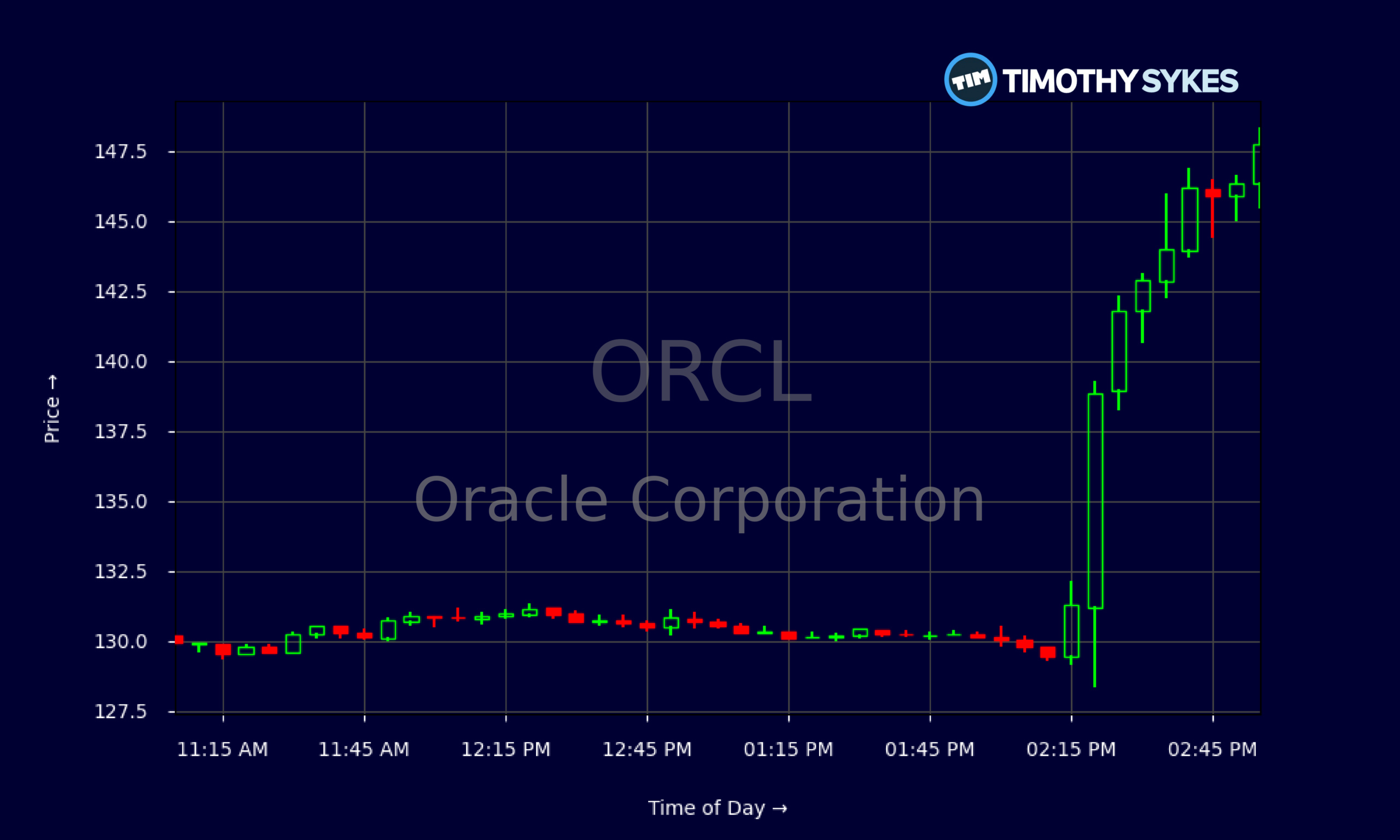
Live Update At 15:03:36 EDT: On Wednesday, October 28, 2026 Oracle Corporation stock [NYSE: ORCL] is trending up by 12.85%! Discover the key drivers behind this movement as well as our expert analysis in the detailed breakdown below.
Quick Financial Overview
ORCL has quietly turned into a momentum name. Over the last several sessions, Oracle Corporation has pushed from the low $120s to a closing price of $147.43 on 2026/10/28, a sharp upside move that lines up with its AI news barrage. The intraday tape tells the same story: ORCL spent most of the day grinding around $130 before launching in the afternoon and spiking above $148 into the close. That is classic news‑driven range expansion.
Fundamentally, Oracle Corporation is not trading like a shaky story stock. ORCL generated about $67.36B in annual revenue with roughly 12% three‑ and five‑year growth, backed by a fat 96% gross margin and an EBIT margin near 37%. A price/earnings ratio around 22 and price/sales near 6 put ORCL in premium‑tech territory, but not bubble land given 26% profit margins.
More Breaking News
On the risk side, total debt to equity of 2.52 and a leverage ratio near 4.9 remind traders that Oracle Corporation is highly geared. Still, ORCL posts return on equity above 40% and steady operating cash flow, even with heavy capex dragging free cash flow negative last quarter. For active traders, that mix—strong margins, leverage, and aggressive AI capex—sets up a name that can trend hard when sentiment shifts.
Why Traders Are Watching ORCL’s AI Blitz
Oracle Corporation just fired off one of the broadest AI salvos we have seen from a legacy software giant, and ORCL traders are treating it as a real catalyst, not marketing fluff. At Oracle AI World, the company laid out a vision that stretches from raw silicon to finished industry agents, and the stock’s 4–5% surge signals the market heard it.
On the infrastructure side, Oracle is turning Oracle Cloud Infrastructure (OCI) into a hardware buffet. ORCL is expanding NVIDIA‑powered Superclusters to multi‑gigawatt scale with Vera Rubin NVL72 GPUs and Vera CPUs, while also adding Cerebras ultra‑fast inference and new Intel Diamond Rapids‑based Xeon offerings. That spread of Nvidia, Intel, and Cerebras support gives Oracle Corporation multiple ways to court AI workloads without tying its fate to one chip vendor.
The Google angle may be the biggest headline for ORCL. Oracle will be the first hyperscale cloud outside Google to offer Google’s Tensor Processing Units, with TPU 8‑series access slated for 2027. For AI‑native teams trained on TPUs, that makes OCI suddenly relevant, and traders are reading that as a potential share‑gainer move against larger clouds.
On the software and data side, the OpenAI collaboration stands out. Oracle Corporation is embedding ChatGPT and Codex across Fusion, NetSuite, OCI, and new offerings like AI Workspace and AI Security Mesh. At the same time, ORCL is bringing Snowflake AI Data Cloud in as a native, first‑party OCI service with unified billing. That turns a former rival into a channel partner and strengthens the case for OCI as a neutral AI and data hub.
Layer on the Deep Trust AI Architecture, AI Agent Studio for industry‑specific agents, and an AI Security Mesh, and Oracle is clearly going after regulated and mission‑critical workloads where security and governance rule. For ORCL traders, this is the key: Oracle Corporation is not chasing consumer hype; it is targeting sticky, high‑spend enterprise AI.
Conclusion
For active traders, ORCL now trades like a full‑blown AI platform story, not just an old‑school database name. The chart shows that clearly: a tight base in the $120s, then an explosive breakout toward the high $140s once the OpenAI tie‑up, Google TPU deal, and Snowflake integration hit the wires. When price, volume, and narrative line up like this, momentum traders take notice.
The risk side is just as important. Oracle Corporation is pouring cash into data centers, partner incentives, and high‑end AI hardware, with recent capital spending above $8.5B in a single quarter and free cash flow dipping slightly negative. Debt levels are high, and execution on these AI promises has to be strong or the same leverage that juices returns can work against ORCL on the downside.
Still, Oracle’s push for FedRAMP Class D on its AI database across AWS GovCloud, Azure Government, and Google’s regulated clouds shows a deliberate grab for durable, government‑grade workloads. Combining that with the $1B partner program suggests Oracle Corporation wants a multiplier effect—letting systems integrators and cloud service partners sell its AI stack for it.
For traders studying ORCL, the playbook remains the same as Tim Sykes has hammered for years: “patterns repeat, but you’ve gotta manage risk first and always be ready to cut losses fast.” That mindset lines up with the idea that chasing the biggest home‑run move in a hot AI ticker can backfire if discipline slips. As millionaire penny stock trader and teacher Tim Sykes, says, “Small gains add up over time; focus on building wealth gradually, not chasing jackpots.”. ORCL’s AI breakout offers opportunity, but the edge goes to those who track the trend, watch the levels, and refuse to marry the stock.
This is stock news, not investment advice. Timothy Sykes News delivers real-time stock market news focused on key catalysts driving short-term price movements. Our content is tailored for active traders and investors seeking to capitalize on rapid price fluctuations, particularly in volatile sectors like penny stocks. Readers come to us for detailed coverage on earnings reports, mergers, FDA approvals, new contracts, and unusual trading volumes that can trigger significant short-term price action. Some users utilize our news to explain sudden stock movements, while others rely on it for diligent research into potential investment opportunities.
Dive deeper into the world of trading with Timothy Sykes, renowned for his expertise in penny stocks. Explore his top picks and discover the strategies that have propelled him to success with these articles:
- Penny Stocks Trading Guide
- Best Penny Stocks Under $1 to Buy Today
- Top 8 Penny Stocks to Watch on Robinhood
Once you’ve got some stocks on watch, elevate your trading game with StocksToTrade the ultimate platform for traders. With specialized tools for swing and day trading, StocksToTrade will guide you through the market’s twists and turns.
Dig into StocksToTrade’s watchlists here:





Leave a reply