

Leverage Shares 2X Short SPCX Daily ETF surged as bearish sentiment on SPAC-focused equities intensified, and stocks have been trading up by 15.79 percent.
Key Takeaways
- SSPC has climbed from roughly $7.00 to the high-$8s over recent weeks, showing steady upside momentum on the daily chart.
- Intraday action in SSPC around $10 shows tight consolidation, hinting at an active tug-of-war between bulls and bears.
- As a 2X short ETF, Leverage Shares 2X Short SPCX Daily ETF amplifies downside moves in its target, giving traders leveraged exposure.
- With limited fundamental ratios published, SSPC trading remains driven mainly by price action and broader market sentiment.
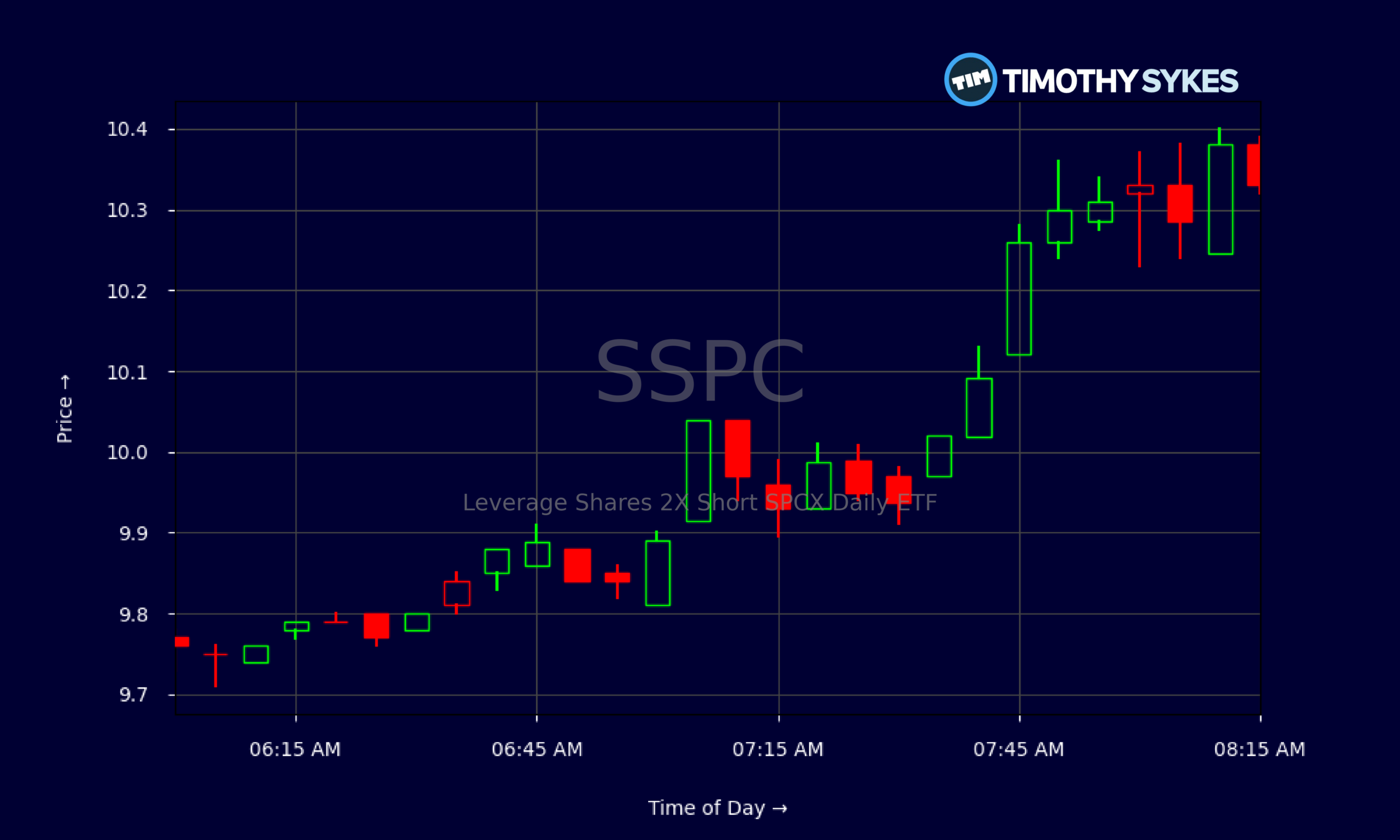
Live Update At 08:18:47 EST: On Wednesday, November 04, 2026 Leverage Shares 2X Short SPCX Daily ETF stock [BATS Global Markets: SSPC] is trending up by 15.79%! Discover the key drivers behind this movement as well as our expert analysis in the detailed breakdown below.
Quick Financial Overview
Leverage Shares 2X Short SPCX Daily ETF, trading under the ticker SSPC, is not a typical operating company with revenues and earnings. It is a leveraged exchange-traded product designed to deliver approximately twice the inverse of the daily move in its underlying target. That structure means most of the usual profit margins and valuation ratios are blank, and for good reason. SSPC exists to track and magnify price moves, not to grow sales or earnings.
Because of that, traders in SSPC lean heavily on the chart. Over the last several weeks, SSPC has moved from around $7.07 on 2026/10/12 to as high as $9.88 on 2026/10/30 before pulling back slightly into the mid-to-high $8s. That steady grind higher tells traders that bearish sentiment on the underlying exposure has been strong enough to push this short product up.
More Breaking News
On the intraday side, SSPC printing a band between roughly $9.75 and $10.40 shows active trading and decent liquidity. For short-term traders, this makes SSPC a pure volatility vehicle, where risk management and discipline matter more than traditional fundamentals.
Why Traders Are Watching SSPC’s Price Action
SSPC attracts a specific crowd: traders who want leveraged downside exposure and are comfortable with fast moves. The recent daily chart for Leverage Shares 2X Short SPCX Daily ETF shows why this ticker is on so many watchlists. From mid-October around $7.00, SSPC has stair-stepped higher, carving out higher lows near $7.19, $7.80, $8.22, and then $8.42. That series of higher lows often signals controlled accumulation rather than random noise.
On 2026/10/20, SSPC closed at $8.69 after trading as high as $9.23, then churned in the mid-$8s to high-$8s for several sessions. By 2026/10/30, SSPC tagged $9.905 intraday and closed at $9.88, showing traders were willing to chase strength. The slight retrace to $9.64 and then $8.93 in early November looks like normal digestion after a strong leg up, not a complete breakdown.
Zoom in to the intraday tape and the story gets clearer. From 06:00 to 08:18, SSPC traded in a relatively tight range between about $9.75 and $10.40. That kind of controlled consolidation near the upper end of its recent range often precedes the next expansion in volatility. SSPC traders watching these five-minute candles see support building around the high-$9s, with quick pops into the low-$10s.
Because SSPC is a 2X short ETF, every tick is essentially a vote on where traders expect the underlying exposure to move that day. Rising prices in SSPC generally signal growing bearishness on the target. For active day traders, that constant feedback loop between broader market sentiment and the SSPC chart is exactly what creates opportunity.
Conclusion
For active traders, SSPC is less a “company” and more a tool. Leverage Shares 2X Short SPCX Daily ETF exists to deliver amplified downside exposure on a daily basis, and the recent trend has favored the bulls in SSPC, which in turn suggests pressure on the underlying long-side exposure. The staircase move from roughly $7.00 to near $10.00, combined with controlled intraday consolidation, paints SSPC as a vehicle in play rather than one drifting aimlessly.
That does not make SSPC easy. Leveraged and short-oriented products can decay over time, especially when the underlying chops sideways. For that reason, most experienced SSPC traders treat it as a short-term trading vehicle, not a long-term holding. They lean on intraday levels, respect gaps, and stay alert to sudden reversals.
The key with SSPC is discipline. Small missteps get magnified when you trade leveraged ETFs tied to daily performance. That is why the mindset taught by Tim Sykes and his community matters so much here. As Tim likes to say, “The market doesn’t care about your opinion, only your risk management. Cut losses quickly, stay disciplined, and let the best setups come to you.” As millionaire penny stock trader and teacher Tim Sykes, says, “It’s better to go home at zero than to go home in the red.”. For anyone trading SSPC, that rule is not optional — it is survival.
This is stock news, not investment advice. Timothy Sykes News delivers real-time stock market news focused on key catalysts driving short-term price movements. Our content is tailored for active traders and investors seeking to capitalize on rapid price fluctuations, particularly in volatile sectors like penny stocks. Readers come to us for detailed coverage on earnings reports, mergers, FDA approvals, new contracts, and unusual trading volumes that can trigger significant short-term price action. Some users utilize our news to explain sudden stock movements, while others rely on it for diligent research into potential investment opportunities.
Dive deeper into the world of trading with Timothy Sykes, renowned for his expertise in penny stocks. Explore his top picks and discover the strategies that have propelled him to success with these articles:
- Penny Stocks Trading Guide
- Best Penny Stocks Under $1 to Buy Today
- Top 8 Penny Stocks to Watch on Robinhood
Once you’ve got some stocks on watch, elevate your trading game with StocksToTrade the ultimate platform for traders. With specialized tools for swing and day trading, StocksToTrade will guide you through the market’s twists and turns.
Dig into StocksToTrade’s watchlists here:





Leave a reply