

The Boeing Company stocks have been trading down by -2.3 percent amid heightened concerns over aircraft safety and regulatory scrutiny.
Key Takeaways
- The FAA has delayed certification of Boeing’s 737 MAX 10 aircraft after finding a software issue that can block pilot access to automated flight guidance in a specific landing scenario.
- News of the software issue and FAA delay knocked BA about $12 lower to roughly $186 intraday on 2026/09/28, a fast 6–7% slide that rattled sentiment.
- Multiple securities and shareholder-rights law firms have launched investigations into potential securities fraud or unlawful business practices at Boeing tied to the MAX 10 disclosure.
- The FAA may convene a corrective action review board to decide whether the 737 MAX glitch is a safety-of-flight issue that demands deeper regulatory action and further fixes.
- A dispute with supplier Vaero has halted Boeing’s 777 freighter production and disrupted 767 output, reportedly costing up to $6.5M per day at BA’s Everett facility.
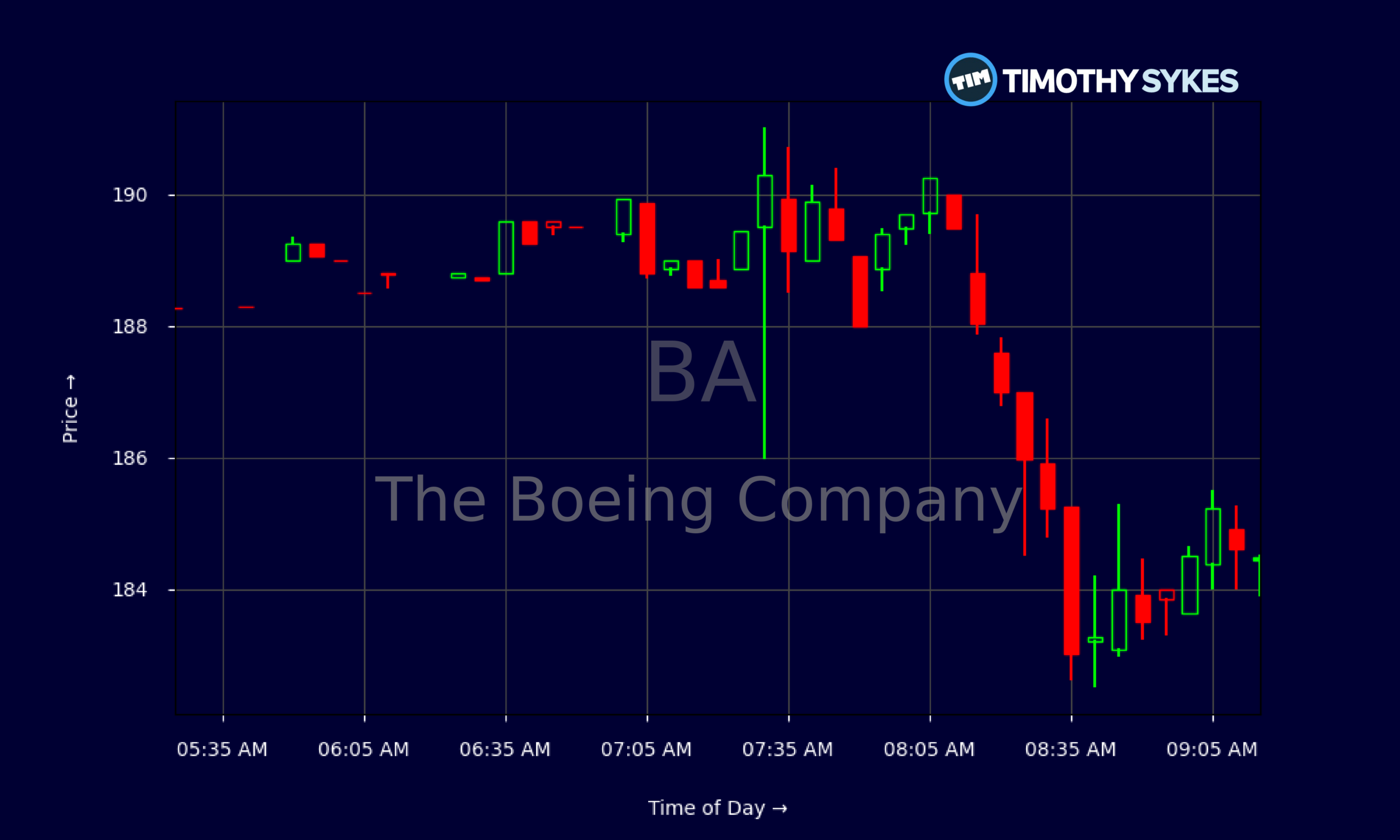
Live Update At 09:19:00 EDT: On Tuesday, October 27, 2026 The Boeing Company stock [NYSE: BA] is trending down by -2.3%! Discover the key drivers behind this movement as well as our expert analysis in the detailed breakdown below.
Quick Financial Overview
BA is trading in a tight but choppy band after that September air pocket. Over the recent sessions, The Boeing Company has mostly bounced between roughly $186 and $193, closing near $188–$192 on most days. That tells traders the stock is in a short-term equilibrium zone, even as headlines stay heavy.
The intraday five‑minute tape for BA shows repeated pushes into the mid‑$180s with quick fades, signalling active day trading but no clear breakout. For momentum traders, that kind of action screams “range play,” not trend yet.
Under the hood, The Boeing Company still looks highly leveraged. Revenue over the last year is about $89.46B, but profit margins are razor thin — EBIT margin is 5.7%, and net margins hover around 2–3%. BA’s price-to-sales near 1.6 and a rich P/E above 68 say the market is already paying up for a recovery story.
More Breaking News
Debt is the big overhang. Total debt-to-equity around 7.5 and a quick ratio of just 0.2 show The Boeing Company has very little near‑term liquidity cushion. BA generated about $1.36B in operating cash flow and $631M in free cash flow last quarter, which helps, but with heavy liabilities and ongoing headline risk, traders should treat every news spike as a potential catalyst, not background noise.
Why Traders Are Watching BA After The MAX 10 Shock
For BA, the latest 737 MAX 10 saga is not just another delay; it is a direct hit to credibility and timing. The FAA administrator has confirmed that a software issue will hold up certification of the MAX 10, and there is no firm resolution timeline on the table. The flaw matters: in a specific landing scenario it can block pilot access to automated flight guidance, and regulators are now weighing whether to convene a corrective action review board.
Traders saw the impact instantly. After Reuters highlighted the delay, BA dropped about $12 intraday to around $186 on 2026/09/28, a roughly 6–7% flush that made the name the worst performer in the Dow that day. For short‑term traders, that kind of move is exactly the sort of volatility they hunt, but it also shows how headline‑driven BA has become.
The fallout did not stop with the chart. A wave of plaintiffs’, securities, and shareholder‑rights law firms have opened investigations into The Boeing Company, probing whether prior disclosures about the MAX 10 software issue were adequate. One firm has even flagged potential securities fraud and unlawful business practices. None of this guarantees future damages, but for traders it adds a new layer of legal uncertainty that can feed more downside headlines.
There is one modest stabilizer in the story. Ryanair, a key MAX 10 customer, currently expects no major delay to its 2027 delivery schedule despite the FAA pause. That tells traders that long‑dated demand for BA’s narrowbodies is still there if the software glitch gets cleaned up in a reasonable window. Even so, with the FAA considering a corrective action review board, the risk is that “reasonable” stretches longer than the market likes.
On top of MAX issues, The Boeing Company is wrestling with an ugly supply‑chain fight. A dispute with supplier Vaero has halted 777 freighter production for about two months and disrupted 767 output after Vaero allegedly stopped delivering a critical wing component. Reports peg the cost to BA at up to $6.5M per day, with work stalled at the Everett, Washington site. Management is trying to in‑source the part, but until 777 freighter lines restart, traders need to factor this operational drag into any near‑term thesis.
Conclusion
For active traders, BA is once again the classic “headline stock” — every regulatory note, every legal filing, every production update has the power to move the tape. The FAA’s decision to delay 737 MAX 10 certification over a navigation software glitch, and the prospect of a corrective action review board, keeps safety and oversight concerns front and center. Add in multiple securities and fraud investigations tied to that same issue, and The Boeing Company now faces legal risk alongside regulatory risk.
Technically, BA is stuck in a volatile range around the high‑$180s to low‑$190s, with strong intraday swings but no decisive trend. Fundamentally, the balance sheet is still heavy, free cash flow is improving but not yet robust, and the Vaero dispute shows how quickly a single supplier conflict can cost real money and stall production.
This is exactly the kind of setup the Tim Sykes trading community studies relentlessly: broken‑story large caps with clean catalysts and emotional price swings. As Tim Sykes likes to say, “Volatility is opportunity for prepared traders, but it’s a nightmare if you’re lazy and undisciplined.” As millionaire penny stock trader and teacher Tim Sykes, says, “The goal is not to win every trade but to protect your capital and keep moving forward.”. For anyone tracking BA, that means respecting the risks, watching the news tape like a hawk, and treating every spike — up or down — as a potential lesson in how fast sentiment can flip in a complex turnaround story.
This is stock news, not investment advice. Timothy Sykes News delivers real-time stock market news focused on key catalysts driving short-term price movements. Our content is tailored for active traders and investors seeking to capitalize on rapid price fluctuations, particularly in volatile sectors like penny stocks. Readers come to us for detailed coverage on earnings reports, mergers, FDA approvals, new contracts, and unusual trading volumes that can trigger significant short-term price action. Some users utilize our news to explain sudden stock movements, while others rely on it for diligent research into potential investment opportunities.
Dive deeper into the world of trading with Timothy Sykes, renowned for his expertise in penny stocks. Explore his top picks and discover the strategies that have propelled him to success with these articles:
- Penny Stocks Trading Guide
- Best Penny Stocks Under $1 to Buy Today
- Top 8 Penny Stocks to Watch on Robinhood
Once you’ve got some stocks on watch, elevate your trading game with StocksToTrade the ultimate platform for traders. With specialized tools for swing and day trading, StocksToTrade will guide you through the market’s twists and turns.
Dig into StocksToTrade’s watchlists here:





Leave a reply