

Infosys Limited stocks have been trading down by -7.38 percent amid heightened concerns over guidance cuts and slowing client spending.
Key Takeaways For INFY Traders
- U.S. Secretary of Labor revealed ongoing criminal investigations into major IT outsourcers, including Infosys, sending shares lower in New York trading.
- The U.S. Labor Department suspended INFY from the key Permanent Labor Certification (PERM) Program, limiting a major channel for skilled foreign hiring.
- Infosys ADRs recently dropped 2.9%, leading South Asian decliners and signaling rising regulatory stress in the name.
- U.S. authorities named INFY among heavy H‑1B users in a broader visa crackdown that may raise labor and compliance costs.
- Recent weakness in INFY also tracks broader selling across Asian tech ADRs, adding macro pressure to company‑specific headlines.
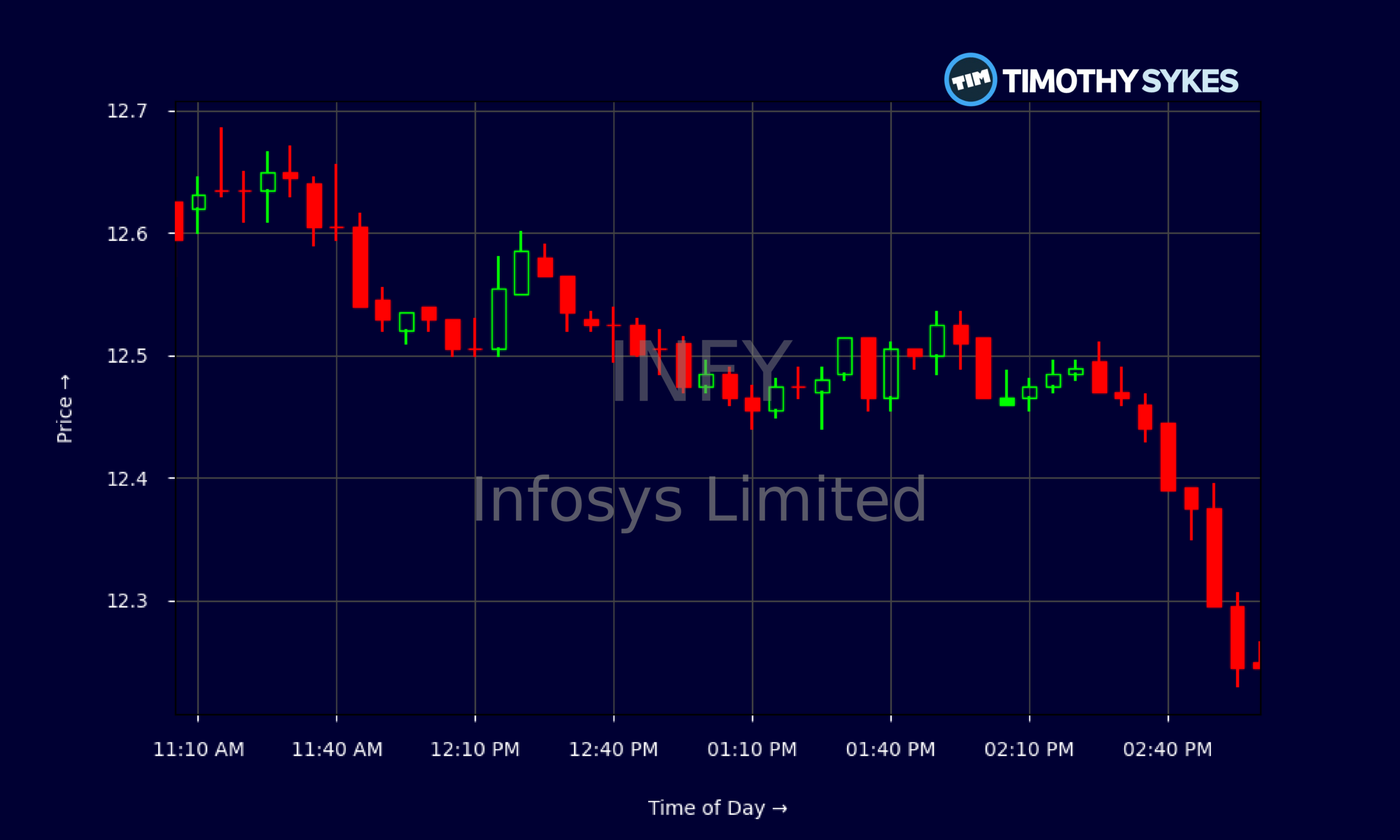
Live Update At 15:02:34 EDT: On Friday, October 23, 2026 Infosys Limited stock [NYSE: INFY] is trending down by -7.38%! Discover the key drivers behind this movement as well as our expert analysis in the detailed breakdown below.
Quick Financial Overview
INFY is not some tiny story stock — it’s a large IT services machine with roughly $19.28B in annual revenue and solid profitability. A pretax margin near 21% and return on equity above 12% show that Infosys still runs a tight operation. For traders, that matters. Strong margins can cushion bad news, but they do not make the stock bulletproof.
At recent prices around the low‑$12s, INFY trades at about 13.4 times earnings and roughly 4.3 times sales. That is a reasonable multiple for a global tech services leader, but not a fire‑sale. The balance sheet looks clean, with modest long‑term debt compared to equity and more than $2.3B in cash.
More Breaking News
On the chart, INFY has run from about $10.5 to above $13 this month before pulling back to roughly $12.25. That’s a sharp, tradable swing. Intraday action shows fading momentum, with lower highs through the session and a close near the day’s lows. For active traders, INFY now sits in a tug‑of‑war zone where headlines will decide the next leg.
Why Traders Are Watching INFY Right Now
INFY is sitting right in the crosshairs of U.S. regulators, and the tape is reacting. The latest jolt came when the U.S. Secretary of Labor confirmed ongoing criminal investigations into large IT outsourcing names, explicitly calling out Infosys alongside Cognizant, Wipro, and Capgemini. Shares of INFY dropped in New York trading right after that statement — a clear sign that traders are repricing regulatory risk in real time.
The damage does not stop at headlines. The U.S. Department of Labor has suspended Infosys from the PERM Program, a major pathway for sponsoring and retaining foreign skilled workers. For a company like INFY that leans heavily on an offshore‑onsite delivery model, losing PERM access is not just a legal footnote. It threatens how the firm staffs U.S. projects, from key engineers to project managers, and that can push wage costs higher or slow down delivery.
On top of PERM, INFY is also named in a broader crackdown on alleged H‑1B visa abuses. Authorities grouped Infosys with Cognizant, Tata Consultancy Services, and Wipro as heavy users of foreign workers whose practices are under scrutiny. That adds another layer of uncertainty for INFY traders. Margins that once looked safely in the 20% range may face pressure if the company must rebalance toward more expensive local hires and beefed‑up compliance.
The price action backs up this narrative. Infosys ADRs dropped 2.9% in one session, leading South Asian decliners, and have lagged other Asia ADRs even on calm days. At the same time, many Asian names — Baidu, Sea, and others — have also been sold, so not all of the weakness is INFY‑specific. But traders treating INFY as “just another Asia ADR” are missing the point: this stock carries unique headline risk tied directly to U.S. labor policy.
Conclusion
For active traders, INFY is now a classic “strong company, messy headlines” setup. The fundamentals are not broken. Infosys still throws off about $937M in quarterly operating cash flow, sports high returns on capital, and carries manageable leverage. The valuation, with a mid‑teens P/E and a cash‑rich balance sheet, looks reasonable for a global tech services leader.
But the U.S. regulatory story has shifted the game. Criminal investigations by the Labor Department’s inspector general, repeated mentions of Infosys as a target in the H‑1B crackdown, and suspension from the PERM Program all point in the same direction — higher regulatory risk and more complex staffing in the company’s most important market. That is why INFY ADRs have been leading South Asian decliners and why every new U.S. headline is sparking sharp intraday moves.
This environment favors prepared, nimble traders. Chart readers will watch how INFY behaves around the recent $12 area after its run from $10–$13. If negative news fades and the stock holds higher lows, you might see a bounce trade. If new regulatory shocks hit, breakdowns can accelerate as funds de‑risk.
Tim Sykes often says, “Discipline and risk management will keep you in the game far longer than any hot stock tip.” As millionaire penny stock trader and teacher Tim Sykes, says, “Preparation plus patience leads to big profits.”. That mindset fits INFY perfectly right now. Treat Infosys as a real‑time case study in how regulatory overhangs collide with technical levels — and make sure your trading plan respects both.
This is stock news, not investment advice. Timothy Sykes News delivers real-time stock market news focused on key catalysts driving short-term price movements. Our content is tailored for active traders and investors seeking to capitalize on rapid price fluctuations, particularly in volatile sectors like penny stocks. Readers come to us for detailed coverage on earnings reports, mergers, FDA approvals, new contracts, and unusual trading volumes that can trigger significant short-term price action. Some users utilize our news to explain sudden stock movements, while others rely on it for diligent research into potential investment opportunities.
Dive deeper into the world of trading with Timothy Sykes, renowned for his expertise in penny stocks. Explore his top picks and discover the strategies that have propelled him to success with these articles:
- Penny Stocks Trading Guide
- Best Penny Stocks Under $1 to Buy Today
- Top 8 Penny Stocks to Watch on Robinhood
Once you’ve got some stocks on watch, elevate your trading game with StocksToTrade the ultimate platform for traders. With specialized tools for swing and day trading, StocksToTrade will guide you through the market’s twists and turns.
Dig into StocksToTrade’s watchlists here:





Leave a reply