

GoDaddy Inc. stocks have been trading up by 8.73 percent following strong earnings and optimistic forward guidance.
What Traders Need To Know
- Q3 from GoDaddy Inc. beat EPS and revenue expectations, and full-year 2026 guidance moved toward the high end of the prior range, pointing to confident execution and steady growth.
- Management guided 2026 revenue toward the top of the $5.215B–$5.255B range, a touch above the Street’s $5.24B view, nudging expectations higher rather than lower.
- Coverage stressed strong traction from GoDaddy Airo, with management focused on profitability, free cash flow, and disciplined buybacks as key levers.
- A shareholder investigation tied to alleged misrepresentation of a “high-intent” strategy and discounting of one-year .com domains lingers as a legal and sentiment overhang.
- Holiday marketing guides, Airo-focused content, and the “Ink Your Link” campaign signal an aggressive push to embed GoDaddy Airo across small-business workflows into year-end.
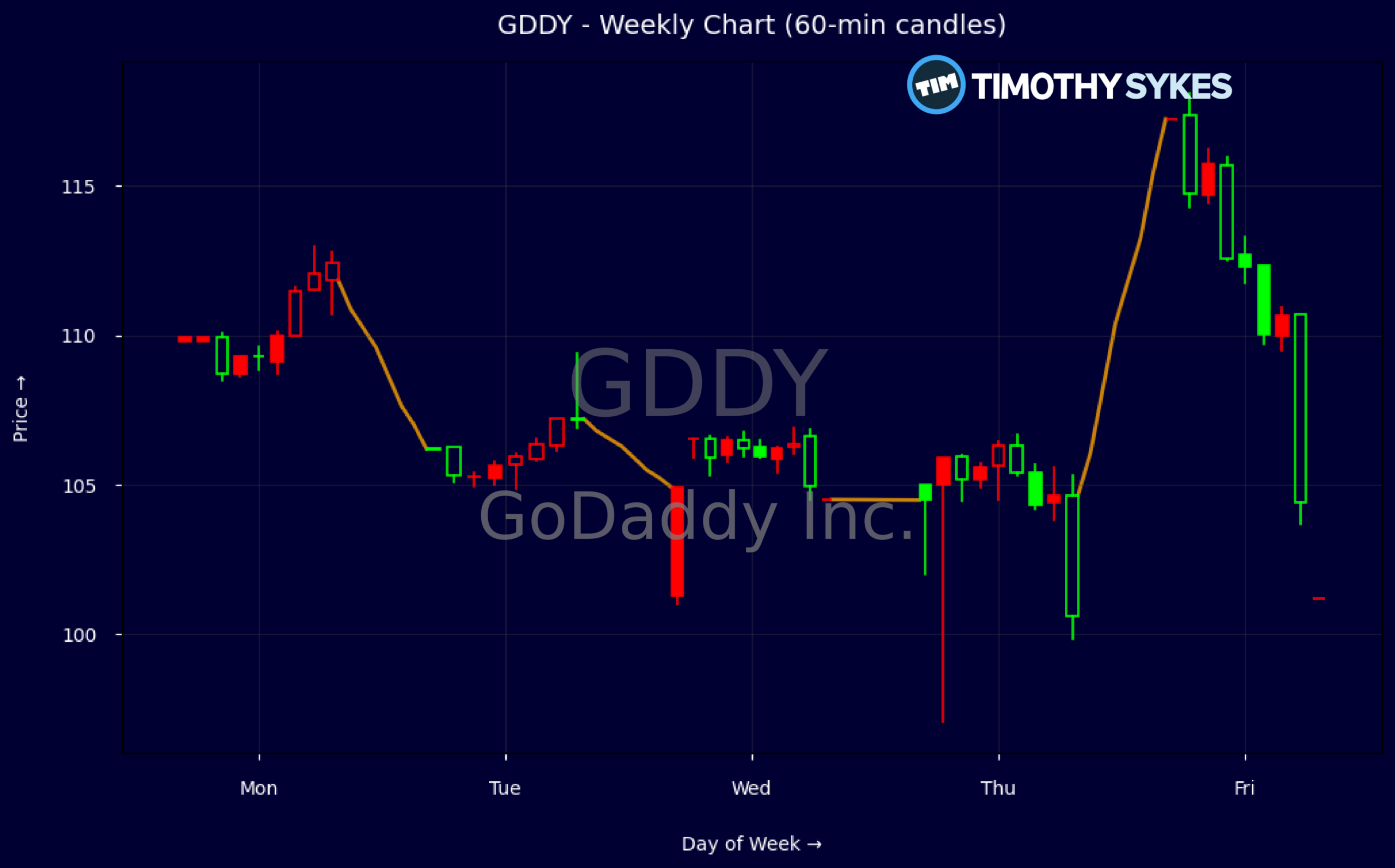
Weekly Update Oct 26 – Oct 30, 2026: On Friday, October 30, 2026 GoDaddy Inc. stock [NYSE: GDDY] is trending up by 8.73%! Discover the key drivers behind this movement as well as our expert analysis in the detailed breakdown below.
Technology industry expert:
Analyst sentiment – positive
GoDaddy holds a defensible position as a scaled SMB web presence and commerce platform with attractive fundamentals. High gross margin at 82% and EBIT margin near 26% place it in the upper tier of Software & IT Services peers, while revenue growth of ~7–8% is solid if not hypergrowth. Cash generation is strong, with quarterly FCF of ~$437M and a low ~7x P/FCF multiple, but the balance sheet is heavily levered (debt/equity >500%, current ratio 0.6), keeping financial risk materially above sector norms.
Technically, the dominant trend is up, with price rebounding sharply from the low-$100s to $117.24, likely on the Q3 beat and guidance raise. The intraday 5‑minute action shows expanding ranges and elevated volume, consistent with institutional participation rather than retail-only momentum. Immediate resistance sits at $118–120; a clean breakout with volume above that band opens room toward the mid‑$120s. On the downside, $105 is the critical tactical support; a stop for short‑term longs should sit just below $101.
Fundamentally and tactically, the setup is favorable versus Technology and Software & IT Services benchmarks. GDDY now offers sector‑leading margins, above‑average ROIC in the mid‑20s, and a discounted P/E relative to growth and FCF quality, with Airo‑driven AI products and holiday‑oriented campaigns acting as incremental demand catalysts. Class‑action noise and leverage are real but manageable near term. I assign an overweight stance with a 6–12 month target range of $130–135, with strong support at $100 and major resistance at $135.
More Breaking News
Quick Financial Overview
GoDaddy Inc. comes into this move with real earnings power behind the chart. Q3 results showed EPS and revenue ahead of analyst expectations while management raised full-year 2026 guidance toward the high end of its prior range. Revenue is running around $4.95B annualized, supported by an 82.2% gross margin and EBIT margin near 25.7%, which is solid profitability for a subscription-heavy online services model.
Cash flow is a key part of the GDDY story. In the latest quarterly cash flow report, operating cash flow was about $442.5M with free cash flow near $437.4M, helped by low capital spending. Management is channeling this into heavy capital returns, including roughly $543.9M of stock repurchases in the period, while keeping leverage significant but manageable, with interest coverage at 9.3 and a total debt-to-equity ratio above 500.
On the tape, the stock just ripped from a weekly close near $101 to a post-earnings spike around $117 on 2026/10/30, a sharp breakout after choppy trade between $97 and $109 earlier in the week. Intraday, GDDY opened strong near $104, quickly pushed above $110, and then trended higher through the session, holding successive higher lows before closing near the highs at $117.24. That pattern shows clear demand absorption all day, with dip buyers stepping in around each minor pullback.
Conclusion
This is stock news, not investment advice. Timothy Sykes News delivers real-time stock market news focused on key catalysts driving short-term price movements. Our content is tailored for active traders and investors seeking to capitalize on rapid price fluctuations, particularly in volatile sectors like penny stocks. Readers come to us for detailed coverage on earnings reports, mergers, FDA approvals, new contracts, and unusual trading volumes that can trigger significant short-term price action. Some users utilize our news to explain sudden stock movements, while others rely on it for diligent research into potential investment opportunities.
Dive deeper into the world of trading with Timothy Sykes, renowned for his expertise in penny stocks. Explore his top picks and discover the strategies that have propelled him to success with these articles:
- Penny Stocks Trading Guide
- Best Penny Stocks Under $1 to Buy Today
- Top 8 Penny Stocks to Watch on Robinhood
Once you’ve got some stocks on watch, elevate your trading game with StocksToTrade the ultimate platform for traders. With specialized tools for swing and day trading, StocksToTrade will guide you through the market’s twists and turns.
Dig into StocksToTrade’s watchlists here:





Leave a reply