

Regeneron Pharmaceuticals Inc. stocks have been trading up by 12.06 percent after positive trial data boosted investor confidence
Key Takeaways
- Late Phase 3 C-POST follow-up showed Libtayo cut risk of death by 37% and sustained disease-free survival in high‑risk skin cancer, reinforcing standard-of-care status for Regeneron.
- An EMA advisory panel backed a less frequent Libtayo dosing schedule in Europe, with every‑six‑weeks infusions and shorter visits, pending final approval.
- A renewed BARDA/ASPR/HHS deal locks in about $270M of Inmazeb Ebola supply revenue for Regeneron through 2031, supported by strong mortality‑reduction data.
- Major Wall Street firms including Canaccord, TD Cowen, Piper Sandler, and Evercore ISI now cluster REGN price targets around the mid‑$800s to near $1,000, with overweight ratings.
- Canaccord points to Dupixent strength and upcoming C5 program catalysts, including a planned gMG launch in Q4 2026, while flagging Dupixent life‑cycle questions.
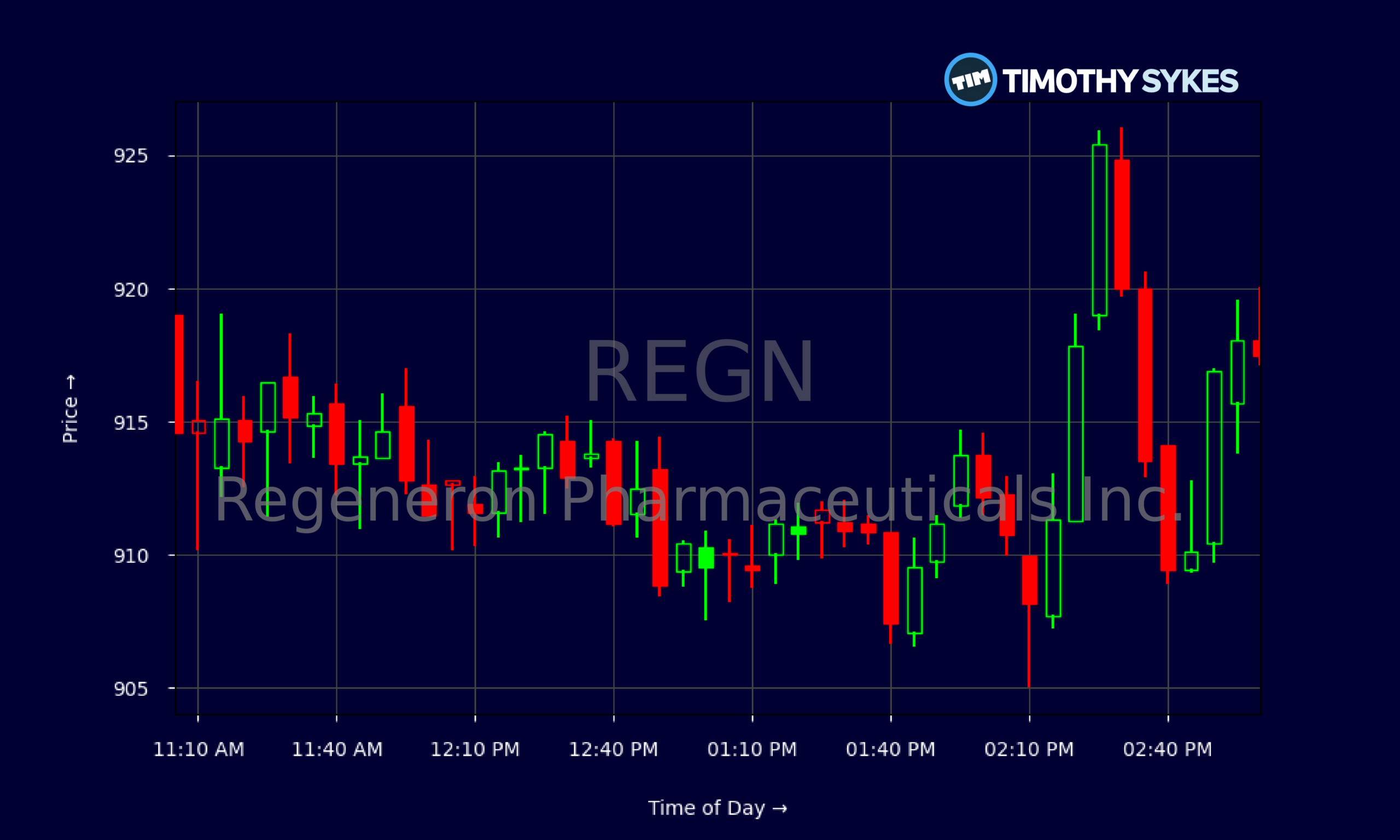
Live Update At 15:03:30 EDT: On Friday, October 30, 2026 Regeneron Pharmaceuticals Inc. stock [NASDAQ: REGN] is trending up by 12.06%! Discover the key drivers behind this movement as well as our expert analysis in the detailed breakdown below.
Quick Financial Overview
REGN has been trading like a big‑cap biotech with real momentum. Over the past few weeks, Regeneron shares have run from the mid‑$730s to a recent close around $917.50, a powerful trend that traders cannot ignore. The latest session shows a wide intraday range from $839.08 to $935.35, signaling heavy interest and some volatility as news hits the tape.
On the daily chart, REGN has been stair‑stepping higher, with shallow pullbacks getting bought around the $790–$810 area before the latest breakout. Intraday, the 5‑minute chart shows tight action above $900 for most of the afternoon, a sign of dip buyers supporting the move rather than a blow‑off spike.
More Breaking News
Under the hood, Regeneron is not trading on hype alone. The company generated about $4.29B in quarterly revenue with a fat 88.6% gross margin and roughly 30.6% EBIT margin. A price‑to‑earnings ratio near 18.5 and price‑to‑sales around 4.95 are not cheap, but they are reasonable for a profitable growth biotech with multiple franchises. Low leverage, a current ratio of 3.3, and strong returns on equity and capital give REGN room to keep funding its pipeline without stressing the balance sheet. For traders, this mix of up‑trending price action and solid fundamentals creates a textbook momentum‑plus‑quality setup to track.
Why Traders Are Watching REGN Now
The core driver behind the latest REGN surge is Libtayo. Regeneron released almost four‑year follow‑up data from the Phase 3 C‑POST trial in high‑risk cutaneous squamous cell carcinoma. The adjuvant use of Libtayo after surgery and radiation now shows a 37% reduction in risk of death, up from 14% earlier in the follow‑up, with disease‑free survival still holding. For a cancer name, that kind of deep, long‑term survival signal is gold. It de‑risks the drug and strengthens the view that Libtayo stays embedded as standard of care.
Regeneron doubled down on Libtayo’s global reach as well. In Europe, the EMA’s CHMP issued a positive opinion to let patients switch from 350 mg every three weeks to 700 mg every six weeks after 12 weeks of therapy, with the option for shorter infusions. That is simple but powerful. Fewer hospital visits and faster chair time tend to drive better adherence and physician comfort, which can quietly lift ex‑U.S. sales over time. Traders watching REGN’s oncology story now see both clinical depth and commercial convenience lining up.
Beyond cancer, Regeneron extended its BARDA/ASPR/HHS agreement for Inmazeb, its Ebola treatment, adding roughly $270M of contracted supply revenue through 2031. Data show a 55% mortality reduction versus active control, which helps justify ongoing U.S. government support. For REGN, this is not the main earnings driver, but it is a steady, low‑beta cash stream that diversifies away from the Dupixent and Eylea machines.
Layered on top of the pipeline wins is a wave of bullish Street commentary. TD Cowen lifted its REGN target to $980, leaning on stronger modeled Eylea and Eylea HD sales as demand skews to the higher‑dose product. Canaccord took its target to $922, citing Dupixent strength and C5 program catalysts, including a generalized myasthenia gravis launch planned for Q4 2026. Piper Sandler nudged its target to $865, while Evercore ISI, despite trimming to $850 from $900, still sits in the overweight camp. The average target in the high‑$870s tells traders the Street broadly sees upside, but not blind euphoria.
Conclusion
For active traders, REGN is a classic case of news flow lining up with the chart. Regeneron’s Libtayo data from the C‑POST trial materially strengthens the long‑term story, pushing survival gains from 14% to a 37% reduction in death risk while sustaining disease‑free survival. That kind of late follow‑up often matters more to big money than any single quarterly print. Pair that with the EMA’s positive dosing opinion and Libtayo looks stickier in Europe as well.
At the same time, Regeneron’s breadth shows up in the extended BARDA deal for Inmazeb and the Street’s confidence in Dupixent, Eylea, and the upcoming C5 franchise. REGN carries a solid balance sheet, thick margins, and still‑reasonable valuation metrics for a biotech this profitable. The recent multi‑week rally from the $700s to above $900 reflects traders finally pricing in that mix of durability and growth.
The job now is discipline. REGN is extended short term, and not every analyst is blindly raising targets; Evercore’s trim to $850 is a reminder that execution and pricing risk never disappear. As Tim Sykes likes to say, “The market doesn’t care about your opinion, it cares about your preparation.” As millionaire penny stock trader and teacher Tim Sykes, says, “You must adapt to the market; the market will not adapt to you.”. For REGN, that means mapping key support zones on the chart, tying them to upcoming catalysts like earnings and gMG timelines, and being ready to trade the volatility, not marry the stock. This article is for educational and research purposes only, and any trading decisions remain solely your responsibility.
This is stock news, not investment advice. Timothy Sykes News delivers real-time stock market news focused on key catalysts driving short-term price movements. Our content is tailored for active traders and investors seeking to capitalize on rapid price fluctuations, particularly in volatile sectors like penny stocks. Readers come to us for detailed coverage on earnings reports, mergers, FDA approvals, new contracts, and unusual trading volumes that can trigger significant short-term price action. Some users utilize our news to explain sudden stock movements, while others rely on it for diligent research into potential investment opportunities.
Dive deeper into the world of trading with Timothy Sykes, renowned for his expertise in penny stocks. Explore his top picks and discover the strategies that have propelled him to success with these articles:
- Penny Stocks Trading Guide
- Best Penny Stocks Under $1 to Buy Today
- Top 8 Penny Stocks to Watch on Robinhood
Once you’ve got some stocks on watch, elevate your trading game with StocksToTrade the ultimate platform for traders. With specialized tools for swing and day trading, StocksToTrade will guide you through the market’s twists and turns.
Dig into StocksToTrade’s watchlists here:





Leave a reply