

CrowdStrike Holdings Inc. stocks have been trading up by 8.75 percent amid strong cybersecurity demand and upbeat growth outlook.
What Traders Need To Know
- Shares jumped after a Nvidia collaboration that embeds Falcon Guardian AI security into Nvidia’s OpenShell runtime, with plans to extend protection into Nvidia Sentry at the chip level.
- Multiple major brokers have lifted price targets into roughly the $265–$320 band while keeping Buy, Overweight, or Outperform calls tied to AI-driven security demand.
- Falcon Flex subscriptions are driving about a 40% uplift in annual recurring revenue on initial migrations, with more upside from follow-on “re-Flexes,” according to Needham.
- Q3 channel checks from KeyBanc point to stronger security budgets into 2027, better win rates, and more AI use moving from pilots into production.
- Management has urged holders to ignore a conditional mini-tender at $260 per share from Tutanota LLC, flagging it as unfavorable to shareholders.
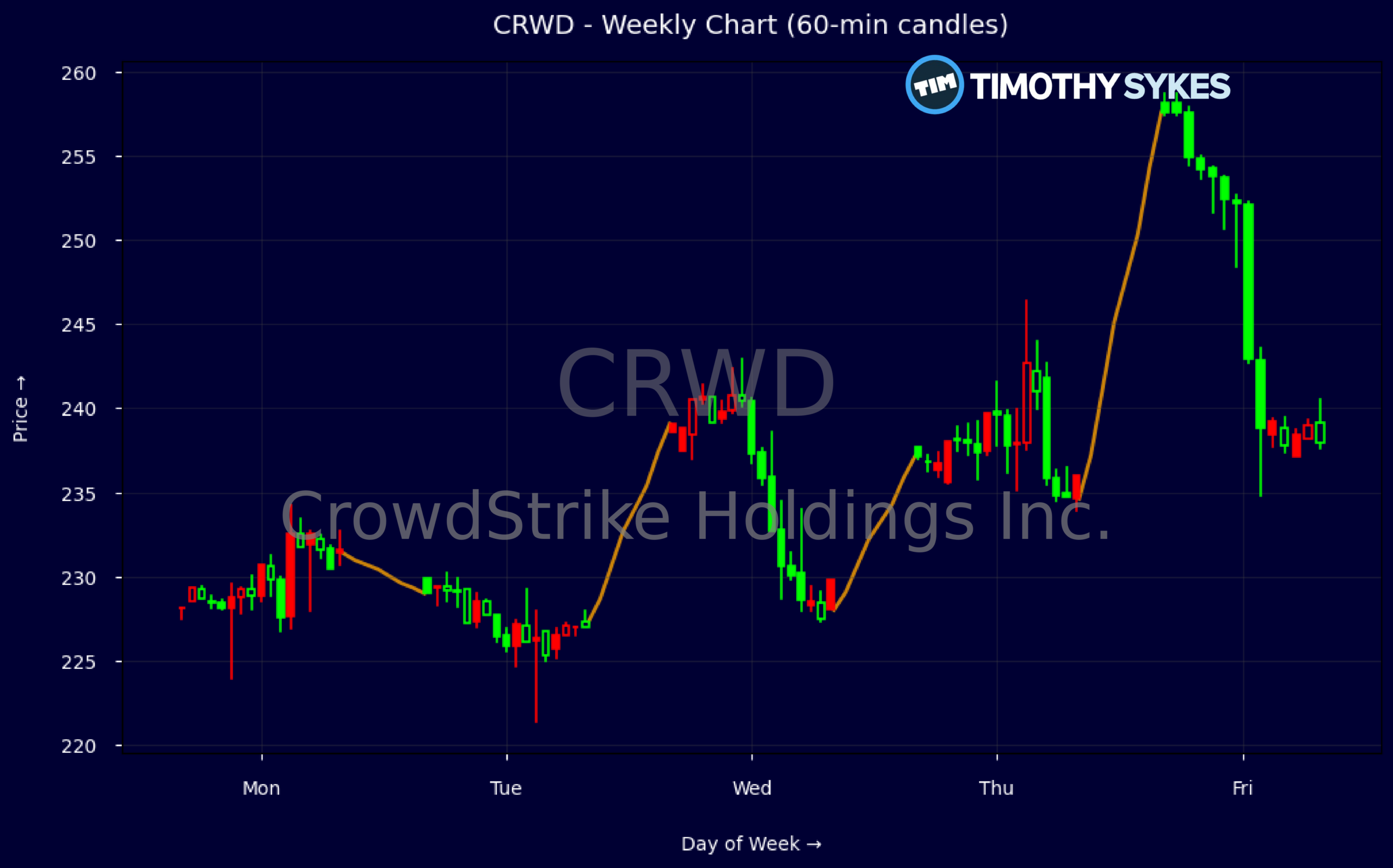
Weekly Update Oct 19 – Oct 23, 2026: On Friday, October 23, 2026 CrowdStrike Holdings Inc. stock [NASDAQ: CRWD] is trending up by 8.75%! Discover the key drivers behind this movement as well as our expert analysis in the detailed breakdown below.
Technology industry expert:
Analyst sentiment – positive
CrowdStrike is the clear share-gainer in next‑gen security, with 75% gross margins, rapidly scaling revenue (+26.9% 3‑yr CAGR; +36.5% 5‑yr) and improving operating leverage, though GAAP profitability remains nascent (EBIT margin ~2%, total profit margin ~1.1%). Free cash flow is strong ($376M in the latest quarter; FCF margin ~26%), balance sheet is solid (net cash, debt/equity 0.16, current ratio 1.6). Valuation is extreme (P/E >1,200, P/S ~52, P/FCF ~184), embedding flawless execution and multi‑year premium growth.
Technically, CRWD is in a strong uptrend, with a sharp weekly move from ~$228 to a $258.20 close, breaking recent consolidation highs near $240–$245 and confirming renewed buying interest following the Nvidia partnership headlines. Intraday 5‑minute action shows persistent dip‑buying and strong closes near session highs, consistent with institutional accumulation on elevated volume. For trading, $245 is the first key support buy‑zone; above, $260 is an actionable breakout trigger for momentum entries with tight risk controls.
The Nvidia Falcon Guardian/OpenShell and future Sentry integration positions CrowdStrike as a foundational AI infrastructure security layer, a structural advantage versus broader Tech and Software & IT Services peers that lack similar silicon‑level hooks. Layer on Flex‑driven ARR uplift (~40% on migrations), broad target hikes ($265–$320), and visible AI security tailwinds, and CRWD merits a premium multiple. I see upside toward $290–$310 over 12 months, with support at $245 and strong resistance only emerging near the low‑$300s.
More Breaking News
Quick Financial Overview
CrowdStrike Holdings Inc. just got a powerful narrative catalyst: deeper integration of its Falcon Guardian AI Detection and Response with Nvidia’s OpenShell secure runtime and, longer term, Nvidia Sentry in-chip enforcement. That positions CRWD as a security layer baked into AI infrastructure, not bolted on after the fact. The market reaction has been clear, with shares spiking about 6.1% on the collaboration announcement, showing traders are willing to pay up for AI-infrastructure leverage.
Under the hood, the business supports that enthusiasm. Revenue over the last year sits near $4.81B, growing at roughly 27% over three years and about 37% over five, while gross margin is a strong 75.3%. Profitability at the bottom line is still thin, with profit margins near 1% and a sky-high P/E around 1,250, which tells you traders are paying for growth and platform dominance, not current earnings. Balance-sheet risk looks controlled with total debt-to-equity of 0.16 and a current ratio of 1.6.
Cash generation is a key offset to the lofty multiples. Recent quarterly free cash flow was roughly $376M on operating cash flow of $530M, helped by large non-cash stock-based compensation. On the tape, weekly price action shows CRWD grinding from the low $230s to roughly $258 into the Nvidia news window, a strong trend. Intraday, the stock built a steady staircase from the $240 area at the open toward $258 into the close, with shallow pullbacks bought quickly—classic strong-trend behavior that momentum traders look for on heavy-news days.
Conclusion
This is stock news, not investment advice. Timothy Sykes News delivers real-time stock market news focused on key catalysts driving short-term price movements. Our content is tailored for active traders and investors seeking to capitalize on rapid price fluctuations, particularly in volatile sectors like penny stocks. Readers come to us for detailed coverage on earnings reports, mergers, FDA approvals, new contracts, and unusual trading volumes that can trigger significant short-term price action. Some users utilize our news to explain sudden stock movements, while others rely on it for diligent research into potential investment opportunities.
Dive deeper into the world of trading with Timothy Sykes, renowned for his expertise in penny stocks. Explore his top picks and discover the strategies that have propelled him to success with these articles:
- Penny Stocks Trading Guide
- Best Penny Stocks Under $1 to Buy Today
- Top 8 Penny Stocks to Watch on Robinhood
Once you’ve got some stocks on watch, elevate your trading game with StocksToTrade the ultimate platform for traders. With specialized tools for swing and day trading, StocksToTrade will guide you through the market’s twists and turns.
Dig into StocksToTrade’s watchlists here:





Leave a reply