

Inter & Co. Inc. stocks have been trading up by 6.68 percent after upbeat earnings guidance signaled stronger-than-expected growth.
What Traders Need To Know
- JPMorgan raised Inter & Co.’s price target from $9 to $11 and reaffirmed an Overweight rating after a Brazil “risk-on” rally cut perceived equity risk and lifted earnings estimates.
- UBS lifted its price target on Inter & Co to $10 from $8.80 while reiterating a Buy rating, signaling stronger conviction in upside potential.
- Shares recently traded near $7.21 versus a mean Street target of $10.20, with Inter & Co. Inc. carrying an overall overweight rating from analysts.
- Management named Alexandre Riccio as COO and executive vice chair and Francisco Santos as Chief Growth Officer; stock dipped about 1.8% pre-market as traders digested the moves.
- A recent Form 6-K filing was routine for Inter & Co, with no new operational or strategic details, keeping the focus on analyst calls and leadership changes.
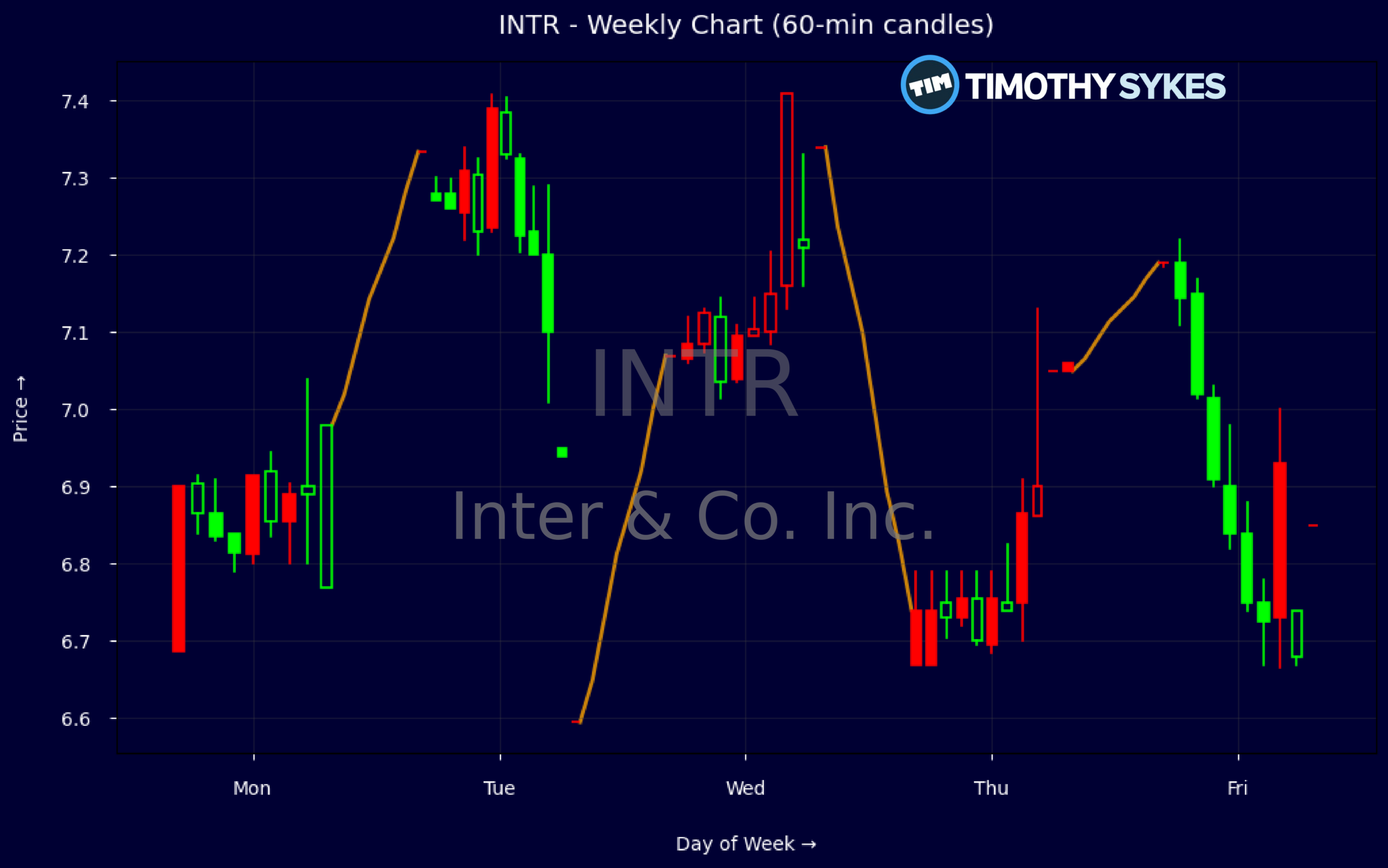
Weekly Update Oct 19 – Oct 23, 2026: On Friday, October 23, 2026 Inter & Co. Inc. stock [NASDAQ: INTR] is trending up by 6.68%! Discover the key drivers behind this movement as well as our expert analysis in the detailed breakdown below.
Finance industry expert:
Analyst sentiment – positive
Inter&Co (INTR) operates as a high-growth, digital-first Brazilian financial institution with solid top-line scale at ~$8.4bn revenue, but profitability remains thin, with a slightly negative pre-tax margin of -2.3% and ROIC of -1.2% despite positive ROE of 8%. The balance sheet shows total assets near R$99bn, equity of ~R$10.2bn and a high leverage ratio of 9.7, typical for banks but demanding tight risk control. Price-to-book of 1.7x and price-to-sales of 2.1x imply investors are already paying for growth and improving returns.
Technically, the weekly tape shows price oscillating between roughly 6.67 and 7.33, with higher lows versus the mid-6s and repeated pushes toward 7.30–7.35, defining a constructive short-term uptrend after prior consolidation. Five‑minute candles indicate dip-buying near 6.70–6.75 and supply emerging above 7.30. The dominant pattern is an emerging bullish range breakout setup. A specific actionable level: 7.35 as upside breakout trigger; above that, momentum traders can target 8.00, using 6.65–6.70 as a tight stop zone, sized to intraday volume.
Fundamentally and from catalysts, Street conviction is strong: JPMorgan lifting its target to $11 and UBS to $10, both with Overweight/Buy, confirms a positive re-rating narrative versus a current ~$7.2 price and ~10.2 average target. Sector peers in Brazilian digital banking often trade at similar or higher P/B yet INTR is still under-earning, suggesting upside as margins normalize. New senior operators (COO, CGO) should accelerate scale benefits. Base case: accumulate with a 12–18 month target range of $9.50–$11, with support at $6.70 and resistance at $8.00 then $10.
More Breaking News
Quick Financial Overview
Inter & Co. Inc., ticker INTR, is trading at a clear discount to where major banks think it should be. UBS now targets $10 while JPMorgan is higher at $11, both well above the recent $7-range price. With a mean Street target around $10.20, traders are looking at roughly a mid-30% implied upside from $7.21, but that gap is potential, not a promise.
On the tape, INTR has been grinding higher. The recent weekly range shows price pushing from around $6.69 up to $7.33, with the last close near $7.19. Intraday action shows a steady intraday trend: buyers defended the $6.80–$6.90 area through midday and then walked it up into the close near the highs, a classic controlled accumulation day rather than a wild squeeze.
Fundamentals are typical of a growing financial platform. Revenue is about $8.40B, with a price-to-sales ratio near 2.07 and price-to-book around 1.71, suggesting the market is paying a modest premium to book for a bank-like business. Return on equity near 8% and slim positive return on assets around 1% show the franchise is profitable but still building efficiency. A leverage ratio around 9.7 is high but normal for a bank balance sheet, with roughly $98.6B in assets, $45.3B in loans, and over $11.6B in cash and equivalents.
Conclusion
Inter & Co. Inc. sits at an interesting crossroads where price, Wall Street expectations, and internal changes are all lining up. Two heavyweight banks, UBS and JPMorgan, both raised their price targets into the $10–$11 zone while reaffirming positive ratings, yet the stock still trades in the low $7s. For traders, that gap is the core of the current risk-reward: a constructive analyst backdrop versus the usual execution and macro risks tied to Brazil and to financials generally.
The chart supports a bullish bias in the short term. INTR has shifted from the high-$6 area toward $7.20 with a clean, ordered intraday uptrend, showing real demand on dips rather than just headline chasing. At the same time, the slight pre-market drop on the COO and Chief Growth Officer appointments reminds traders that leadership changes can create short-term noise even if they strengthen the long-term story. In navigating that noise, discipline matters as much as the setup itself. As millionaire penny stock trader and teacher Tim Sykes says, “Consistency is key in trading; don’t let emotions dictate your trades.” That mindset is crucial when price action and headlines pull in opposite directions.
For educational and research purposes, the key levels are straightforward: the $6.80–$6.90 zone as near-term support, and the recent $7.30 area as initial resistance on the way toward analyst target territory. As I tell my students, “The edge is not in guessing the future, it’s in defining your levels, sizing your risk, and letting the market prove you right or wrong fast.”
This is stock news, not investment advice. Timothy Sykes News delivers real-time stock market news focused on key catalysts driving short-term price movements. Our content is tailored for active traders and investors seeking to capitalize on rapid price fluctuations, particularly in volatile sectors like penny stocks. Readers come to us for detailed coverage on earnings reports, mergers, FDA approvals, new contracts, and unusual trading volumes that can trigger significant short-term price action. Some users utilize our news to explain sudden stock movements, while others rely on it for diligent research into potential investment opportunities.
Dive deeper into the world of trading with Timothy Sykes, renowned for his expertise in penny stocks. Explore his top picks and discover the strategies that have propelled him to success with these articles:
- Penny Stocks Trading Guide
- Best Penny Stocks Under $1 to Buy Today
- Top 8 Penny Stocks to Watch on Robinhood
Once you’ve got some stocks on watch, elevate your trading game with StocksToTrade the ultimate platform for traders. With specialized tools for swing and day trading, StocksToTrade will guide you through the market’s twists and turns.
Dig into StocksToTrade’s watchlists here:





Leave a reply