

Crocs Inc. stocks have been trading up by 25.4 percent amid surging demand and bullish analyst upgrades driving optimism.
Key Takeaways
- Barclays upgraded CROX to Overweight and lifted its price target to $139 from $118, backing a multi‑year growth story driven by stronger international sales and product innovation.
- Shares of Crocs Inc. jumped roughly 6–7% after the Barclays call, as traders repriced CROX off the prior ~$126 area despite only slightly below‑average trading volume.
- UBS flagged mixed sentiment on CROX ahead of Q3, expecting an EPS beat but warning that Amazon channel shifts will weigh on reported North America revenue and justifying a Neutral rating with a $120 target.
- The BARK x Crocs partnership is expanding from sold‑out Pet Crocs into branded beds, toys, and dog‑walk accessories sold on bark.co and crocs.com, extending the Crocs Inc. franchise into the pet aisle.
- Crocs Inc. will host a Q3 2026 earnings call on 2026/10/29, giving traders a near‑term catalyst to test the bullish Barclays view against UBS’s more cautious stance.
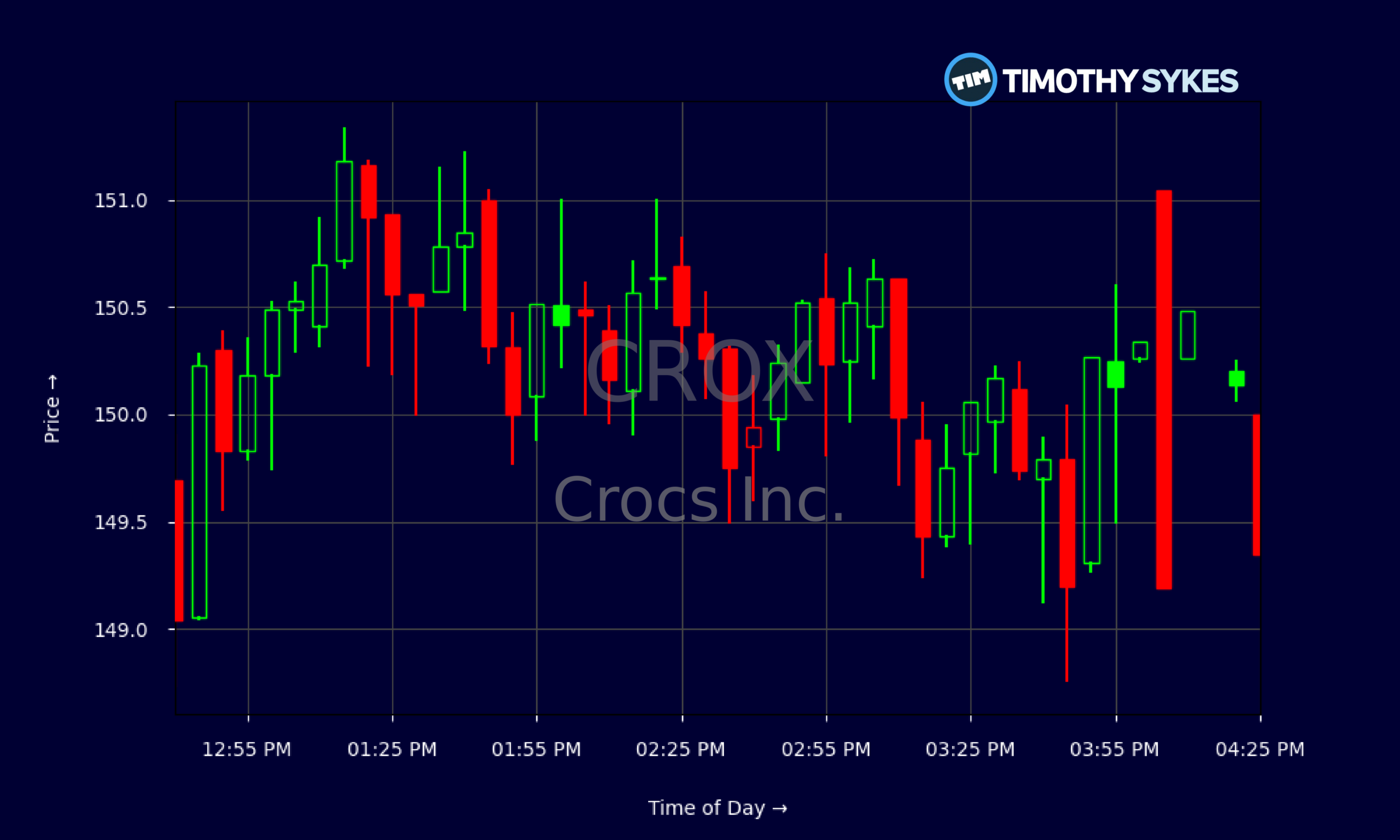
Live Update At 16:47:04 EDT: On Thursday, October 29, 2026 Crocs Inc. stock [NASDAQ: CROX] is trending up by 25.4%! Discover the key drivers behind this movement as well as our expert analysis in the detailed breakdown below.
Quick Financial Overview
CROX has been acting like a momentum stock again. In late October, Crocs Inc. ripped from the high‑$110s to about $150.26, with the latest session printing a wide intraday range from $139.33 to $151.82. That kind of $10+ swing shows active trading and strong emotion on both sides.
The intraday tape in CROX around the close was tight, with most five‑minute candles pinned between $149 and $151. That tells traders the stock is consolidating gains rather than immediately giving them back. For short‑term players, that consolidation zone becomes a key risk level.
Fundamentally, Crocs Inc. is not trading like a hype name. A price/earnings ratio near 10.1 and price‑to‑sales around 1.36 are low for a consumer brand posting roughly $4.04B in annual revenue and fat 57.5% gross margins. Profit margins sit in the mid‑teens, while returns on equity north of 40% show CROX is squeezing a lot of profit out of every dollar of shareholder capital.
More Breaking News
Leverage is real but manageable. Total debt to equity of 1.22 and interest coverage around 11 times earnings suggest Crocs Inc. can comfortably service its obligations while still funding growth. For traders, that mix of strong profitability, reasonable valuation, and a powerful chart makes CROX a name to keep on the premarket screen.
Why Traders Are Watching CROX Right Now
CROX caught a fresh spark after Barclays turned more bullish. The firm upgraded Crocs Inc. to Overweight from Equal Weight and raised its price target to $139 from $118. That is not a minor tweak. Barclays framed CROX as a multi‑year growth story, pointing to strengthening international sales and early traction from product innovation and heavier brand spend.
The market listened. On the day of the call, Crocs Inc. climbed about 6–7%, jumping from roughly $126 toward that $139 target. Volume was only slightly below average, which tells traders this was not a full‑on mania day, more like the start of a sentiment shift. When a stock like CROX moves that far on modest volume, it often means there is still plenty of room for big funds to reposition.
At the same time, UBS brings a reality check. UBS keeps CROX at Neutral with a $120 target and highlights a messy near‑term picture in North America. The key twist: Amazon sales are moving from a direct‑to‑consumer model into first‑party wholesale. That accounting change pressures reported North America revenue even if real demand for Crocs Inc. product stays steady. UBS still expects an EPS beat and slightly higher full‑year EPS guidance, which quietly supports the Barclays growth angle.
Traders also care about the story outside shoes. The expanded BARK x Crocs line pushes the Crocs Inc. brand into pet beds, toys, and dog‑walk accessories. On its own, that will not move the P&L like a new clog franchise, but it sends a strong signal: CROX is leaning into brand power and lifestyle positioning. That is exactly the type of innovation Barclays is rewarding.
Conclusion
For active traders, CROX now sits at the crossroads of chart momentum and shifting Wall Street expectations. Crocs Inc. just surged into the $150 area after a Barclays upgrade and target hike to $139, while still trading on valuation metrics that look more like a value stock than a fad brand. UBS, meanwhile, reminds the market that North America and Amazon channel noise are not going away overnight.
The next big test lands on 2026/10/29, when Crocs Inc. hosts its Q3 2026 earnings call. Traders should be dialed in for commentary on three pressure points: how fast international growth is compounding, how the Amazon shift is flowing through reported North America numbers, and whether management doubles down on the long‑term growth message Barclays likes. Any confirmation there can keep CROX’s uptrend intact; any stumble can turn this high‑volume zone into a ceiling.
As Tim Sykes likes to say, “Patterns repeat, but only for traders who study them relentlessly.” As millionaire penny stock trader and teacher Tim Sykes says, “Embrace the journey, the ups and downs; each mistake is a lesson to improve your strategy.” CROX is offering a live pattern in real time — strong fundamentals, a bullish analyst reset, mixed regional headlines, and an upcoming catalyst. Study the chart, know the key levels, understand the story, and treat this article strictly as educational and research material, not as trading advice.
This is stock news, not investment advice. Timothy Sykes News delivers real-time stock market news focused on key catalysts driving short-term price movements. Our content is tailored for active traders and investors seeking to capitalize on rapid price fluctuations, particularly in volatile sectors like penny stocks. Readers come to us for detailed coverage on earnings reports, mergers, FDA approvals, new contracts, and unusual trading volumes that can trigger significant short-term price action. Some users utilize our news to explain sudden stock movements, while others rely on it for diligent research into potential investment opportunities.
Dive deeper into the world of trading with Timothy Sykes, renowned for his expertise in penny stocks. Explore his top picks and discover the strategies that have propelled him to success with these articles:
- Penny Stocks Trading Guide
- Best Penny Stocks Under $1 to Buy Today
- Top 8 Penny Stocks to Watch on Robinhood
Once you’ve got some stocks on watch, elevate your trading game with StocksToTrade the ultimate platform for traders. With specialized tools for swing and day trading, StocksToTrade will guide you through the market’s twists and turns.
Dig into StocksToTrade’s watchlists here:





Leave a reply