

Cloudflare Inc. stocks have been trading up by 7.9 percent amid strong demand for its AI-optimized security and edge services.
Key Takeaways
- More than 10 million developers now build on Cloudflare’s platform, jumping from 7.4 million last quarter as its Workers and AI stack evolve into a full application platform.
- Oppenheimer lifted its NET price target to $430, expecting Q3 2026 to top guidance and full‑year revenue to be raised on strong AI‑driven security and edge demand.
- TD Cowen and Barclays also raised NET targets, to $375 and $400, flagging a Q3 beat‑and‑raise setup and powerful demand for AI security and web application firewall products.
- The Deno acquisition deepens Cloudflare’s developer runtime stack and aims to make its workerd engine more flexible and self‑hostable.
- The “PHP2Shell” vulnerability may push urgent web security spending, positioning NET, Akamai, and Fastly as near‑term winners as enterprises harden their infrastructure.
Live Update At 16:47:35 EDT: On Friday, October 23, 2026 Cloudflare Inc. stock [NYSE: NET] is trending up by 7.9%! Discover the key drivers behind this movement as well as our expert analysis in the detailed breakdown below.
Quick Financial Overview
NET has been trading like a classic momentum leader. Over the last several weeks, Cloudflare shares have swung between the high $280s and mid‑$360s, with recent closes clustering in the low‑to‑mid $300s. That tells traders the dip from the highs has been met with steady buying rather than panic selling.
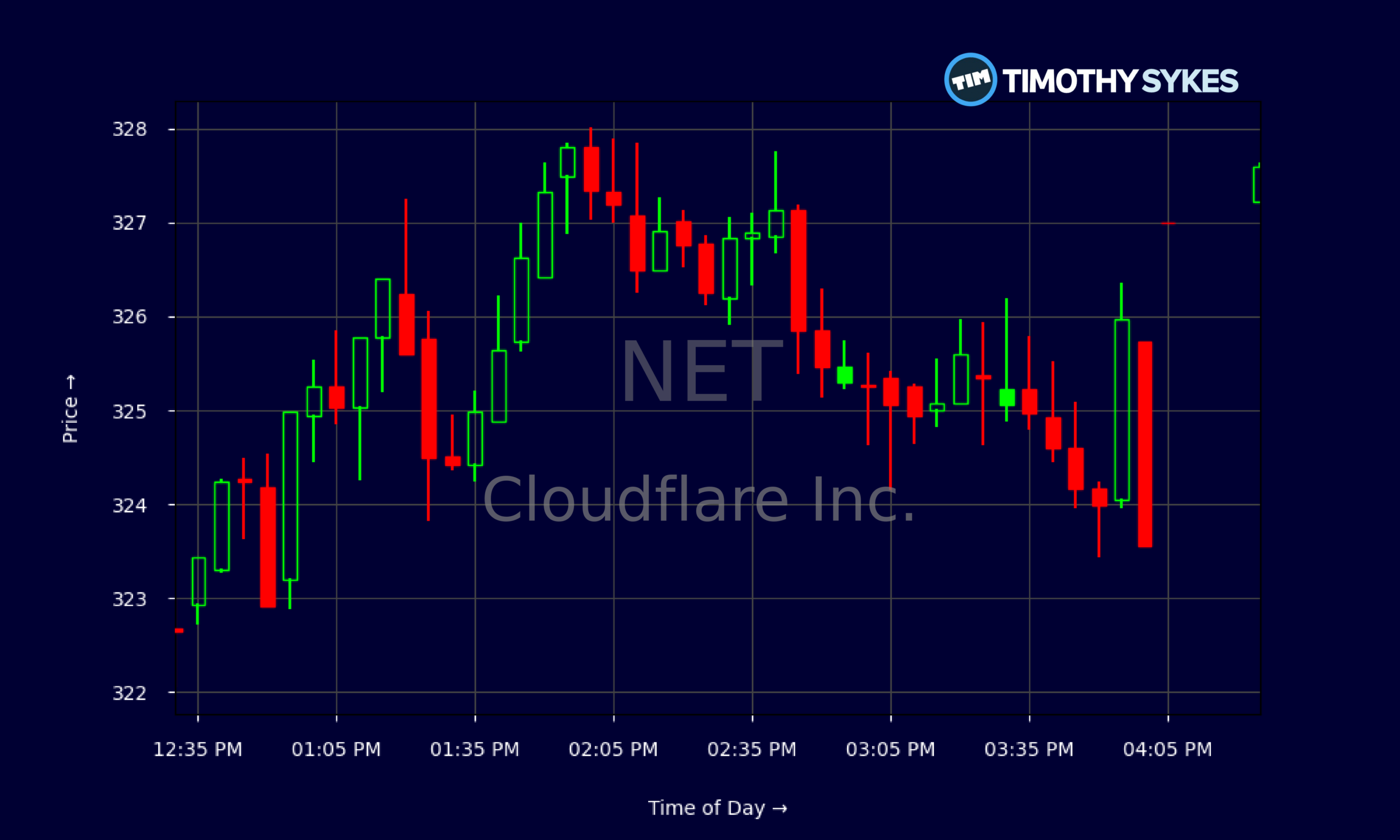
On 2026/10/23, NET opened near $306.70 and closed around $325.73 after testing both $299 and $328 intraday. The 5‑minute chart shows a strong morning shakeout below $305, followed by a grind higher all day and a tight consolidation near the highs into the close. That intraday pattern is classic accumulation — higher lows, controlled pullbacks, and no ugly flush into the bell.
Fundamentally, Cloudflare is still unprofitable, with EBIT and net margins in the red, but gross margin sits around 72.6%. That kind of margin tells traders the core business has pricing power and software‑like economics. Revenue is roughly $2.17B with three‑ and five‑year growth above 30%, so NET is paying for growth now and worrying about GAAP profits later.
More Breaking News
Valuation is rich — price‑to‑sales over 50 and sky‑high cash‑flow multiples — which means NET is a “story” and execution stock. When expectations rise, the stock can rip. When the story cracks, it can unwind fast. Active traders in NET need to respect both the upside momentum and the downside air pocket that comes with this kind of premium.
Why Traders Are Watching NET Right Now
Cloudflare is sitting at the crossroads of three hot themes: AI, edge computing, and cybersecurity. That is why NET keeps showing up on momentum screens and why big firms are moving their price targets higher.
On the product side, Cloudflare reports more than 10 million developers now building on its platform, up from 7.4 million just one quarter earlier. For NET traders, that is not just a vanity metric. It signals sticky usage for Workers, Cloudflare’s serverless platform, and its AI stack. When developer counts ramp like that, paid usage and larger contracts tend to follow with a lag, which is exactly what the Street is betting on.
Oppenheimer bumped its NET target from $380 to $430 and expects Q3 2026 revenue and EPS to beat guidance, with another raise to the full‑year outlook. TD Cowen and Barclays joined in, moving to $375 and $400, each calling out strong demand for AI security and web application firewall tools. That’s three different shops, same basic message: NET’s AI and security exposure is driving upside.
Strategically, Cloudflare is buying Deno, the JavaScript/TypeScript runtime from the creator of Node.js. For traders, that deal reinforces NET’s push to own more of the developer workflow and make its workerd runtime more flexible and self‑hosted. Add Cloudflare OS, its AI workspace with expanding one‑click integrations into major SaaS and developer platforms, and NET is positioning itself as a control layer for enterprise AI adoption.
There is also a macro tailwind. The new “PHP2Shell” vulnerability in PHP code could force companies to upgrade web security stacks fast. When headlines like that hit, budgets shift. Names like NET, Akamai, and Fastly often see a bump in demand as customers scramble to protect public‑facing applications. For short‑term NET trading, that kind of security scare can spark bursts of volume and sharp moves.
Conclusion
Right now, NET combines a strong narrative with real numbers backing it up. Developer adoption is accelerating, with Cloudflare’s platform passing 10 million builders and becoming a home base for AI agents and automated workflows. Analysts are not just noticing; they are leaning in, with Oppenheimer, TD Cowen, and Barclays all raising price targets and framing Q3 2026 as a likely beat‑and‑raise quarter for Cloudflare.
At the same time, the core financials show the trade‑off. NET is still losing money on a GAAP basis, carries leverage, and sports one of the richer multiples in software. Cloudflare survives on growth and belief. If Q3 disappoints, that premium can compress quickly. If NET delivers the upside the Street expects — plus tangible traction from the Deno acquisition, Cloudflare OS integrations, and security demand around threats like PHP2Shell — momentum traders may see another leg higher.
Insider activity has been modest so far, with a director selling 5,000 shares while still holding a large stake, something active NET traders may watch but not over‑react to. The real focus stays on earnings, AI‑driven product adoption, and whether Cloudflare keeps expanding contract sizes as traffic and AI workloads shift to its edge.
As millionaire penny stock trader and teacher Tim Sykes says, “Consistency is key in trading; don’t let emotions dictate your trades.” As Tim Sykes likes to remind traders, “The market doesn’t care about your opinion, only the price action — so cut losses quickly, protect your account, and only ride momentum when the chart and news line up.” For NET right now, the chart and the news are lining up, but risk management still comes first.
This is stock news, not investment advice. Timothy Sykes News delivers real-time stock market news focused on key catalysts driving short-term price movements. Our content is tailored for active traders and investors seeking to capitalize on rapid price fluctuations, particularly in volatile sectors like penny stocks. Readers come to us for detailed coverage on earnings reports, mergers, FDA approvals, new contracts, and unusual trading volumes that can trigger significant short-term price action. Some users utilize our news to explain sudden stock movements, while others rely on it for diligent research into potential investment opportunities.
Dive deeper into the world of trading with Timothy Sykes, renowned for his expertise in penny stocks. Explore his top picks and discover the strategies that have propelled him to success with these articles:
- Penny Stocks Trading Guide
- Best Penny Stocks Under $1 to Buy Today
- Top 8 Penny Stocks to Watch on Robinhood
Once you’ve got some stocks on watch, elevate your trading game with StocksToTrade the ultimate platform for traders. With specialized tools for swing and day trading, StocksToTrade will guide you through the market’s twists and turns.
Dig into StocksToTrade’s watchlists here:





Leave a reply