
Banco Bradesco Sa stocks have been trading up by 4.31 percent, buoyed by strong earnings and improving credit quality.
Key Takeaways Traders Can’t Ignore
- JPMorgan upgraded Banco Bradesco to Overweight from Neutral after revising Brazilian bank models post-election and raising earnings estimates.
- Shares of Banco Bradesco jumped nearly 4%, and preferred shares gained about 5% on heavy volume after the JPMorgan upgrade.
- Goldman Sachs lifted its Banco Bradesco price target from $3.80 to $4.20 while keeping a Neutral rating, signaling tempered optimism.
- Multiple BBD executive officers bought roughly $0.89M–$1.43M of preferred shares in mid-September 2026, according to SEC Form 4 filings.
- Director Denise Aguiar Alvarez and executives Carlos Pedras and Cintia De Souza added multi‑million dollar Banco Bradesco positions, sparking a 2.3% after‑hours gain on the disclosure.
Live Update At 16:47:12 EDT: On Tuesday, October 20, 2026 Banco Bradesco Sa stock [NYSE: BBD] is trending up by 4.31%! Discover the key drivers behind this movement as well as our expert analysis in the detailed breakdown below.
Quick Financial Overview
Banco Bradesco, trading in the U.S. as BBD, has shifted from sleepy to actively traded over the last few weeks. The daily chart shows BBD climbing from around $3.33 on 2026/09/29 to above $4.00 by 2026/10/20, a move of roughly 20% in three weeks. For a major Brazilian bank, that is a strong momentum burst, not a quiet grind.
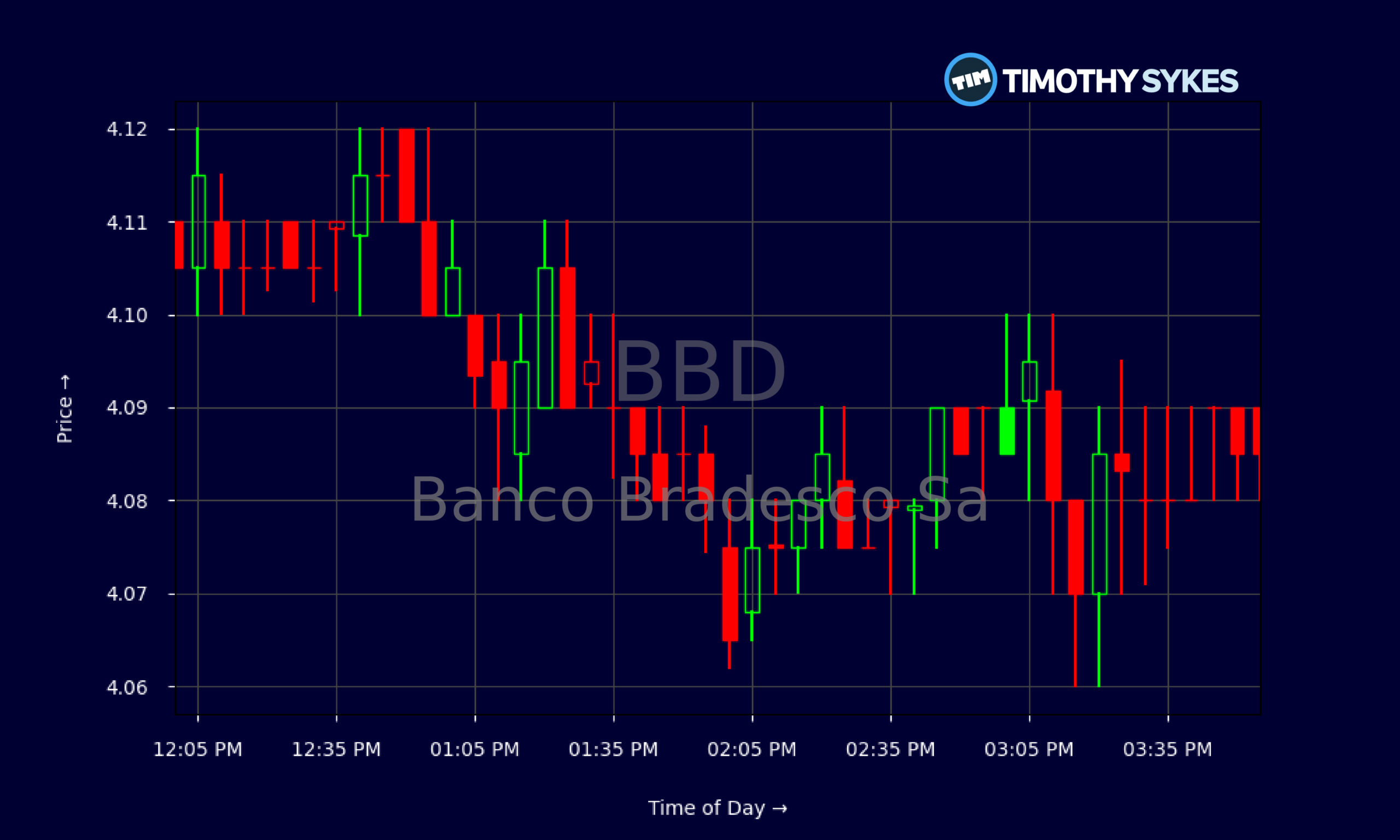
The latest session closed near $4.08 after a tight intraday range between roughly $4.02 and $4.13. The 5‑minute chart reads like classic consolidation: dozens of candles pinned between $4.07 and $4.12, with very small wicks. For short‑term traders, that kind of coil after a run often sets up the next directional break.
More Breaking News
On fundamentals, Banco Bradesco posted revenue around $105.33B, with a price‑to‑earnings ratio of 10.34 and price‑to‑book of 1.38. That tells traders the market is not paying growth‑stock multiples for BBD; it is treating the bank more like a value name with moderate profitability. Return on equity sits near 4%, while leverage is high at 13.1, typical for big banks but still a reminder that credit cycles matter. With a dividend yield near 1.16% and an ex‑dividend date on 2026/11/05, yield alone is not the main draw here; the story right now is price action plus shifting sentiment.
Why Traders Are Watching BBD Right Now
The real spark for Banco Bradesco and BBD trading was the call from JPMorgan. After Brazil’s post‑election risk‑on rally, JPMorgan cut its cost‑of‑equity assumptions for Banco Bradesco and raised earnings estimates, then upgraded the stock from Neutral to Overweight. That is not just an opinion shift; it is a model shift. Lower perceived risk and higher expected profit are exactly what big money screens for.
The market responded fast. Banco Bradesco rose nearly 4% on the upgrade, while its preferred shares jumped about 5% on heavy volume. When a large, liquid bank like Banco Bradesco moves that hard on one note, it tells traders that positioning was offside and funds were forced to adjust. For short‑term players, that kind of volume‑backed spike is textbook momentum fuel.
Goldman Sachs added another layer by raising its Banco Bradesco price target from $3.80 to $4.20 while staying Neutral. That keeps one foot on the brake. Traders in BBD now see a split tape: JPMorgan is comfortable calling for upside, while Goldman is pricing in improvement but not going all‑in bullish. That tension can actually help intraday traders, because it keeps debate alive and order flow two‑sided.
Then comes the insider cluster. In mid‑September, a wave of Banco Bradesco insiders stepped in. Executive officer Oswaldo Tadeu Fernandes bought 79,782 preferred shares for about $1.43M, lifting his holdings to 348,575 shares. Vinicius Urias Favarao grabbed roughly $1.09M of BBD preferred shares, taking his stake to 341,683 shares. Juliano Ribeiro Marcilio added around $1.09M as well, bringing his holdings to 329,067 shares.
The list goes on. Renata Geiser Mantarro bought 54,760 shares for about $984,585 with BBD trading near $3.53. Fernando Freiberger picked up 49,550 shares for about $890,909 around $3.51. Director Denise Aguiar Alvarez made one of the biggest moves, purchasing 130,596 preferred shares for about $2.35M and boosting her Banco Bradesco holdings to 6,002,223 shares. On the common side, executives Carlos Pedras and Cintia De Souza each bought roughly $1.0M–$1.08M, and the disclosure alone pushed the stock about 2.3% higher after hours. For momentum traders, that combination of analyst upgrades, strong price reaction, and heavy insider buying turns BBD into a name that demands screen space.
Conclusion
Put it together and BBD is sitting at an interesting crossroads. Banco Bradesco has just enjoyed a sharp rally off the low‑$3s into the low‑$4s, powered by a fresh Overweight from JPMorgan, a higher price target from Goldman Sachs, and a cluster of seven‑figure insider buys. The intraday tape now shows consolidation, not collapse, which tells traders that, so far, dip sellers are not in full control.
For active traders, the key questions around Banco Bradesco are simple. Does BBD hold above the recent breakout zone near $3.80–$3.90, and does volume expand again on any push through the recent highs around $4.30–$4.50? If the stock starts living above the insiders’ buy band in the mid‑$3s and builds a base in the low‑$4s, that signals the market is validating their conviction, at least for now.
At the same time, Banco Bradesco is still a leveraged emerging‑market bank with modest return on equity. This is not a no‑risk story. Credit quality, Brazil’s macro picture, and global risk appetite all matter for BBD’s next leg.
As Tim Sykes likes to say, “The market doesn’t care about your opinion, only about your discipline.” As millionaire penny stock trader and teacher Tim Sykes, says, “Preparation plus patience leads to big profits.”. For traders studying Banco Bradesco, that means respecting the trend in BBD, watching the key levels, and being ready to cut losses fast if this bullish narrative cracks. This article is for educational and research purposes only and is not investment advice.
This is stock news, not investment advice. Timothy Sykes News delivers real-time stock market news focused on key catalysts driving short-term price movements. Our content is tailored for active traders and investors seeking to capitalize on rapid price fluctuations, particularly in volatile sectors like penny stocks. Readers come to us for detailed coverage on earnings reports, mergers, FDA approvals, new contracts, and unusual trading volumes that can trigger significant short-term price action. Some users utilize our news to explain sudden stock movements, while others rely on it for diligent research into potential investment opportunities.
Dive deeper into the world of trading with Timothy Sykes, renowned for his expertise in penny stocks. Explore his top picks and discover the strategies that have propelled him to success with these articles:
- Penny Stocks Trading Guide
- Best Penny Stocks Under $1 to Buy Today
- Top 8 Penny Stocks to Watch on Robinhood
Once you’ve got some stocks on watch, elevate your trading game with StocksToTrade the ultimate platform for traders. With specialized tools for swing and day trading, StocksToTrade will guide you through the market’s twists and turns.
Dig into StocksToTrade’s watchlists here:





Leave a reply