

Banco Bradesco Sa faces mounting pressure as regulatory scrutiny and Brazil macro risks deepen, with stocks have been trading down by -28.75 percent.
Key Takeaways
- HSBC downgraded Banco Bradesco S.A. from Buy to Hold, signaling a cooler stance on BBD.
- A new $3.90 price target from HSBC points to limited upside for Banco Bradesco Sa in the near to medium term.
- The call from a major global bank pushes traders to reassess risk/reward as BBD chops around recent support and resistance levels.
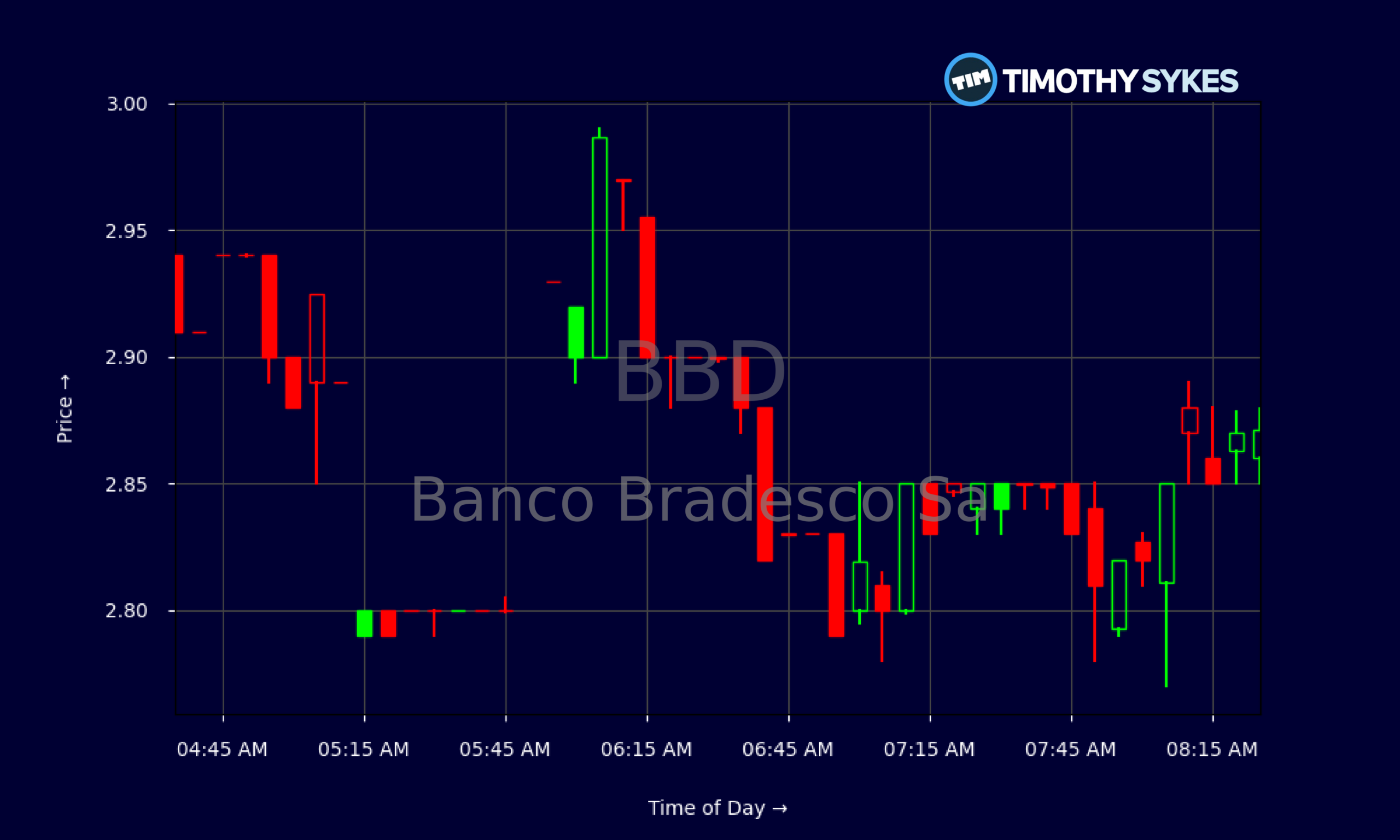
Live Update At 08:32:34 EDT: On Monday, October 26, 2026 Banco Bradesco Sa stock [NYSE: BBD] is trending down by -28.75%! Discover the key drivers behind this movement as well as our expert analysis in the detailed breakdown below.
Quick Financial Overview
Banco Bradesco Sa, trading in the U.S. under ticker BBD, has been stuck in a tight range despite heavy interest from active traders. Over the recent daily stretch, BBD has mostly traded between about $3.90 and $4.30, with failed attempts to hold above $4.30 and a recent close near $4.07. That range tells traders one thing: BBD is undecided, and the tape reflects a tug-of-war between bulls and bears.
Intraday, the 5‑minute chart shows BBD grinding between roughly $2.80 and $3.00 in premarket-style action, with quick pops getting sold and dips getting bought. That is classic range‑bound behavior, where scalpers thrive but swing traders need tight risk.
More Breaking News
Fundamentally, Banco Bradesco Sa is no tiny bank. It shows more than $2.33T in total assets and about $178.4B in equity on the latest balance sheet. A price‑to‑earnings ratio around 10.3 and price‑to‑book near 1.4 put BBD in value territory versus many global peers. A pretax profit margin near 34.6% and a dividend yield just above 1% show BBD is still profitable and paying cash, even after three tough years for revenue and payouts.
Why Traders Are Watching BBD After The HSBC Downgrade
Traders are locked in on BBD today because HSBC just stepped to the sidelines. The bank cut Banco Bradesco Sa from Buy to Hold and pinned a $3.90 price target on the stock. For a name that recently closed around $4.07 and has been hovering in the low‑$4s, that call says one thing clearly: don’t expect a big breakout without new catalysts.
When a major global house like HSBC downgrades Banco Bradesco S.A., short‑term trading action often shifts fast. Momentum players who chased BBD for a push back toward prior highs now have a very public reference level — $3.90 — that sits right below current prices. Every tick toward that line will be watched as a sentiment test. If BBD holds above $3.90 on volume, it shows dip buyers still care. A clean break below, with heavy selling, can invite more pressure.
At the same time, the fundamentals under Banco Bradesco Sa are not falling apart. BBD still runs a massive balance sheet, with over $1.15T in deposits and strong capital. But HSBC’s move says the easy money trade is gone for now, and upside from here looks capped in their view. For active traders, that often shifts the playbook from “buy and sit” to “trade the range.” BBD becomes a ticker you scalp between defined levels rather than a swing you marry for months.
This is exactly the kind of setup Tim Sykes’ community studies: a liquid, widely followed stock like BBD, a fresh analyst downgrade, and a clear price target acting as a magnet for price action.
Conclusion
For traders, the main lesson from the HSBC call on Banco Bradesco Sa is simple: respect the levels. BBD is now framed by a big‑name price target at $3.90 and recent resistance in the low‑$4s. That creates a clear battlefield where sentiment can flip quickly. If BBD repeatedly rejects moves below $3.90, short squeezes and fast pops back toward $4.10–$4.20 are on the table. If the floor cracks, range traders will adjust and watch for a new, lower channel.
The financials behind Banco Bradesco S.A. still show a profitable, leveraged bank with solid margins and a modest dividend, but the growth story looks muted. That is what HSBC is flagging by shifting BBD to Hold. For active traders, the focus now is less on long‑term narratives and more on intraday behavior around the downgrade news.
As Tim Sykes loves to remind traders, “The market doesn’t care about your opinion, only about price and volume.” As millionaire penny stock trader and teacher Tim Sykes, says, “It’s better to go home at zero than to go home in the red.”. With BBD, that means tracking how price reacts near $3.90 and sizing trades so a sudden break does not blow up your account. Use Banco Bradesco Sa as a case study: follow the news, map the key levels, and always, always cut losses fast.
This is stock news, not investment advice. Timothy Sykes News delivers real-time stock market news focused on key catalysts driving short-term price movements. Our content is tailored for active traders and investors seeking to capitalize on rapid price fluctuations, particularly in volatile sectors like penny stocks. Readers come to us for detailed coverage on earnings reports, mergers, FDA approvals, new contracts, and unusual trading volumes that can trigger significant short-term price action. Some users utilize our news to explain sudden stock movements, while others rely on it for diligent research into potential investment opportunities.
Dive deeper into the world of trading with Timothy Sykes, renowned for his expertise in penny stocks. Explore his top picks and discover the strategies that have propelled him to success with these articles:
- Penny Stocks Trading Guide
- Best Penny Stocks Under $1 to Buy Today
- Top 8 Penny Stocks to Watch on Robinhood
Once you’ve got some stocks on watch, elevate your trading game with StocksToTrade the ultimate platform for traders. With specialized tools for swing and day trading, StocksToTrade will guide you through the market’s twists and turns.
Dig into StocksToTrade’s watchlists here:




Leave a reply