

Wingstop Inc. stocks have been trading up by 10.69 percent amid strong same-store sales growth and bullish expansion outlook
Key Takeaways
- Fiscal Q3 adjusted EPS landed at $1.08 versus $1.02 expected, while revenue of $185.1M came in below the $192.9M consensus and reflected softer top-line momentum.
- Domestic same-store sales fell 5.4% year over year in Q3 2026, pushing Wingstop to cut its outlook and lean harder on marketing, operations, and the Club Wingstop loyalty engine.
- The development pipeline has passed 2,300 committed restaurants, with international units up 27% to 544 and a long-term target of 10,000+ locations worldwide.
- Management flagged India as roughly a 1,000-restaurant opportunity, with openings expected to start in early 2027 under Wingstop’s global expansion roadmap.
- Multiple firms trimmed WING price targets but kept bullish ratings, while RBC went the other way and hiked its target to $175, citing encouraging traction in new marketing and loyalty initiatives.
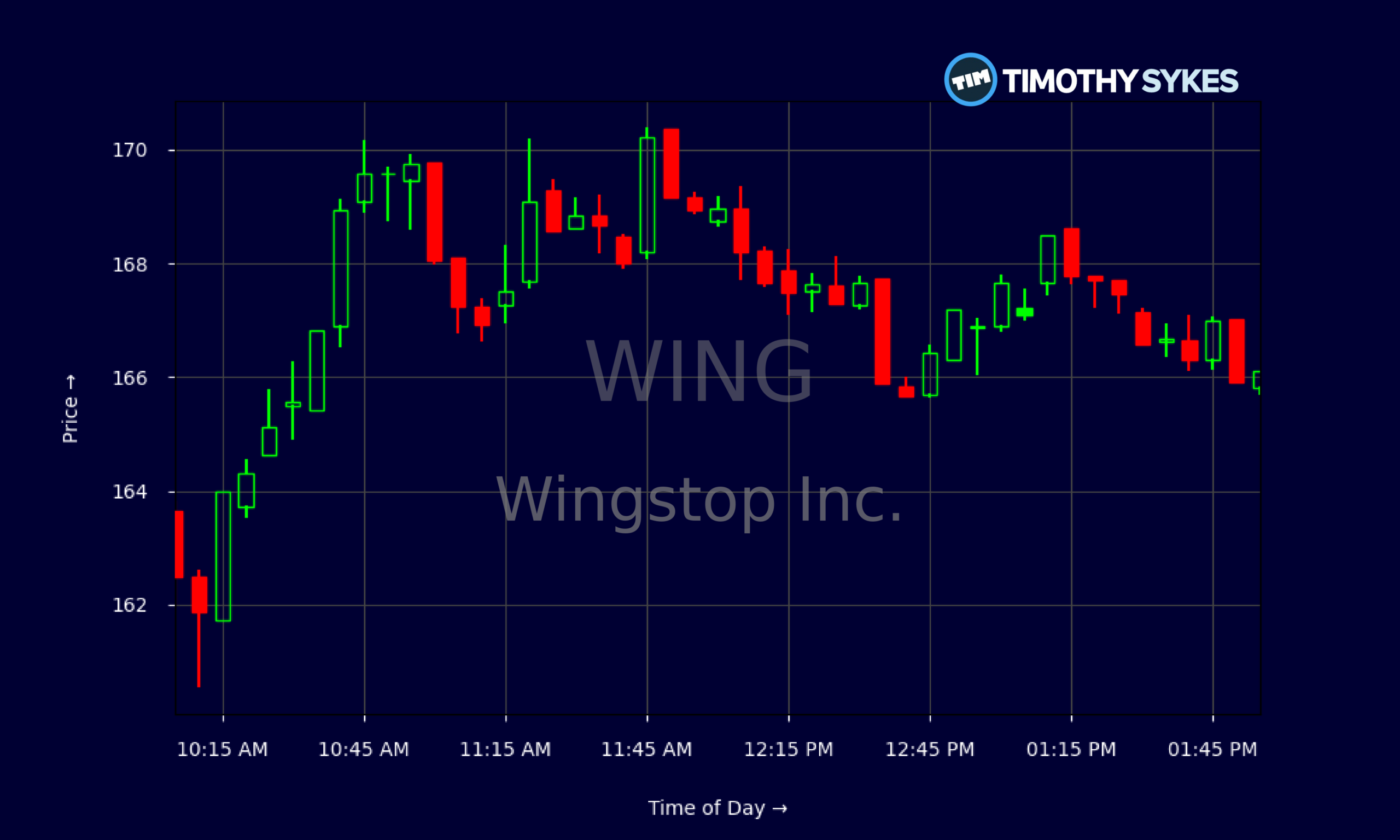
Live Update At 14:02:07 EST: On Monday, November 02, 2026 Wingstop Inc. stock [NASDAQ: WING] is trending up by 10.69%! Discover the key drivers behind this movement as well as our expert analysis in the detailed breakdown below.
Quick Financial Overview
Wingstop Inc. gave traders a classic mixed but tradable quarter. On the headline numbers, WING printed fiscal Q3 adjusted EPS of $1.08, ahead of the $1.02 Street view, even as revenue reached $185.1M and missed expectations near $192.9M. Profit held up, sales disappointed. That tension is what drives trading opportunities.
Margins remain a big part of the WING story. With an EBIT margin around 27.8% and gross margin near 76.8%, the model still throws off serious cash. Operating cash flow for the quarter was about $61.3M, with free cash flow near $49.7M, even after capex and business purchases. For an asset-light restaurant franchisor, that cash engine matters more than one quarter of weak comps.
More Breaking News
On the chart, WING has ripped from the low $120s in mid-October 2026 to a close near $165.73 on 2026/11/02. The earnings day reaction alone saw the stock spike roughly 12% intraday. Intraday 5‑minute candles show steady higher lows above $160, a sign of aggressive dip-buying. With a P/E around 28.8 and price-to-sales near 4.6, Wingstop trades at a premium, but traders clearly still pay up for growth and high returns on assets north of 18%.
Why Traders Are Watching WING After Q3
Wingstop is a textbook “expectations game” case study right now. Heading into Q3, the worry was simple: domestic traffic. WING then reported a 5.4% same-store sales decline year over year and lowered its outlook. In many restaurant names, that combo gets punished. Instead, Wingstop ripped about 12% intraday after the print. That tells you where sentiment and positioning really were.
Traders saw enough in the details to stay bullish. The company beat on EPS at $1.08 versus $1.02 expected, even while revenue lagged. That means Wingstop managed costs and pricing better than the Street modeled. For active traders, that gap between earnings strength and sales softness becomes a key narrative driver: is this just near-term turbulence, or the start of a longer slowdown?
Management on the Wingstop call leaned hard into growth. WING now has a development pipeline of more than 2,300 committed restaurants. International stores grew 27% year over year to 544. The company reiterated its big, bold target of 10,000+ restaurants globally. It also called out India as a roughly 1,000-unit opportunity, with openings expected to begin in early 2027.
Sell-side reaction backs up that long-term angle. RBC raised its Wingstop price target to $175 from $150 and kept an Outperform rating, citing strong early reads from new marketing campaigns and Club Wingstop enrollment. Others like Mizuho, Morgan Stanley, Citi, Baird, and StoneX nudged targets down but kept bullish stances such as Buy, Outperform, or Overweight. UBS even raised its target to $150 with a Neutral rating, while the average Street target around $187.38 implies more upside if WING keeps executing.
This mix of soft comps, strong unit growth, and solid loyalty uptake is exactly why traders are glued to WING’s tape right now.
Conclusion
Wingstop sits at an interesting crossroads for traders. On one side, WING is dealing with real pressure in its core U.S. same-store sales, down 5.4% year over year and forcing a guidance cut. On the other, the company is still pumping out high-margin earnings, beating EPS expectations, and laying out a long runway with 2,300+ units in the pipeline and 10,000+ as the endgame.
The global growth story gives WING plenty of optionality. International units climbed 27% to 544 locations, and management is already mapping India as a roughly 1,000-restaurant market starting in early 2027. That helps explain why the stock rallied about 12% even after a weaker comp print and why firms like RBC and others keep Wingstop in their preferred restaurant baskets.
For active traders, the message is clear: this is a premium name where the market is willing to look past a rough quarter if the long-term math still works. But price always comes first. As Tim Sykes likes to say, “The chart doesn’t care about your opinion — it only cares about buyers and sellers.” That’s where risk management comes in: as millionaire penny stock trader and teacher Tim Sykes, says, “The goal is not to win every trade but to protect your capital and keep moving forward.”. With WING holding gains above $160 after earnings, the next chapters will be written by how those buyers and sellers react to every new data point on comps, marketing, and global expansion.
This is stock news, not investment advice. Timothy Sykes News delivers real-time stock market news focused on key catalysts driving short-term price movements. Our content is tailored for active traders and investors seeking to capitalize on rapid price fluctuations, particularly in volatile sectors like penny stocks. Readers come to us for detailed coverage on earnings reports, mergers, FDA approvals, new contracts, and unusual trading volumes that can trigger significant short-term price action. Some users utilize our news to explain sudden stock movements, while others rely on it for diligent research into potential investment opportunities.
Dive deeper into the world of trading with Timothy Sykes, renowned for his expertise in penny stocks. Explore his top picks and discover the strategies that have propelled him to success with these articles:
- Penny Stocks Trading Guide
- Best Penny Stocks Under $1 to Buy Today
- Top 8 Penny Stocks to Watch on Robinhood
Once you’ve got some stocks on watch, elevate your trading game with StocksToTrade the ultimate platform for traders. With specialized tools for swing and day trading, StocksToTrade will guide you through the market’s twists and turns.
Dig into StocksToTrade’s watchlists here:





Leave a reply