

Weatherford International plc stocks have been trading up by 8.78 percent after securing a major multi-year energy services contract.
Key Takeaways
- Q3 2026 EPS of $1.66 for WFRD beat the $1.27–$1.33 range of estimates and jumped from $1.12 a year ago.
- Quarterly revenue of $1.14B topped forecasts but slipped from $1.23B last year as Middle East disruptions weighed on sales.
- Management expanded EBITDA margin to 22.2% and generated $155M in adjusted free cash flow while closing the NCS Multistage deal and redeeming high-coupon 2030 notes.
- Long-duration international contracts and an Equinor frame-agreement extension strengthen Weatherford International plc’s backlog and offshore footprint.
- Citi, Barclays, Piper Sandler, and Goldman Sachs all cut price targets on WFRD, yet most still carry Overweight/Buy ratings despite Saudi-related activity suspensions.
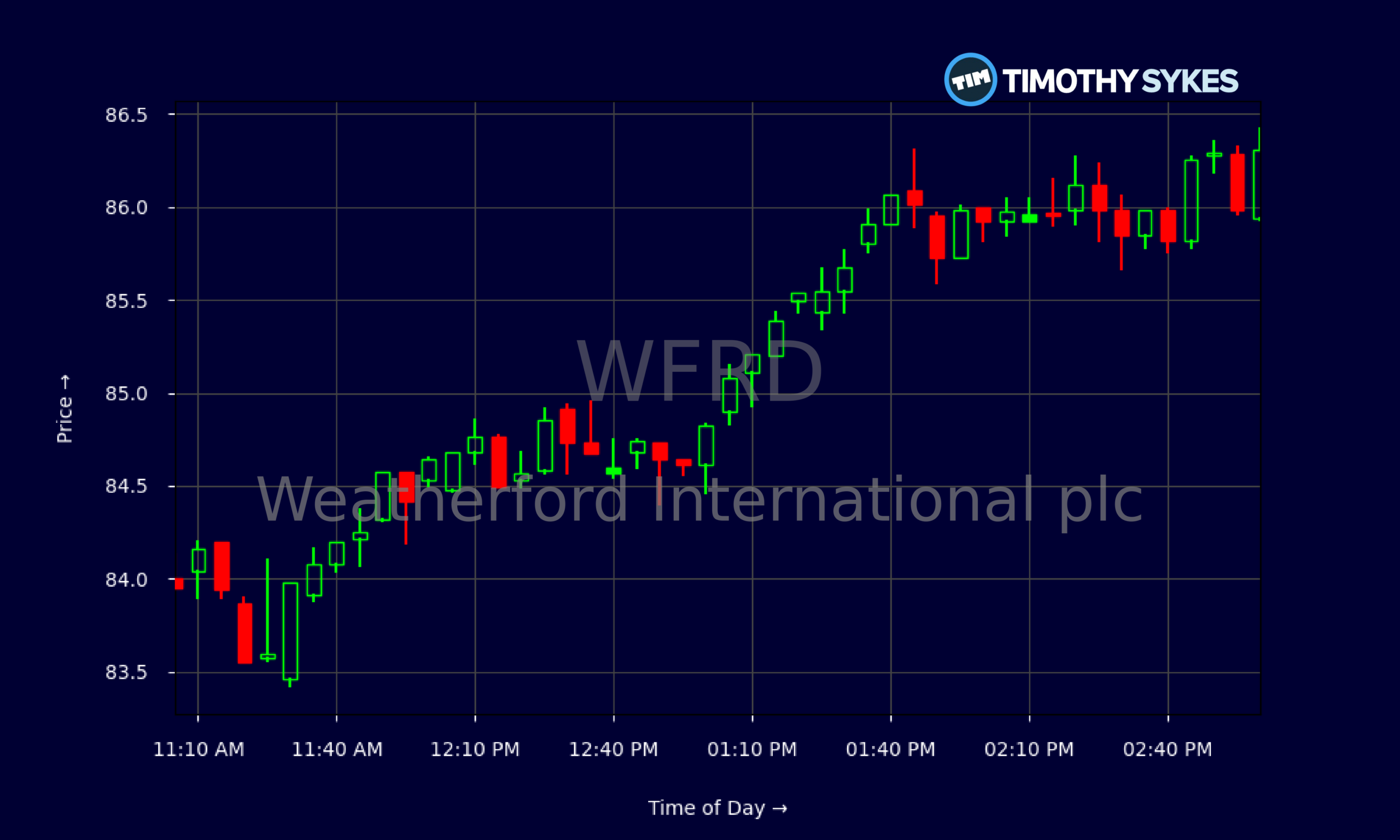
Live Update At 15:02:33 EDT: On Wednesday, October 21, 2026 Weatherford International plc stock [NASDAQ: WFRD] is trending up by 8.78%! Discover the key drivers behind this movement as well as our expert analysis in the detailed breakdown below.
Quick Financial Overview
WFRD has been trading like a strong uptrend that keeps getting tested but refuses to break. On 2026/09/28 the stock closed at $82.80; by 2026/10/21 it finished near $86.31, a solid grind higher despite headline risk. The latest session shows WFRD opening around $83, dipping briefly, then pushing to an intraday high above $86 with a firm close, signaling aggressive dip buying into the earnings strength.
On the higher timeframe, Weatherford International plc is backing that price action with real numbers. Q3 2026 revenue of about $1.14B is slightly down year over year, yet profitability is moving the other way. EBITDA margin has pushed into the low‑20% range, and company-level data shows profit margin in the high‑single digits with a gross margin near 46.7%. For an oilfield services name, those are serious quality metrics.
More Breaking News
WFRD also carries a P/E near the mid‑teens and a price-to-sales ratio just above 1, which keeps valuation in check compared to past cycle peaks. Debt is manageable with total debt-to-equity under 1 and interest coverage around 9.5 times. For traders, that balance sheet plus strong free cash flow gives Weatherford International plc room to ride out regional slowdowns while still funding growth, buybacks, or dividends.
Why Traders Are Watching WFRD Now
WFRD just dropped the kind of quarter that grabs momentum traders’ attention. Earnings per share of $1.66 smashed consensus in the $1.27–$1.33 area, and that beat came even while revenue slipped to $1.14B from $1.23B a year earlier. The message from Weatherford International plc is clear: less volume, more profit. Margin expansion to 22.2% EBITDA and adjusted free cash flow of $155M are the real stars here.
At the same time, WFRD isn’t just squeezing the current business; it is reshaping it. Management completed the NCS Multistage acquisition, redeemed high‑coupon 2030 notes, and kept pushing its redomestication to Delaware. Those moves tell traders two things. First, Weatherford International plc is leaning into completion technology and offshore work where pricing can be stronger. Second, it is actively lowering its cost of capital, which can boost future EPS even without blowout revenue growth.
Contract wins back that strategy up. WFRD secured multiple long-duration international deals and locked in a two-year extension of strategic frame agreements with Equinor. Being named the primary provider of completion systems for the Statfjord and Oseberg licenses on the Norwegian Continental Shelf gives Weatherford International plc high‑quality backlog in a stable region. That helps offset Middle East conflict‑related disruptions and Saudi-linked activity suspensions that are weighing on Q4 outlooks.
Wall Street’s reaction has been mixed but mostly positive. Citi, Barclays, and Piper Sandler all cut price targets on WFRD, now clustering in the roughly $94–$148 range, yet they kept Buy or Overweight ratings. Only Goldman Sachs sits on the fence with a Neutral stance as it trimmed to $94. For short‑term trading, that combination—earnings beat, margin strength, and cautious but constructive analyst coverage—often fuels range‑bound volatility rather than a clean trend. Active traders in the WFRD community will be tracking whether follow‑through volume confirms this post‑earnings pop or fades back toward support.
Conclusion
For active traders, WFRD now sits at the intersection of strong execution and messy macro. Weatherford International plc just proved it can grow EPS and expand margins in a tough quarter, generating $155M of adjusted free cash flow and supporting a steady dividend of $0.275 per share. The balance sheet is healthier, leverage is under control, and the NCS Multistage acquisition plus the Equinor extensions give WFRD deeper exposure to high‑value offshore work and longer‑term contracts.
On the other side of the ledger, the Middle East conflict and Saudi-related activity suspensions are not noise. They are the core reason Citi, Barclays, Piper Sandler, and Goldman Sachs reset their price targets on Weatherford International plc ahead of what many see as a softer Q4 2026. Until traders get clearer 2027 capex signals from North America and international upstream markets, WFRD may swing around key levels as sentiment flips between fear and FOMO.
This is exactly the type of backdrop where trading discipline matters more than opinions. As Tim Sykes likes to remind his students, “The market doesn’t care about your feelings, only your preparation—pattern recognition and strict risk management are what keep you in the game.” As millionaire penny stock trader and teacher Tim Sykes says, “Be patient, don’t force trades, and let the perfect setups come to you.”. For WFRD, that means studying how the stock reacts around earnings gaps, tracking volume near support and resistance, and being ready to cut losses fast if the Middle East headlines start to overwhelm the otherwise bullish story around Weatherford International plc’s improving fundamentals.
This is stock news, not investment advice. Timothy Sykes News delivers real-time stock market news focused on key catalysts driving short-term price movements. Our content is tailored for active traders and investors seeking to capitalize on rapid price fluctuations, particularly in volatile sectors like penny stocks. Readers come to us for detailed coverage on earnings reports, mergers, FDA approvals, new contracts, and unusual trading volumes that can trigger significant short-term price action. Some users utilize our news to explain sudden stock movements, while others rely on it for diligent research into potential investment opportunities.
Dive deeper into the world of trading with Timothy Sykes, renowned for his expertise in penny stocks. Explore his top picks and discover the strategies that have propelled him to success with these articles:
- Penny Stocks Trading Guide
- Best Penny Stocks Under $1 to Buy Today
- Top 8 Penny Stocks to Watch on Robinhood
Once you’ve got some stocks on watch, elevate your trading game with StocksToTrade the ultimate platform for traders. With specialized tools for swing and day trading, StocksToTrade will guide you through the market’s twists and turns.
Dig into StocksToTrade’s watchlists here:





Leave a reply