

CoreWeave Inc. stocks have been trading up by 2.99 percent amid bullish sentiment on its expanding AI cloud infrastructure capacity.
Key Takeaways
- Goldman Sachs upgraded CoreWeave to Buy from Neutral after last week’s sharp selloff tied to debt and credit-risk worries, helping drive a 7% rebound in the stock.
- Nvidia’s CEO described CoreWeave as financially stronger with a falling cost of capital and said Nvidia, a roughly 10% shareholder, does not anticipate needing to provide financial support.
- CoreWeave is entering the Indian market via a collaboration with AdaniConneX, planning to deploy 240 MW of AI cloud data center capacity in Navi Mumbai, expandable to 480 MW, with several billion dollars in planned investment and operations targeted for mid-2028.
- CoreWeave and Akamai have integrated Perplexity’s open-sourced SPACE software on their cloud platforms to offer defenses against rogue AI agents to their customers.
- Nasdaq and AI-related stocks, including CoreWeave, recently came under pressure in pre-market/early trading amid a broader AI-driven selloff, contributing to a weaker open for the index before a subsequent rebound in US tech equities.
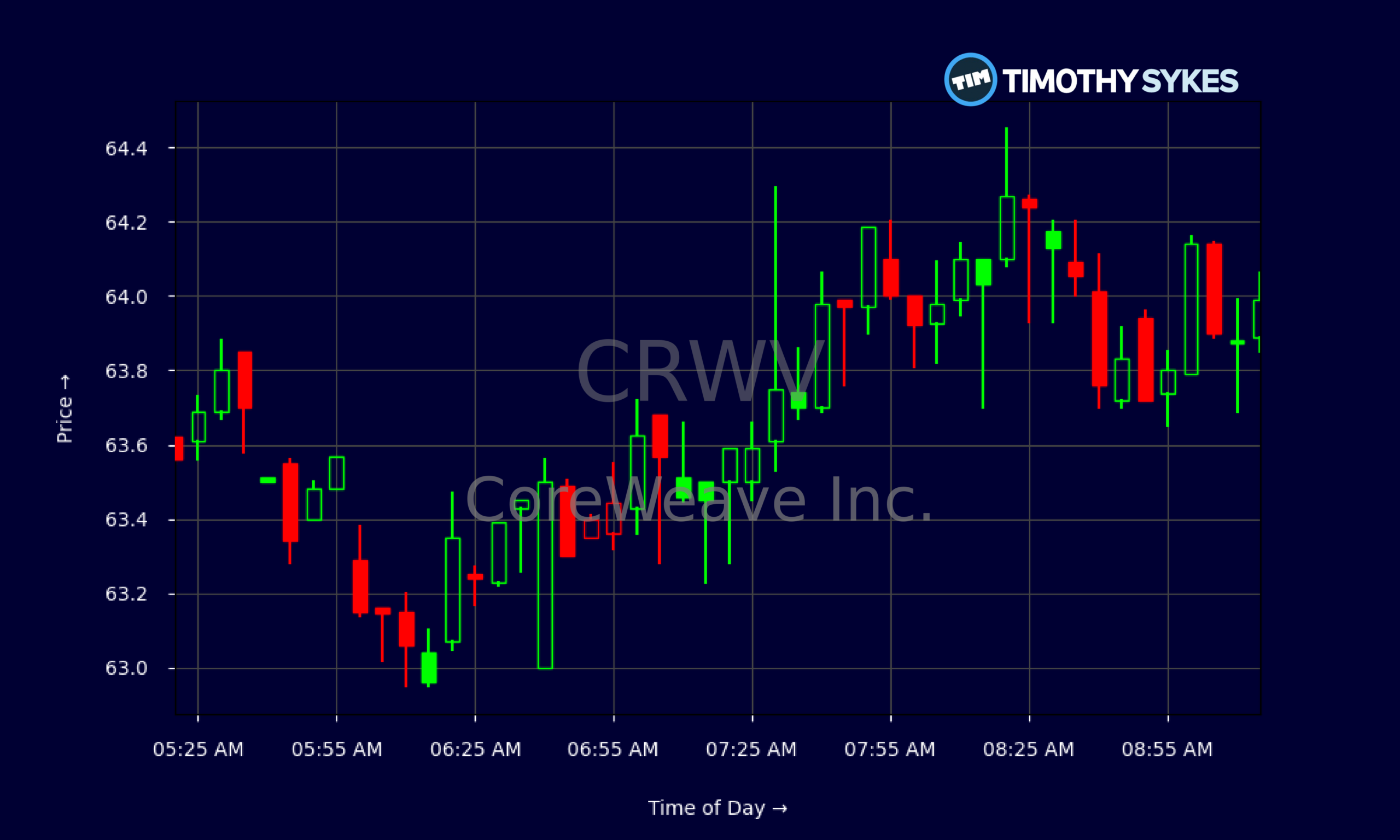
Live Update At 09:18:33 EDT: On Wednesday, October 21, 2026 CoreWeave Inc. stock [NASDAQ: CRWV] is trending up by 2.99%! Discover the key drivers behind this movement as well as our expert analysis in the detailed breakdown below.
Quick Financial Overview
CRWV has been on a wild ride. Over the past few weeks, CoreWeave Inc. slid from the low $90s into the low $60s, a drawdown of roughly 30% as traders bailed on leveraged AI names. The latest close around $62.13 shows CRWV still well off recent highs, but the tape is trying to stabilize after the Goldman Sachs upgrade and a broader tech rebound.
Financially, CoreWeave is a classic high-growth, high-burn AI infrastructure play. The company generated about $5.13B in revenue, with a huge 90.6% gross margin, yet it still posted a net loss of roughly $626M and a negative profit margin near -25%. CRWV is pouring money into hardware and data centers; capital expenditures ran about $6.42B for the recent quarter, driving free cash flow to about -$5.74B.
More Breaking News
Debt is the key pressure point. Total liabilities sit near $72.0B against only $5.0B in equity, pushing total debt-to-equity to 3.29 and leverage over 15x. The current ratio of 0.5 and quick ratio of 0.4 tell traders liquidity is tight. That leverage profile explains why any hint of credit risk has hit CRWV hard, and why the Goldman call and Nvidia’s support comments matter so much.
Why Traders Are Watching CRWV Now
CRWV is back on every momentum trader’s screen because the narrative flipped fast. Just days ago, CoreWeave Inc. was being dumped on fears that its debt load and credit profile were cracking in a shaky AI tape. Nasdaq futures were heavy, AI names were under pressure in premarket, and CRWV followed that trend lower with a brutal multi-day slide from the high $70s and $80s into the $60s.
Then the catalysts hit. First, Goldman Sachs upgraded CoreWeave from Neutral to Buy after the sharp selloff, calling out that the move had priced in a lot of credit risk. That single headline helped trigger about a 7% rebound in CRWV, exactly the kind of squeeze move short-term traders look for after a panic flush. The upgrade also aligned with a broader rebound in US tech, as AI-related stocks bounced from oversold levels.
Next came reassurance from a heavy hitter. Nvidia’s CEO said CoreWeave is financially stronger, with a falling cost of capital, and made it clear Nvidia — which owns roughly 10% of CRWV — does not expect to provide financial support. For a name hammered on balance-sheet worries, that comment hits directly at the bear thesis.
At the same time, CoreWeave is playing offense. The company is pushing into India through a major AI data center build-out with AdaniConneX in Navi Mumbai: 240 MW planned at launch, expandable to 480 MW, backed by several billion dollars of spend through around 2028/06/30. CRWV is also tightening its AI-security story by integrating Perplexity’s SPACE software, alongside Akamai, to protect against rogue AI agents. That positions CoreWeave as not just another GPU host, but as a more complete AI cloud platform.
Conclusion
For active traders, CRWV is a pure volatility engine built on real fundamental tension. On one side, CoreWeave Inc. has explosive revenue growth, massive 90%-plus gross margins, global expansion plans into India, and ecosystem wins like the Perplexity SPACE integration. On the other, the company is burning cash, running with heavy leverage, thin liquidity, and a free cash flow hole measured in the billions. That push-pull is exactly why the stock can swing 10% in a week.
The key now is how CRWV trades around news. Debt and credit-risk headlines drove the last leg down. The Goldman Sachs upgrade and Nvidia CEO comments sparked the relief bounce. The India build-out with AdaniConneX tells traders management is betting on long-term AI demand in high-growth markets, even if near-term capex weighs on sentiment.
Short-term charts show CRWV trying to base in the low $60s after a steep downtrend from the $90 area. For momentum-focused traders, that sets up a classic “bounce vs. breakdown” watch — but risk control matters. As Tim Sykes likes to remind his community, “The market doesn’t owe you anything; that’s why you cut losses quickly and only come back when the odds are in your favor.” As millionaire penny stock trader and teacher Tim Sykes, says, “Embrace the journey, the ups and downs; each mistake is a lesson to improve your strategy.”. This CRWV story is a live case study in that mindset, and it should stay on the radar of any trader tracking AI volatility.
This is stock news, not investment advice. Timothy Sykes News delivers real-time stock market news focused on key catalysts driving short-term price movements. Our content is tailored for active traders and investors seeking to capitalize on rapid price fluctuations, particularly in volatile sectors like penny stocks. Readers come to us for detailed coverage on earnings reports, mergers, FDA approvals, new contracts, and unusual trading volumes that can trigger significant short-term price action. Some users utilize our news to explain sudden stock movements, while others rely on it for diligent research into potential investment opportunities.
Dive deeper into the world of trading with Timothy Sykes, renowned for his expertise in penny stocks. Explore his top picks and discover the strategies that have propelled him to success with these articles:
- Penny Stocks Trading Guide
- Best Penny Stocks Under $1 to Buy Today
- Top 8 Penny Stocks to Watch on Robinhood
Once you’ve got some stocks on watch, elevate your trading game with StocksToTrade the ultimate platform for traders. With specialized tools for swing and day trading, StocksToTrade will guide you through the market’s twists and turns.
Dig into StocksToTrade’s watchlists here:





Leave a reply