

Seadrill Limited stocks have been trading up by 7.75 percent after news of a lucrative multi-year offshore drilling contract.
What Traders Need To Know
- Seadrill Limited nailed an about $420M, ~880‑day West Carina drillship deal in Indonesia, with up to 880 more optional days that extend revenue visibility.
- The company extended West Capella work in Malaysia to 2028, adding roughly $94M in backlog and more potential from unpriced options.
- A near three‑year Sonangol Libongos extension in Angola secures joint‑venture utilization through 2030, tightening Seadrill Limited’s deepwater footprint.
- A 25‑day Sevan Louisiana job from 2026 and over 85% of 2027 drillship days contracted highlight strong fleet coverage and pricing power.
- A recent amended Schedule 13D filing flags a change in beneficial ownership in SDRL, hinting at shifting large‑holder dynamics to watch.
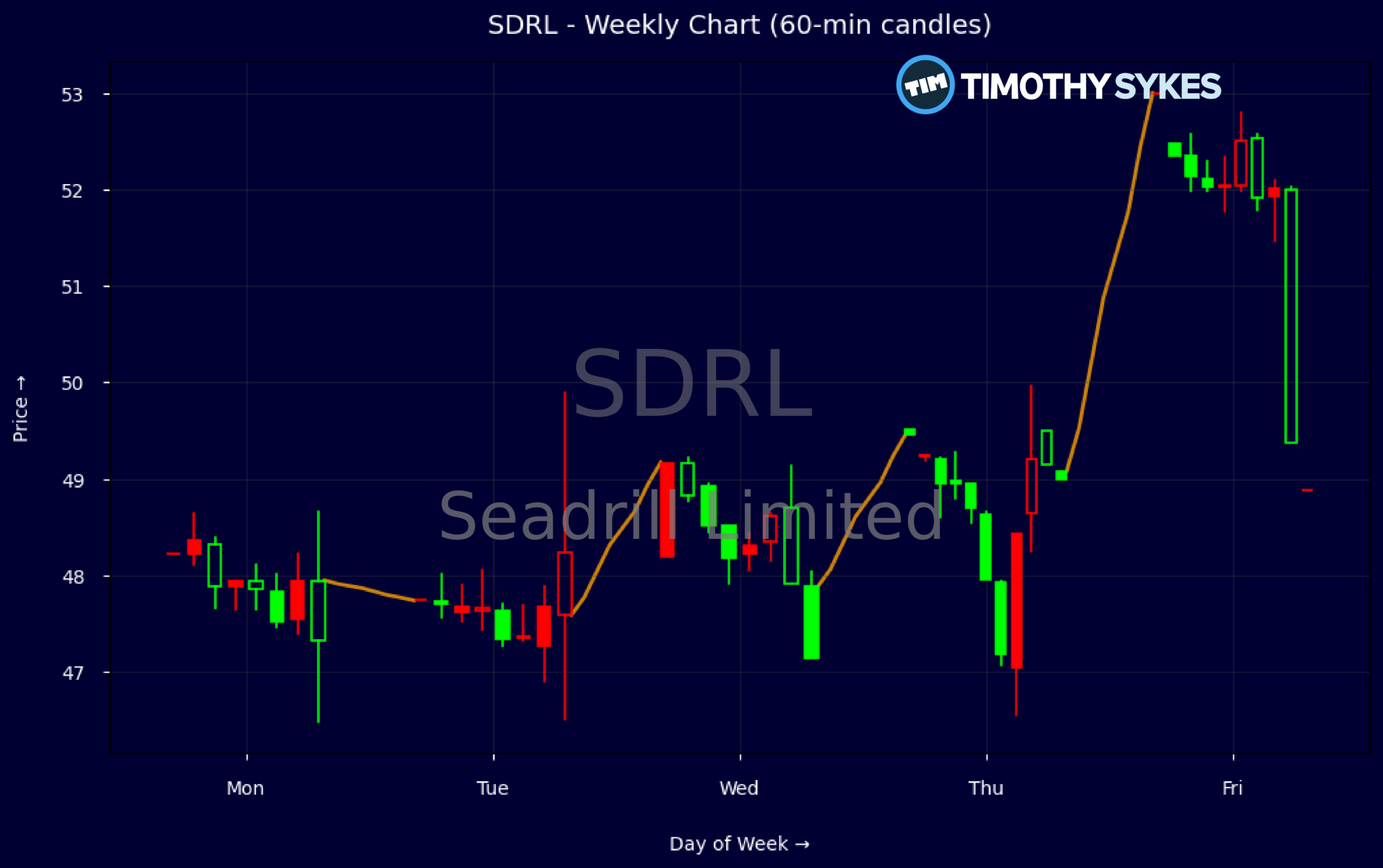
Weekly Update Oct 19 – Oct 23, 2026: On Sunday, October 25, 2026 Seadrill Limited stock [NYSE: SDRL] is trending up by 7.75%! Discover the key drivers behind this movement as well as our expert analysis in the detailed breakdown below.
Energy industry expert:
Analyst sentiment – positive
Seadrill (SDRL) is a leveraged play on the tightening deepwater cycle with improving, but still fragile, fundamentals. Revenue growth is strong (3Y +88.7%) and EBITDA margin at 27.7% confirms solid underlying economics, yet EBIT is volatile and pretax margins remain negative, reflecting heavy non‑cash items and still‑elevated operating complexity. Balance sheet strength is a relative positive: net leverage is low (debt/equity 0.26, current ratio 2.5), and ROE above 50% signals high operating leverage to dayrates.
Price action shows a clear, accelerating uptrend, with a sharp weekly breakout from ~48 to 53 and expanding intraday ranges supported by rising volume, signaling aggressive institutional buying rather than a thin squeeze. The 49–50 zone, where the last consolidation and prior highs sit, is now the key tactical pivot and first buy‑the‑dip area. I would anchor a trading plan around 50 as support, with a stop below 47.5 and upside momentum extension potential toward the upper 50s.
Fundamentally, the new ~$420M West Carina contract, West Capella extension, and Sonangol Libongos deal materially lengthen backlog into 2028–2030, raising visibility well above most offshore peers and the broader Energy and Fossil Fuels indices. With over 85% of 2027 drillship days fixed at high dayrates, cash generation and earnings inflection are imminent. I view SDRL as a buy versus Energy benchmarks, with near‑term resistance around 56–58 and a 12‑18 month target range of 65–70.
More Breaking News
Quick Financial Overview
SDRL’s recent tape confirms traders are willing to pay up for this backlog story. On the weekly chart, price pushed from $47.74 to $53 over a few days, a clean, fast move that signals aggressive buying at new contract headlines. The intraday data show a strong burst from $49.37 to an intraday high near $52.80, then a close at $52.35, which tells you buyers controlled the session even after some profit taking.
Financially, Seadrill Limited is driven by scale. Trailing revenue sits around $1.44B, with strong growth over three and five years, showing that the offshore upcycle is already flowing through the income statement. Margins are mixed: EBITDA margin near 27.7% is healthy, but reported net margins and pretax margins are still slim or slightly negative, which helps explain the distorted P/E above 1,500 and negative cash‑flow metrics.
The balance sheet is better than many offshore peers. Debt to equity near 0.26, a current ratio around 2.5, and quick ratio of 1.8 give SDRL breathing room to ride contract cycles. Book value per share is about 45.79 versus a recent price in the low $50s, so the stock trades close to 1.1x book, not a frothy level for a company that just locked in multi‑year, higher‑rate contracts through 2028–2030.
Conclusion
This is stock news, not investment advice. Timothy Sykes News delivers real-time stock market news focused on key catalysts driving short-term price movements. Our content is tailored for active traders and investors seeking to capitalize on rapid price fluctuations, particularly in volatile sectors like penny stocks. Readers come to us for detailed coverage on earnings reports, mergers, FDA approvals, new contracts, and unusual trading volumes that can trigger significant short-term price action. Some users utilize our news to explain sudden stock movements, while others rely on it for diligent research into potential investment opportunities.
Dive deeper into the world of trading with Timothy Sykes, renowned for his expertise in penny stocks. Explore his top picks and discover the strategies that have propelled him to success with these articles:
- Penny Stocks Trading Guide
- Best Penny Stocks Under $1 to Buy Today
- Top 8 Penny Stocks to Watch on Robinhood
Once you’ve got some stocks on watch, elevate your trading game with StocksToTrade the ultimate platform for traders. With specialized tools for swing and day trading, StocksToTrade will guide you through the market’s twists and turns.
Dig into StocksToTrade’s watchlists here:





Leave a reply