

Stellantis N.V. stocks have been trading down by -4.91 percent amid reports of weakening global auto demand and pricing pressure.
Key Takeaways For STLA Traders
- Management is planning about a 10% cut to 2026 Italy production, trimming Mirafiori output to roughly 450,000 vehicles and slashing hybrid Fiat 500 volumes to 60,000 from 100,000.
- Temporary shutdowns at Rennes, Sochaux, and Mulhouse linked to long‑range EV battery shortages highlight execution risk in the Stellantis N.V. supply chain.
- News of French factory pauses in October knocked STLA shares down roughly 4.2%–4.6% intraday, showing how sensitive the stock is to production headlines.
- Canadian union Unifor authorized strike action at Stellantis, with Windsor assembly output canceled through at least the week of 2026/11/02 despite no legal strike yet.
- U.S. Q3 sales for Stellantis came in flat at 324,277 units, outperforming General Motors’ 5.5% drop in a soft market.
Live Update At 16:47:07 EDT: On Friday, October 23, 2026 Stellantis N.V. stock [NYSE: STLA] is trending down by -4.91%! Discover the key drivers behind this movement as well as our expert analysis in the detailed breakdown below.
Quick Financial Overview
STLA is trading in the low‑$4 area, and the recent daily chart shows a steady grind lower from around $4.68 on 2026/10/01 to $4.06 on 2026/10/23. That is a meaningful pullback for Stellantis N.V., and it lines up with the negative production news hitting the tape. The stock keeps failing to hold pushes above the mid‑$4s, which tells traders sellers are active on every bounce.
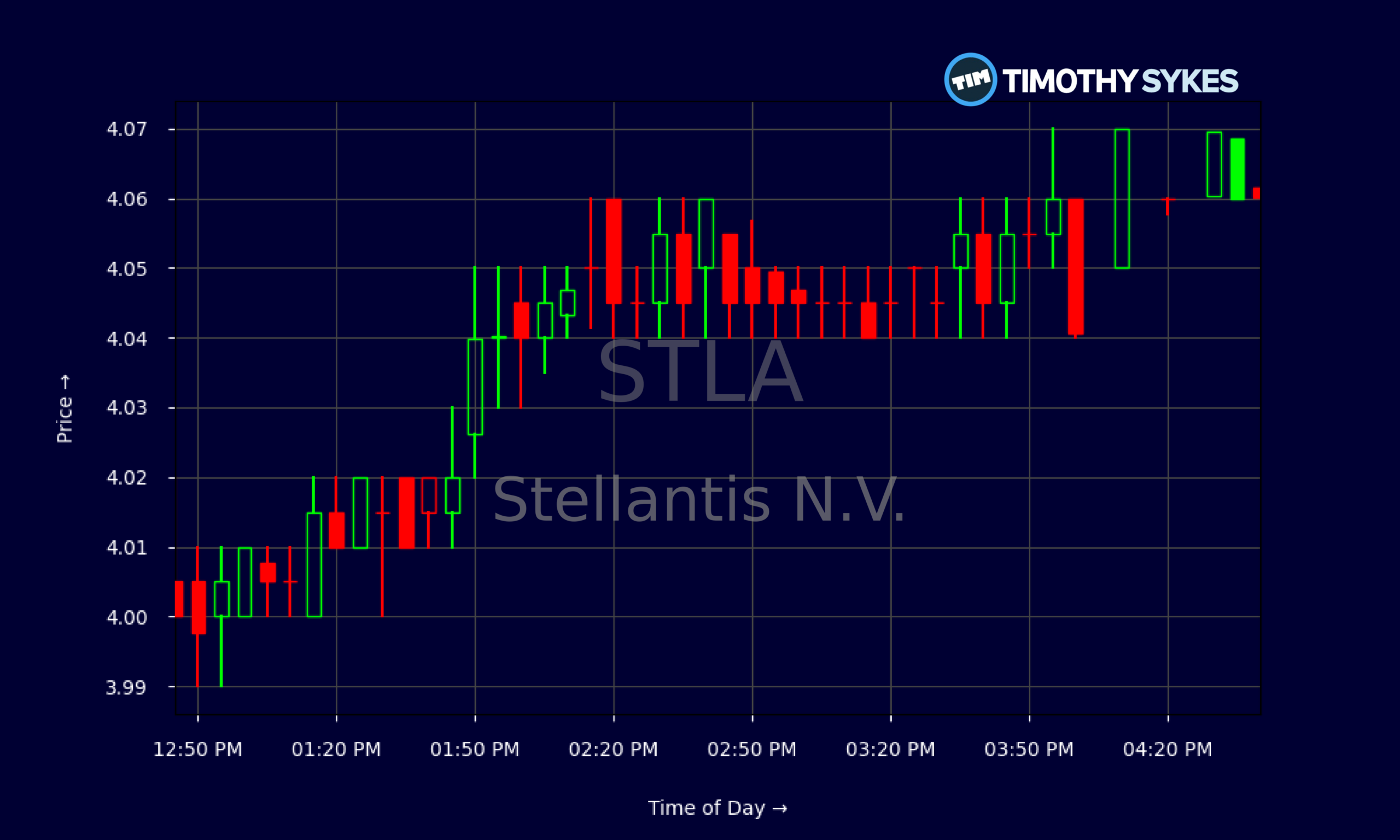
Intraday, STLA was tight and heavy. Most 5‑minute candles clustered between $3.99 and $4.07, with weak attempts to reclaim the early premarket $4.18–$4.19 area. That sort of narrow, controlled drift is classic “distribution” behavior — not a panic flush, but consistent supply.
More Breaking News
On fundamentals, Stellantis N.V. put up about $153.5B in revenue, yet the market only values the company at roughly 0.07 times sales and around 0.21 times book value. STLA also holds over $31B in cash and short‑term investments against $30.2B in long‑term debt, which gives it some balance‑sheet firepower. Still, a negative recent ROIC suggests the market doubts Stellantis is turning that capital into strong returns. For traders, that disconnect between cheap valuation and weak momentum is exactly where sharp moves often come from — once sentiment breaks one way.
Why Traders Are Watching STLA So Closely
News flow around Stellantis N.V. has shifted from quiet to crowded, and not in a good way. STLA is now dealing with a stack of real‑world problems that go straight to volumes, margins, and confidence in its EV strategy — exactly the levers active traders track.
First, the company plans to cut its 2026 Italy production by about 10%, dropping output to roughly 450,000 vehicles. That is not a small tweak. Mirafiori halts and a sharp reduction in hybrid Fiat 500 production — from 100,000 down to 60,000 units — tell traders management is lowering expectations for demand and for its electrified lineup. When a legacy automaker like Stellantis N.V. pulls back on a flagship hybrid, the market reads that as a warning on growth.
Next, STLA is wrestling with EV battery bottlenecks in France. Rennes and Sochaux will temporarily halt, while Mulhouse shuts for part of October due to long‑range battery shortages at Automotive Cells Co., the joint venture with Mercedes and TotalEnergies. Those stoppages are not just a line in a press release. They have already mattered to the stock. When Stellantis N.V. confirmed pauses at three French factories, STLA dropped around 4.2%–4.6% intraday. That reaction shows traders are highly sensitive to any hint that the Stellantis EV rollout is slipping.
Layer on top the Canadian headline: Unifor members at Stellantis voted 97.3% in favor of authorizing strike action, and Windsor assembly production is canceled through at least the week of 2026/11/02. Even without a legal strike in force yet, traders know this is real risk to North American output and labor costs.
There are offsets. STLA’s U.S. Q3 sales were flat at 324,277 units while GM fell 5.5%, which signals some resilience. And new EU caps on Chinese hybrid imports starting as soon as 2026/12/01 could ease competitive pressure over time. But right now, the tape is focused on production cuts, stoppages, and labor noise — and that is what drives day‑to‑day trading setups.
Conclusion
For active traders, STLA is starting to look like a classic battleground name. On one side, Stellantis N.V. prints huge revenue, carries significant cash, and trades at what looks like a bargain multiple. On the other, the stock is sliding while headlines scream about plant halts in France, a 10% production trim in Italy, and strike authorization in Canada. The market is telling you what it cares about: execution and reliability.
Short‑term, that means volatility. STLA has clear catalysts — any fresh update on Rennes, Sochaux, Mulhouse, Mirafiori, or Windsor can spark sharp moves. A confirmed strike, deeper EV battery shortages, or more cuts to the hybrid Fiat 500 plan would likely pressure Stellantis N.V. further. Positive news on resolving supply or labor issues could trigger hard‑to‑chase relief rallies, especially given how cheaply the market is pricing the company’s assets and sales.
This is where discipline matters. As Tim Sykes likes to remind traders, “The market doesn’t care about your opinions, it cares about your risk management — always cut losses quickly and never fall in love with a stock.” As millionaire penny stock trader and teacher Tim Sykes, says, “There is always another play around the corner; don’t chase just because you feel FOMO.”. STLA gives plenty of opportunity, but Stellantis N.V. is a complex, headline‑driven story. Treat it like a trading vehicle, respect the volatility, and always remember this is for educational and research purposes only, not advice to buy or sell any security.
This is stock news, not investment advice. Timothy Sykes News delivers real-time stock market news focused on key catalysts driving short-term price movements. Our content is tailored for active traders and investors seeking to capitalize on rapid price fluctuations, particularly in volatile sectors like penny stocks. Readers come to us for detailed coverage on earnings reports, mergers, FDA approvals, new contracts, and unusual trading volumes that can trigger significant short-term price action. Some users utilize our news to explain sudden stock movements, while others rely on it for diligent research into potential investment opportunities.
Dive deeper into the world of trading with Timothy Sykes, renowned for his expertise in penny stocks. Explore his top picks and discover the strategies that have propelled him to success with these articles:
- Penny Stocks Trading Guide
- Best Penny Stocks Under $1 to Buy Today
- Top 8 Penny Stocks to Watch on Robinhood
Once you’ve got some stocks on watch, elevate your trading game with StocksToTrade the ultimate platform for traders. With specialized tools for swing and day trading, StocksToTrade will guide you through the market’s twists and turns.
Dig into StocksToTrade’s watchlists here:





Leave a reply