
PT Telekomunikasi Indonesia Tbk faces pressure as regulatory and competitive concerns deepen, with stocks have been trading down by -12.99 percent
Market Insights For TLK Traders
- Telekomunikasi Indonesia’s ADR was among Asian ADRs that experienced losses of varying degrees as the S&P Asia 50 ADR Index fell 1.3%, showing clear participation in regional risk-off flow.
- On another trading day, a group of Asian ADRs including a telecom stock such as Telekomunikasi Indonesia declined more than the modest 0.25% drop in the S&P Asia 50 ADR Index, signaling index underperformance.
- The ADR was listed among the steepest decliners with names like PLDT and Sea, helping drive a broader fall in the S&P Asia 50 ADR Index and flagging downside volatility risk.
- There were multiple sessions where Telekomunikasi Indonesia’s ADR declined while the S&P Asia 50 ADR Index was flat or slightly positive, highlighting persistent relative weakness versus the Asia ADR basket.
- In later sessions, Telekomunikasi Indonesia again showed smaller but notable losses in otherwise mixed trading, pointing to steady grind-down pressure and limited near-term buying interest.
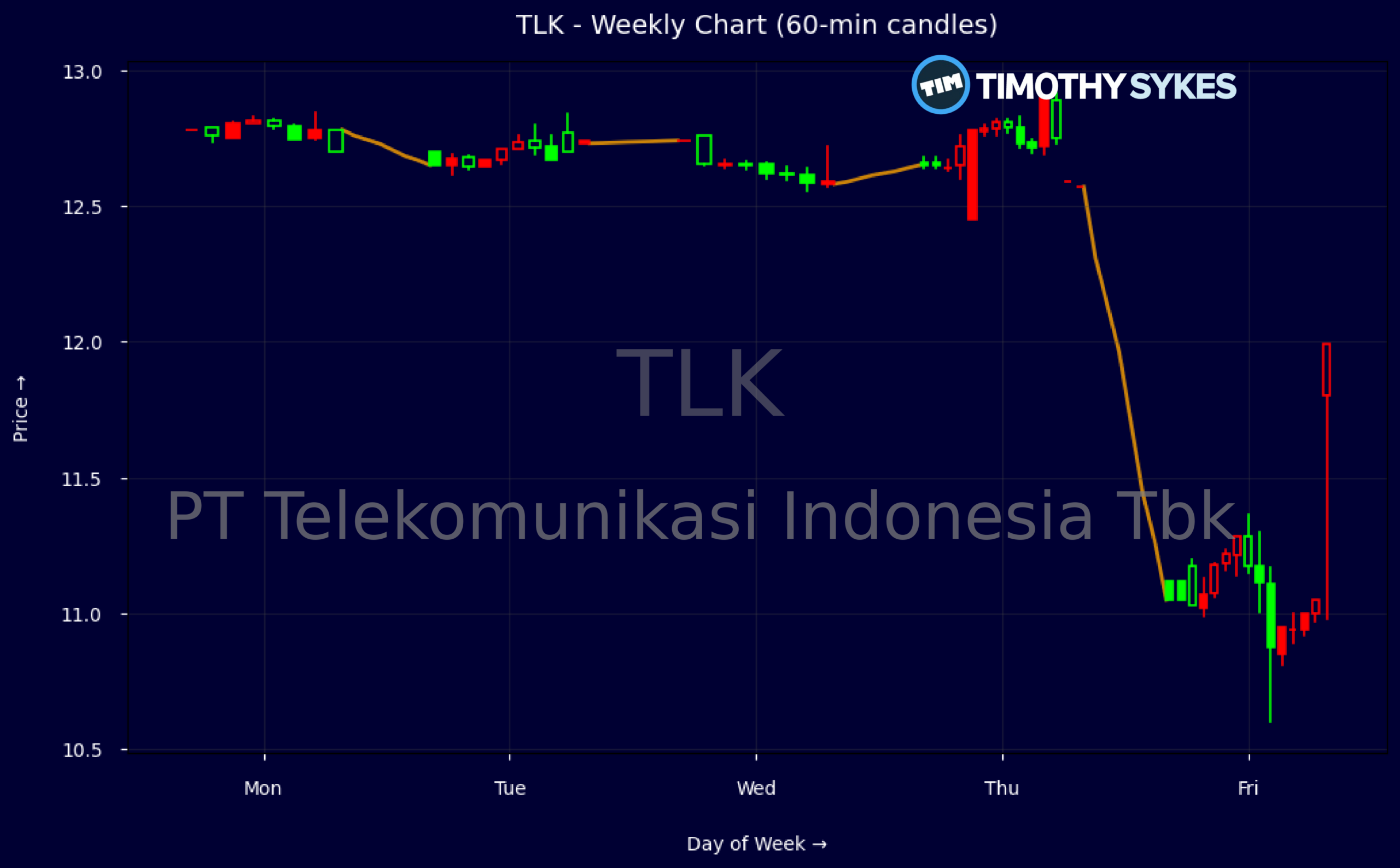
Weekly Update Oct 12 – Oct 16, 2026: On Saturday, October 17, 2026 PT Telekomunikasi Indonesia Tbk stock [NYSE: TLK] is trending down by -12.99%! Discover the key drivers behind this movement as well as our expert analysis in the detailed breakdown below.
Media & Telecommunications industry expert:
Analyst sentiment – neutral
Telekomunikasi Indonesia (TLK) remains the dominant integrated operator in Indonesia, underpinned by scale, state linkage, and a solid balance sheet. Revenue of ~IDR 150T masks reported 3–5 year declines, reflecting restructuring and pricing pressure rather than structural decay. Profitability is robust, with a 28.9% pre-tax margin and ROE of 8.75% and ROIC of 9.65%, comfortably covering its 11.1% indicated dividend yield. Leverage is moderate: long-term debt/capital of 0.26 and a 2.2x leverage ratio are conservative for an incumbent telco.
Technically, TLK has broken from a tight 12.6–12.8 range into a sharp downdraft, closing the latest week at 11.12 from 12.78 intrweek, confirming a clear short-term bearish trend. The air pocket from 12.50–12.80 now forms strong overhead resistance, with 12.70 the key tactical sell zone on rebounds. Intraday 5‑minute action shows heavy volume on down candles and weak bounces, confirming distribution. Traders should avoid chasing weakness; use rallies toward 12.50–12.70 to re‑establish shorts or reduce exposure.
Recent news flow shows TLK repeatedly underperforming Asia ADR peers, even on up days for the regional index, signaling persistent foreign selling and sentiment headwinds versus telecom benchmarks. While fundamentals justify a valuation nearer 1.9–2.1x book than the current 1.72x, sentiment and regional risk aversion cap near-term upside. Base case: accumulation zone at 10.50–11.00 support, resistance at 12.70. Twelve‑month risk‑adjusted target is 13.50; risk‑reward is acceptable but not compelling.
More Breaking News
Quick Financial Overview
PT Telekomunikasi Indonesia Tbk (TLK) is showing a clear short-term shift in momentum on the tape. Weekly data show price slipping from the mid-$12s, with a recent drop from about $12.66 down toward the low-$11 area. Intraday, the 5-minute action shows a wide range from roughly $10.60 to $11.37 before closing near $11.03, then settling around $11.12 by week’s end. That intraday spike and fade tells traders there was selling into strength rather than aggressive dip buying.
On the fundamentals, TLK sits on large revenue of roughly $150,0B (local currency) with a pre-tax margin near 28.9%, which is solid profitability for a telecom operator. A price-to-earnings ratio around 12.8 and price-to-sales near 1.52 suggest the ADR is not richly valued. Return on equity of 8.75% and return on assets of 3.27% indicate a steady, though not explosive, earnings engine. A leverageratio of 2.2 and long-term debt of about $25.5B against total assets near $299.3B show a balance sheet that uses debt, but not in an extreme way.
Dividends are a key piece of the TLK story. The stated dividend rate of about 1.22 and a yield around 11% are unusually high for a large telecom name, which can attract yield-focused capital but also hint at perceived risk in the stock. The most recent ex-dividend date was 2026/06/18, so that catalyst is already passed, which may partly explain weaker near-term support. For traders, the combination of high yield, modest valuation, and recent price breakdown means this is a classic “cheap but heavy” tape that needs a clear shift in order flow before treating it as a long swing setup.
Conclusion
This is stock news, not investment advice. Timothy Sykes News delivers real-time stock market news focused on key catalysts driving short-term price movements. Our content is tailored for active traders and investors seeking to capitalize on rapid price fluctuations, particularly in volatile sectors like penny stocks. Readers come to us for detailed coverage on earnings reports, mergers, FDA approvals, new contracts, and unusual trading volumes that can trigger significant short-term price action. Some users utilize our news to explain sudden stock movements, while others rely on it for diligent research into potential investment opportunities.
Dive deeper into the world of trading with Timothy Sykes, renowned for his expertise in penny stocks. Explore his top picks and discover the strategies that have propelled him to success with these articles:
- Penny Stocks Trading Guide
- Best Penny Stocks Under $1 to Buy Today
- Top 8 Penny Stocks to Watch on Robinhood
Once you’ve got some stocks on watch, elevate your trading game with StocksToTrade the ultimate platform for traders. With specialized tools for swing and day trading, StocksToTrade will guide you through the market’s twists and turns.
Dig into StocksToTrade’s watchlists here:





Leave a reply