

Fractyl Health, Inc. stocks have been trading down by -52.4 percent amid heightened concern over its latest clinical trial developments.
Key Takeaways Traders Need To Know
- Multiple securities class actions target Fractyl Health (GUTS) for allegedly overstating Revita’s efficacy and commercial prospects and misrepresenting REMAIN‑1 Midpoint Cohort data between 2025/01/13 and 2026/01/29.
- Plaintiffs say early three‑month Revita weight‑loss data looked too good because site‑level problems were hidden until six‑month results showed meaningful weight regain.
- Once six‑month REMAIN‑1 data and an “outlier” site were revealed in 2026/01, GUTS collapsed an estimated 68–75% in two days and drew at least one major Wall Street downgrade.
- Complaints also claim Fractyl raised about $76.7M in 2025/08–09 equity offerings off upbeat interim Revita data before disclosing trial‑site issues.
- Law firms are now recruiting those who bought GUTS between 2025/01/13 and 2026/01/29 ahead of a 2026/10/20 lead‑plaintiff deadline, extending the litigation overhang.
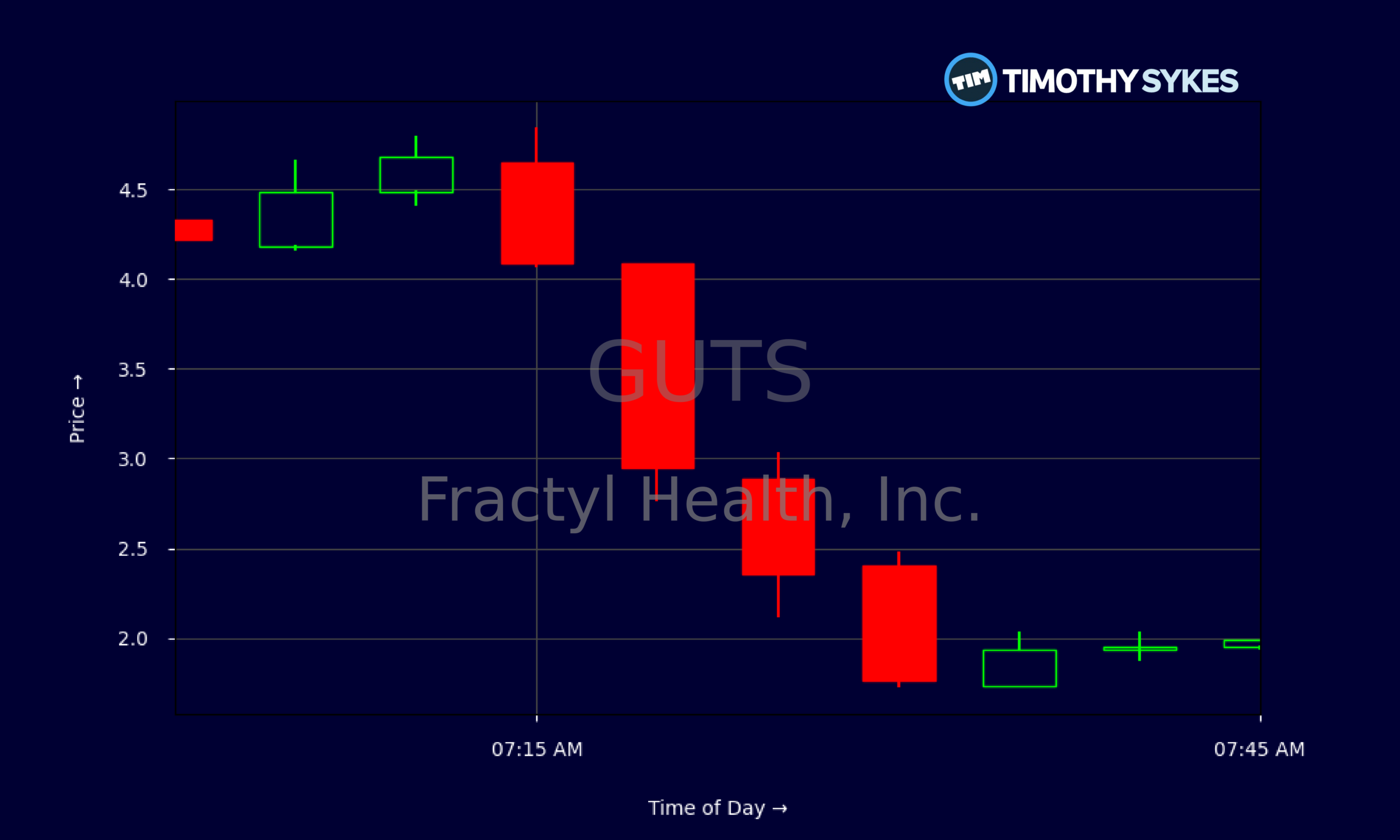
Live Update At 07:47:45 EDT: On Friday, October 16, 2026 Fractyl Health, Inc. stock [NASDAQ: GUTS] is trending down by -52.4%! Discover the key drivers behind this movement as well as our expert analysis in the detailed breakdown below.
Quick Financial Overview
GUTS is trading like a damaged story stock. On the daily chart, Fractyl Health swung from sub‑$1 levels in late September to the low‑$4 range by mid‑October, a massive percentage move that screams high‑risk, event‑driven trading. That kind of volatility shows traders are trying to price a broken narrative in real time.
Zoom in on the intraday action and it gets even wilder. On the five‑minute chart, GUTS whips from the mid‑$4s to below $2 within less than an hour, then bounces back toward $2. This is exactly the kind of liquidity pocket where disciplined day traders thrive and bag‑holders get crushed.
More Breaking News
Fundamentals back up the “speculative biotech” label. In the latest reported quarter ending 2026/06/30, Fractyl Health posted roughly -$25.5M in net losses and about -$15.9M in negative operating cash flow. GUTS still held about $51.4M in cash at quarter‑end, with a comfortable current ratio near 3.0, but return on assets is deeply negative and book value per share is below zero. For traders, that paints GUTS as a cash‑burning clinical story whose fate sits squarely on Revita and the courtroom.
Why Traders Are Watching GUTS So Closely
Fractyl Health and GUTS are now textbook examples of how clinical data, trust, and capital raises can collide. The heart of the story is Revita, the company’s procedure aimed at helping weight maintenance and metabolic disease after GLP‑1 drugs. According to multiple complaints, Fractyl highlighted very strong three‑month REMAIN‑1 Midpoint Cohort data while allegedly leaving out key problems at one study site.
That omission matters. When fuller six‑month data for Revita came out in 2026/01 and showed patients regaining more weight than traders had been led to expect, Fractyl also acknowledged an “outlier” clinical site with operational issues. The market’s response was brutal. GUTS shares fell roughly 68–75% in just two trading days, and Morgan Stanley cut its rating, slashing peak sales expectations for Revita and lowering its price target from $8 to $2.
The lawsuits go a step further. Several filings allege Fractyl used the rosy three‑month Revita narrative and incomplete risk disclosure to push through two equity offerings in 2025/08 and 2025/09, raising about $76.7M before the weaker six‑month data surfaced. For GUTS traders, the accusation is simple but serious: the street may have been paying a premium for a story that was not fully told.
Now, law firms are circling, asking anyone who bought GUTS between 2025/01/13 and 2026/01/29 to step up as lead plaintiffs by 2026/10/20. That means headlines around Fractyl Health, GUTS, Revita, and REMAIN‑1 are unlikely to fade soon. Every new filing, motion, or trial update can become a fresh catalyst, keeping GUTS firmly on the radar of volatility‑hunters and short‑term traders who thrive on fast news flow.
Conclusion
For active traders, GUTS sits at the intersection of science drama and legal risk. Fractyl Health’s entire equity story is concentrated in Revita and the REMAIN‑1 program, and the current wave of securities class actions directly attacks the credibility of that program’s data and disclosures. The 70%‑plus drop after the six‑month readout and the Morgan Stanley downgrade show how quickly sentiment can reset when trust breaks.
From a balance‑sheet angle, Fractyl Health still has meaningful cash, but the alleged timing of those 2025 equity offerings now hangs over every future capital raise. GUTS may need the market again if Revita takes longer or costs more to commercialize, and traders will remember the $76.7M controversy. That skepticism can weigh on pricing, widen spreads, and exaggerate both spikes and dumps.
For day and swing traders, the setup is clear: GUTS is a high‑beta biotech with layered legal, regulatory, and execution risk. Every new Revita update or court development can trigger sharp moves in either direction. In this kind of tape, discipline and emotional control become just as important as reading headlines and level 2. As millionaire penny stock trader and teacher Tim Sykes, says, “Consistency is key in trading; don’t let emotions dictate your trades.”. As Tim Sykes teaches, “The market doesn’t care about your hopes, it cares about catalysts and timing — your job is to react fast and cut losses even faster.” With Fractyl Health and GUTS, that mindset is not optional; it is survival.
This is stock news, not investment advice. Timothy Sykes News delivers real-time stock market news focused on key catalysts driving short-term price movements. Our content is tailored for active traders and investors seeking to capitalize on rapid price fluctuations, particularly in volatile sectors like penny stocks. Readers come to us for detailed coverage on earnings reports, mergers, FDA approvals, new contracts, and unusual trading volumes that can trigger significant short-term price action. Some users utilize our news to explain sudden stock movements, while others rely on it for diligent research into potential investment opportunities.
Dive deeper into the world of trading with Timothy Sykes, renowned for his expertise in penny stocks. Explore his top picks and discover the strategies that have propelled him to success with these articles:
- Penny Stocks Trading Guide
- Best Penny Stocks Under $1 to Buy Today
- Top 8 Penny Stocks to Watch on Robinhood
Once you’ve got some stocks on watch, elevate your trading game with StocksToTrade the ultimate platform for traders. With specialized tools for swing and day trading, StocksToTrade will guide you through the market’s twists and turns.
Dig into StocksToTrade’s watchlists here:





Leave a reply