

EOG Resources Inc. stocks have been trading up by 3.95 percent after upbeat analyst upgrades highlighted robust shale production growth
Key Takeaways
- Jefferies lifted its EOG Resources price target to $185 and sees Q3 cash flow per share beating consensus by 13% on stronger production and lower costs through 2027.
- UBS nudged its EOG Resources target to $186 and kept a Buy rating, reinforcing strong institutional confidence in the name.
- Mizuho and BMO Capital raised targets to $165 and $170 with Outperform ratings, adding to a cluster of bullish calls on EOG.
- Street consensus on EOG screens overweight, with mean targets in the mid‑$160s versus recent trading in the low‑to‑mid $150s.
- Scotiabank’s new Sector Perform and $144 target on EOG marks a more cautious stance, flagging valuation risk if execution or oil prices wobble.
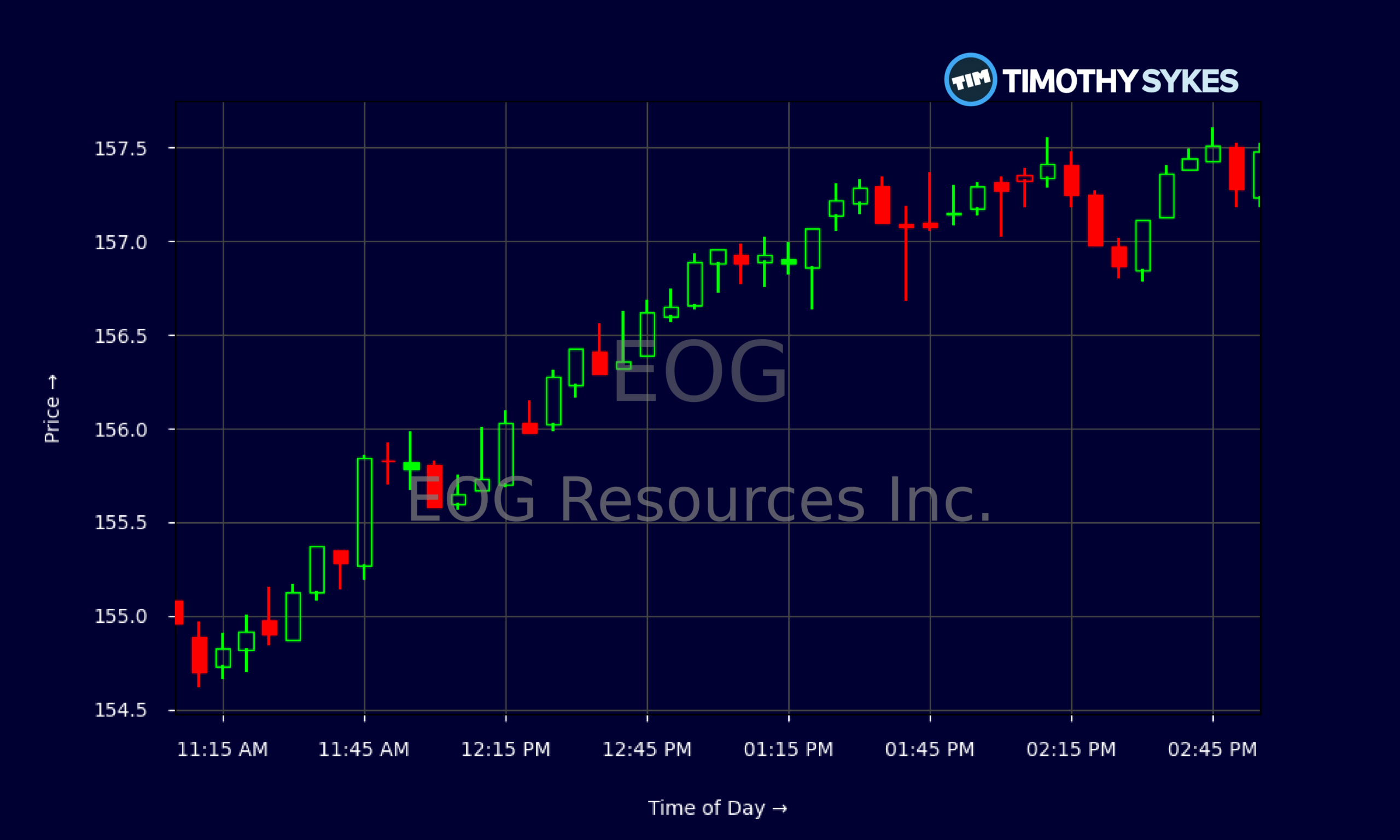
Live Update At 15:02:08 EDT: On Friday, October 16, 2026 EOG Resources Inc. stock [NYSE: EOG] is trending up by 3.95%! Discover the key drivers behind this movement as well as our expert analysis in the detailed breakdown below.
Quick Financial Overview
EOG Resources is trading like a steady grinder, not a meme rocket. Over the last few weeks, EOG has climbed from the high $130s to around $157, building a clear uptrend with higher lows and higher highs on the daily chart. That steady push, not a parabolic spike, tells traders real money is accumulating.
Intraday, EOG’s tape on the latest session stayed tight between roughly $153 and $158, with buyers defending every small dip. That kind of controlled, stair‑step action often signals institutions adding on weakness rather than flipping out on every pullback.
Under the hood, EOG throws off serious cash. The company generated about $8.62B in quarterly revenue with a fat 27.4% EBIT margin and a 45.4% EBITDA margin. Return on equity above 22% and return on assets above 13% show EOG is not just riding high oil prices; it’s running an efficient operation.
More Breaking News
With a price‑to‑earnings ratio near 11.5 and price‑to‑cash‑flow around 4.2, EOG screens cheaper than many growth stories, even after the run. Low debt, a current ratio near 1.9, and roughly $4.9B in cash give EOG room to keep drilling, pay a roughly 2.7% dividend, and still support buybacks. For active traders, that combination of trend strength and balance sheet quality sets a strong backdrop for momentum‑based setups.
Why Traders Are Watching EOG Into Q3
Traders are glued to EOG Resources right now because Wall Street keeps ratcheting targets higher into Q3 earnings and beyond. Jefferies kicked off the latest leg with a boost to a $185 target and a Buy rating, calling for Q3 cash flow per share to beat consensus by 13%. That call leans on stronger production and ongoing cost improvements, and it stretches the bullish story out through 2027. For swing traders, that’s the kind of multi‑year narrative that can support repeated breakouts, not just a one‑day spike.
UBS followed with its own push to a $186 target and another Buy on EOG, reinforcing that Jefferies isn’t alone. Mizuho bumped its target to $165 with an Outperform, and BMO took theirs to $170, also with an Outperform rating. Add in Capital One and Roth Capital lifting numbers as well, and you’ve got a wall of upward revisions clustering in the $160–$180 zone.
Morgan Stanley is more measured. It raised its EOG target to $163 and kept an Equal Weight view, pointing out that with oil back near $100, the market’s eyes are shifting to EOG’s preliminary 2027 plans during Q3 reporting. Truist, meanwhile, moved its target to $160 but stuck with a Hold, framing the coming quarter as “operationally in‑line” and pushing attention toward capital spend, Middle East exploration, well productivity, and return on capital. Scotiabank’s Sector Perform and $144 target adds a final reality check.
For day traders and swing traders, this mix matters. The bullish camp sets up a “supportive air pocket” under the stock, while the neutral voices outline clear catalysts: Q3 numbers, capex discipline, exploration updates, and 2027 guidance. Price action that reacts strongly to any of those talking points can turn into high‑probability intraday or multi‑day moves in EOG.
Conclusion
EOG Resources is sitting at the crossroads of strong fundamentals, bullish Street calls, and an already‑extended chart. The stock has rallied from the high $130s to the mid‑$150s, yet consensus targets still cluster in the mid‑$160s, with Jefferies and UBS stretching into the mid‑$180s. That gap gives traders a defined upside map if Q3 and 2027 commentary line up with the optimism around EOG’s production and cost profile.
At the same time, Scotiabank’s neutral $144 target is a reminder that not everyone sees endless runway. If oil cools off or EOG stumbles on capital efficiency or well productivity, those mid‑$160s targets become heavier resistance, not magnets. That’s exactly why disciplined traders treat analyst notes as context, not a trading plan.
The real edge will come from watching how EOG trades around earnings, guidance, and key levels like $150 support and the recent highs near $158. Tight risk management and fast decision‑making matter more than any single price target. As millionaire penny stock trader and teacher Tim Sykes, says, “The goal is not to win every trade but to protect your capital and keep moving forward.”. As Tim Sykes likes to say, “The market doesn’t care about your opinion, only your discipline.” For EOG, that means riding momentum when the chart confirms the story — and cutting losses fast when it doesn’t. This article is for educational and research purposes only and is not investment advice.
This is stock news, not investment advice. Timothy Sykes News delivers real-time stock market news focused on key catalysts driving short-term price movements. Our content is tailored for active traders and investors seeking to capitalize on rapid price fluctuations, particularly in volatile sectors like penny stocks. Readers come to us for detailed coverage on earnings reports, mergers, FDA approvals, new contracts, and unusual trading volumes that can trigger significant short-term price action. Some users utilize our news to explain sudden stock movements, while others rely on it for diligent research into potential investment opportunities.
Dive deeper into the world of trading with Timothy Sykes, renowned for his expertise in penny stocks. Explore his top picks and discover the strategies that have propelled him to success with these articles:
- Penny Stocks Trading Guide
- Best Penny Stocks Under $1 to Buy Today
- Top 8 Penny Stocks to Watch on Robinhood
Once you’ve got some stocks on watch, elevate your trading game with StocksToTrade the ultimate platform for traders. With specialized tools for swing and day trading, StocksToTrade will guide you through the market’s twists and turns.
Dig into StocksToTrade’s watchlists here:





Leave a reply