

CoreWeave Inc. stocks have been trading up by 6.42 percent after securing a landmark AI cloud infrastructure partnership.
Key Takeaways For CRWV Traders
- CoreWeave is entering the Indian market via AdaniConneX, planning a huge Navi Mumbai AI cloud campus with 240 MW initially and potential expansion to 480 MW by mid-2028.
- Nvidia’s CEO calls CoreWeave financially stronger with a falling cost of capital, and says Nvidia’s roughly 10% stake does not require support.
- Shares sank over 13% after reports that the three co-founders sold $3.3B of stock since the March 2025 IPO, including $2.4B in 2026.
- Debt-financing fears hit CoreWeave hard, even as ARK Innovation and ARK Next Generation Technology ETFs stepped in to buy more CRWV.
- Perplexity’s SPACE security software is now integrated into CoreWeave’s cloud, highlighting CRWV’s role in AI safety infrastructure.
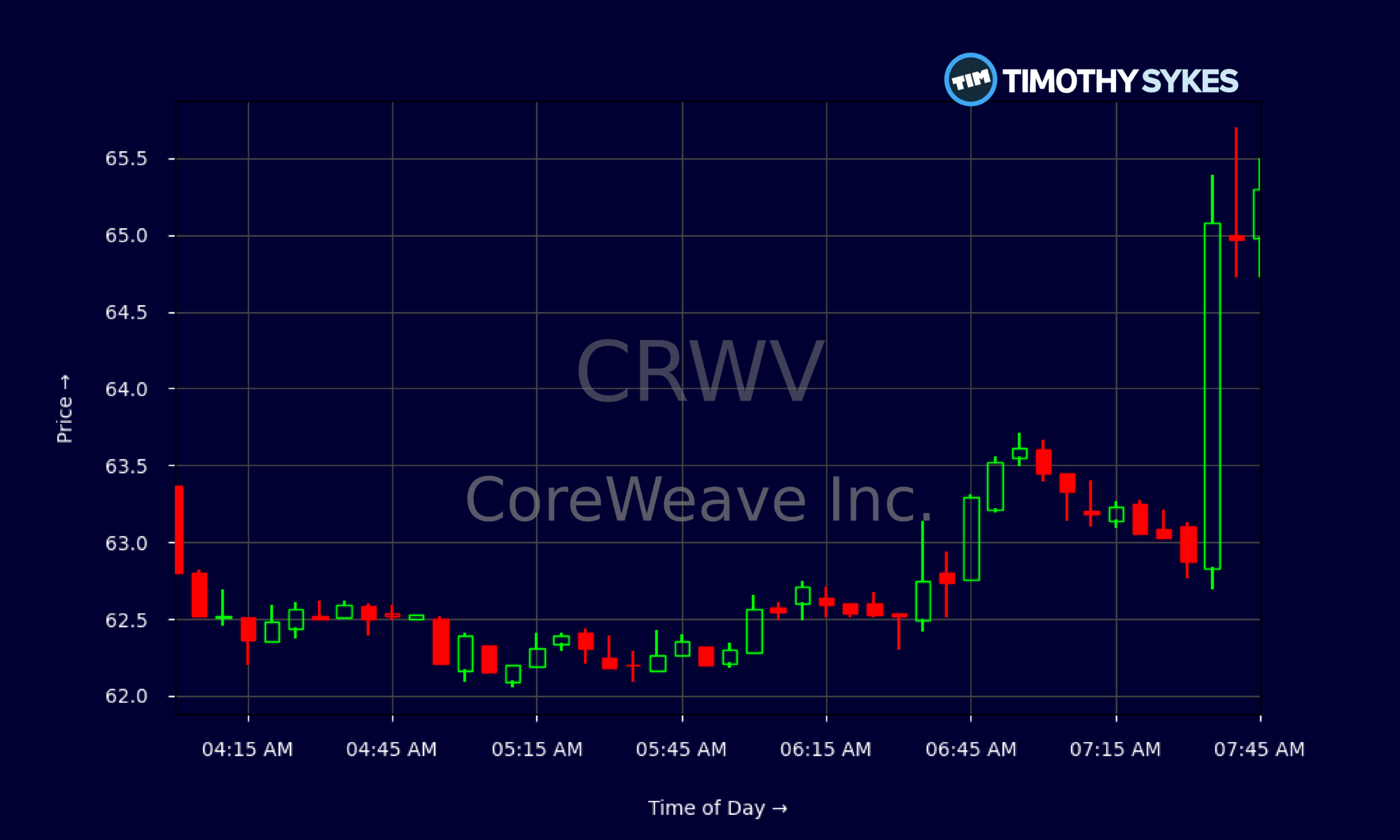
Live Update At 07:47:36 EDT: On Monday, October 19, 2026 CoreWeave Inc. stock [NASDAQ: CRWV] is trending up by 6.42%! Discover the key drivers behind this movement as well as our expert analysis in the detailed breakdown below.
Quick Financial Overview
CRWV has been trading like a classic momentum name that finally hit an air pocket. In late September, CoreWeave was closing near $90. By 2026/10/16, the stock finished at $61.39 after a wild intraday range from $59.90 to $66.69. That’s roughly a one‑third drawdown in just a couple of weeks.
The daily chart shows a progressive roll from the low $90s to the low $60s, with sharp down days following news headlines. For active traders, CRWV has shifted from steady uptrend to high‑beta, headline‑driven action. The tight 5‑minute tape around $62–$65 shows liquidity, but also intraday fade on bounces.
More Breaking News
Fundamentally, CoreWeave is a scale‑up story. Revenue sits around $5.13B, with a huge 90.6% gross margin, yet net margins are deeply negative and free cash flow in the latest quarter was about -$5.74B. Heavy capital expenditure of about $6.42B and a levered balance sheet—total debt to equity of 3.29, current ratio at 0.5—tell traders this is an aggressive growth balance sheet, not a conservative one. CRWV is spending hard to build AI capacity, and the market is now questioning how smooth that funding path will be.
Why Traders Are Watching CRWV Now
CoreWeave Inc. is sitting right in the crosshairs of three powerful forces: AI euphoria, aggressive expansion, and serious balance‑sheet risk. That mix is exactly why short‑term traders keep CRWV on their screens.
On the bullish side, CoreWeave just laid out a big international push. Through a collaboration with AdaniConneX, CRWV plans a major AI cloud data center campus in Navi Mumbai, starting with 240 MW and expandable to 480 MW, with operations targeted around 2028 and several billion dollars in planned spend. That puts CoreWeave directly into India’s fast‑growing AI ecosystem. For long‑term growth narratives, this is textbook: new geography, huge power footprint, sticky cloud workloads.
CoreWeave is also plugging deeper into the AI stack. Perplexity is open‑sourcing its SPACE software to defend against rogue AI agents, and CoreWeave has already integrated and launched SPACE on its cloud. That positions CRWV not just as a GPU host, but as part of the security layer traders know enterprises will pay up for.
Then there is Nvidia. Its CEO publicly described CoreWeave as financially stronger, with a falling cost of capital, and said Nvidia—owning roughly 10%—does not expect to step in with financial support. For CRWV, that reads as a strong endorsement from a core partner, signaling that the business model still looks viable from the inside.
But the bear side is loud. CRWV dropped more than 13% after news that its three co‑founders have sold $3.3B of stock since the March 2025 IPO, including $2.4B in 2026 alone. Add fresh concerns over CoreWeave’s ability to finance its debt stack, and the stock has been hit by forced re‑rating. Even with big‑name players like ARK Innovation and ARK Next Generation Technology ETFs buying more CRWV into the slide, the tape says this is now a battleground. Nasdaq weakness in AI names and CoreWeave’s objection to unauthorized tokenized trading on OKXICE just add to the noise. For traders, that noise equals volatility—and opportunity if managed well.
Conclusion
CoreWeave Inc. is a classic high‑growth, high‑risk AI infrastructure name. CRWV is pouring capital into capacity, including that massive India project with AdaniConneX, while wiring in tools like Perplexity’s SPACE to broaden its AI cloud offering. Nvidia’s public stance that CoreWeave looks financially stronger, with cheaper capital and no need for rescue, gives the bull case real credibility.
At the same time, traders cannot ignore the other side of the ledger. CoreWeave’s financials show negative net income, heavy free‑cash‑flow burn, and a leveraged balance sheet. Debt‑funding fears are not a message‑board rumor; they are reflected in the ratios. Add in the $3.3B of founder stock sales since the 2025 IPO and the sharp price drop from the $80s–$90s down to the low $60s, and CRWV has a serious sentiment overhang.
This is exactly the type of name where disciplined process matters. As Tim Sykes loves to say, “Cut losses quickly and don’t believe the hype—let the chart and the news do the talking.” As millionaire penny stock trader and teacher Tim Sykes says, “Consistency is key in trading; don’t let emotions dictate your trades.” For traders studying CRWV, that means respecting the volatility, tracking headlines on debt and expansion, and treating every setup as a trade, not a promise. This article is for educational and research purposes only and is not investment advice.
This is stock news, not investment advice. Timothy Sykes News delivers real-time stock market news focused on key catalysts driving short-term price movements. Our content is tailored for active traders and investors seeking to capitalize on rapid price fluctuations, particularly in volatile sectors like penny stocks. Readers come to us for detailed coverage on earnings reports, mergers, FDA approvals, new contracts, and unusual trading volumes that can trigger significant short-term price action. Some users utilize our news to explain sudden stock movements, while others rely on it for diligent research into potential investment opportunities.
Dive deeper into the world of trading with Timothy Sykes, renowned for his expertise in penny stocks. Explore his top picks and discover the strategies that have propelled him to success with these articles:
- Penny Stocks Trading Guide
- Best Penny Stocks Under $1 to Buy Today
- Top 8 Penny Stocks to Watch on Robinhood
Once you’ve got some stocks on watch, elevate your trading game with StocksToTrade the ultimate platform for traders. With specialized tools for swing and day trading, StocksToTrade will guide you through the market’s twists and turns.
Dig into StocksToTrade’s watchlists here:





Leave a reply