


Trillions of dollars move through the stock market every single day.
Picture it: clouds of cash sifting through the air.
Flying from households and businesses, into and out of the market. All day long. Every day.
With all that money changing hands, there should be a way to snag some…
To hold out a net and fill it with greenbacks as the wind carries it by…
Well, there is.
Especially in 2026.
The number of catalysts rocking the market right now is mind-numbing. I picked three of the biggest headlines…
- Early in February, the market erased nearly $1 trillion in AI market caps.
- The Supreme Court just threw Trump’s tariffs out the window.
- There’s a new Fed chair on deck amid sticky inflation and a weakening labor market.
Volatility is back.
And when stocks are volatile, my trading patterns work even better.
That might seem counterintuitive. But the patterns are based on human emotion.
When emotions are high (like they are right now), you’ll see stocks follow this exact framework.
I’ve already used these patterns to pull $7.9 million from the market. And they’re the same patterns my 50+ millionaire students use to trade.*
It’s not rocket science, it just takes a few small shifts in your mindset…


Table of Contents
- 1 Mindset Shift #1: Understand the Upside. Really Understand It.
- 2 Shift #2: Ignore the Crowd. They’re Usually Wrong.
- 3 Shift #3: You Don’t Need an Office, a Degree, or a City.
- 4 Shift #4: The Strategy Is Teachable. And Teaching Makes You Better.
- 5 Shift #5: This Is Not an Exact Science. Stay Adaptable.
- 6 My Mistakes Are Your Easy Lessons
Mindset Shift #1: Understand the Upside. Really Understand It.
I grew up in a neighborhood where $50,000 was more money than most people had lying around.
So when I started making $10,000 – $30,000 trading, I thought I’d already won.
I didn’t know the true upside…
I didn’t know you could make seven figures or eight figures with the same patterns I had already mastered
I was capping my own potential.
There wasn’t anybody in my life to show me what was possible. So I never bet big enough. I never sized up when I should have. And I left tens of millions of dollars on the table because my neighborhood taught me what “rich” looked like, and it wasn’t rich at all.
My first $100,000 trade changed everything.
I was a college freshman. And the gain rewired my brain.
It showed me what was possible with these strategies.
Everyone thought penny stock volatility was meaningless garbage before I traded them for a profit.
Now look at my students: Jack Kellogg started as a valet and has made over $24 million in trading profits. Tim Grittani doubled my profits in half the time.
My students understand the upside after seeing my success. And they refuse to cap their own potential.
It’s the Roger Bannister effect.
Before Bannister ran the sub-4-minute mile in 1954, everyone said it was humanly impossible. The moment he did it, other runners started doing it too.
Not because they got faster overnight… because they finally believed it was real.
A million dollars is possible.
I know that sounds crazy if you’re starting with a few hundred bucks. But you can get there over time.
Put in the work and refuse to limit yourself.
Shift #2: Ignore the Crowd. They’re Usually Wrong.
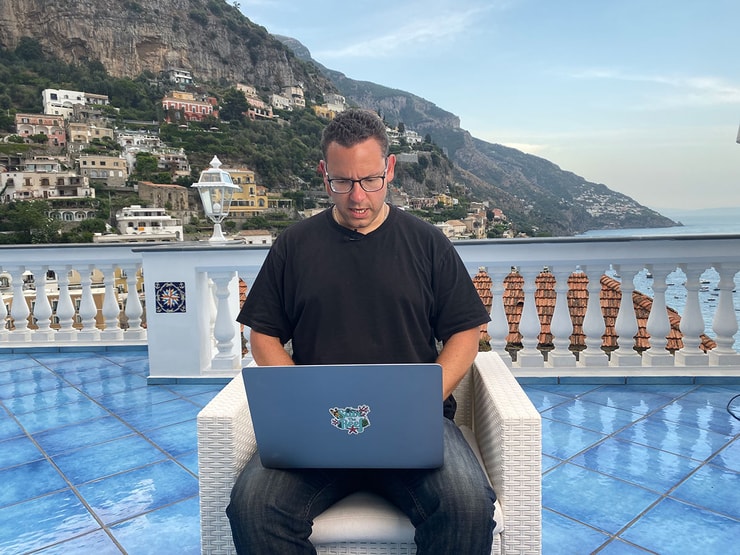
When I told people I was getting into penny stocks, short selling, and day trading, everyone had the same reaction.
They told me:
- “Penny stocks are for suckers.”
- “Short selling is dangerous.”
- “Day trading is gambling.”
I heard it from everyone.
Wall Street types, family friends, people who’d never actually tried any of it.
The wisdom of crowds told me I was making a catastrophic mistake…
But then I made my first million buying penny stock pumps.
When your own results contradict what everyone else is saying, you start to realize something: maybe everyone else is wrong.
It’s not arrogance if there’s evidence.
Now I know there’s no such thing as the “wisdom of crowds” when it comes to trading.
The crowd buys at the top. The crowd holds when they should sell. And the crowd loses money. I’ve watched it happen thousands of times.
Ironically, the crowd’s poor choices actually create the patterns that I use to trade.
Try penny stocks, try day trading.
More Breaking News
- Stock Surge: Solstice Minerals Breakthrough at Nanadie Adventure
- BigBear.ai Collaborates with Maqta Tech for AI Customs Solutions
- TeraWulf Stock Soars Amidst Strategic Expansion and Market Optimism
- TeraWulf Stock Jumps as Morgan Stanley Sees Big Gains Ahead
Test these so-called “evil” strategies for yourself. See what the crowd has been wrong about.
Shift #3: You Don’t Need an Office, a Degree, or a City.
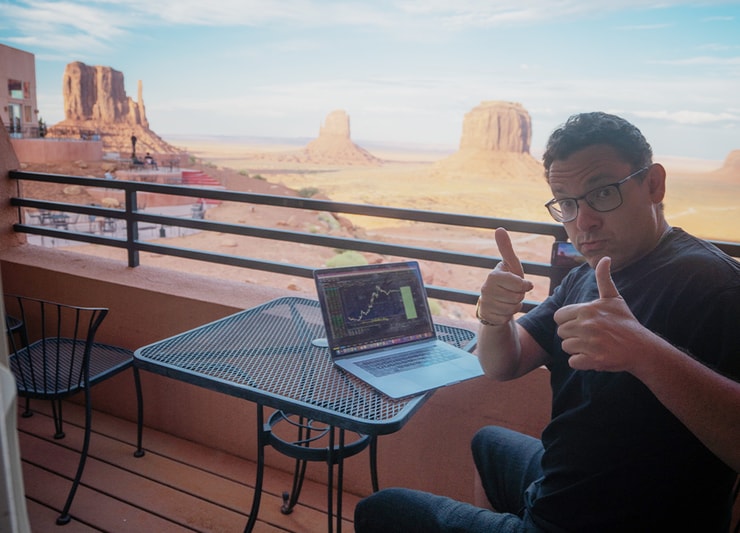
I used to think I had to live in New York.
I took endless meetings. I wore the right clothes and sat in the right rooms with the right people.
And none of it mattered. Not one bit.
The meetings, the offices, the fancy connections: zero impact on my trading results. Zero.
I wasted years thinking geography and credentials and handshakes were prerequisites for success. They’re not.
All you need is a laptop and an internet connection.
I trade from Bali. I trade from Europe. I’ve even traded from Machu Picchu… it was one of my childhood dreams to visit Machu Picchu.
I’ve brought my laptop into nightclubs with music blasting all around me just to test myself in hard conditions. And you know what I’ve learned? Trading from uncomfortable, distracting environments forces me to be selective.
When I can’t babysit a screen all day, I can only take the best setups. And when I only take the best setups, my chance for gains drastically improves.
You can build real wealth and real freedom at the same time. Don’t let anyone tell you that you need a cubicle or a corner office to do this.
Shift #4: The Strategy Is Teachable. And Teaching Makes You Better.
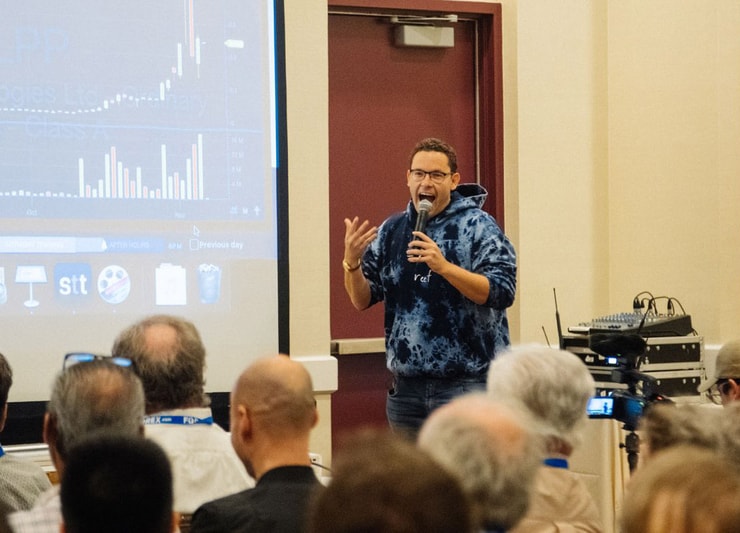
When I started teaching in 2008, I wasn’t sure it would work.
I’d been trading for about a decade. I had wins. I had losses. But I had a nagging doubt: maybe I was just lucky. After all, everyone on the internet said I was.
One of my first millionaire students, Michael Goode, was a skeptic who initially set out to prove my process was a fake.
These days, 15+ years of teaching proves: it’s not luck, and it’s not fake.
It’s discipline. And that can be taught to anyone willing to learn.
All of my millionaire students started where you are right now: unsure, doubtful, grinding through the early losses.
They pushed past the doubt. They pushed past the haters. They put in the work.
And some of them give back to the community by teaching new traders. Because teaching makes you a better trader.
I share every trade transparently.
I can’t afford to look like an idiot by taking a bad setup. So I’m forced to avoid them.
I’ve still made boneheaded mistakes.
I lost thousands of dollars between tricep pulldowns at the gym while trying to hit a profit milestone when I was only $70 short. I traded like a complete degenerate.
Watch my video below with the full breakdown:


The losses are lessons. The embarrassing trades are lessons. Everything I share, good and bad, is part of the education.
That’s the deal.
Shift #5: This Is Not an Exact Science. Stay Adaptable.
Early in my career, I traded as if my strategy was the only way. “This is the pattern. This is the setup. Do exactly this.” I was wrong.
- I made my first million going long on penny stock pumps.
- Then I flipped and made millions short-selling those same pumps.
- Then shares got too hard to borrow and I had to adapt again.
Now, heading into 2026, I’m primarily going long because short selling has gotten too risky for most people. The squeezes are wilder than ever.
But I still respect shorting, and when conditions change, I’ll adapt again.
That’s my main point: the market changes. Patterns evolve. Hot sectors cool off. You have to adapt or die.
After 15+ years of teaching students from every corner of the world, different time zones, different account sizes, different personalities, and different risk tolerances, I’ve realized there’s no single path to success.
My seven-step framework gives you the foundation. But the specific patterns you master, the strategies you favor, the setups that click for you, those are yours to discover.
The goal isn’t to trade exactly like me.
The goal is to become self-sufficient. Financially free. Adaptable enough to profit in any market condition.
My Mistakes Are Your Easy Lessons

These five mindset shifts didn’t come easy for me.
They came from painful experiences. Sometimes expensive ones.
You don’t have to learn these lessons the hard way. That’s the whole reason I teach.
- Understand the upside.
- Ignore the crowd.
- Ditch the office mentality.
- Trust that the process is teachable and try teaching it.
- Stay adaptable.
Take your gains , cut your losses, and never stop learning.
That’s how millionaires are made.
Cheers
*Past performance does not indicate future results

Leave a reply