
SK hynix Inc. stocks have been trading down by -3.27 percent amid renewed concerns over memory chip demand and pricing.
Key Takeaways
- Shares are down over 6% premarket after Chinese rival CXMT claimed a DRAM technology breakthrough, putting competitive pressure on SKHY.
- Micron Technology and SKHY both dropped sharply after reports of CXMT’s DRAM advance and a new 4F2 data center chip targeted for year‑end.
- The stock has seen multiple intraday selloffs as traders reassess DRAM sector risk around CXMT’s push.
- SKHY also faces a confirmed 10% price hike on ASML EUV/DUV spare parts, locking in higher future equipment costs.
- Rising competition and rising costs combine into a double headwind that active traders are watching closely.
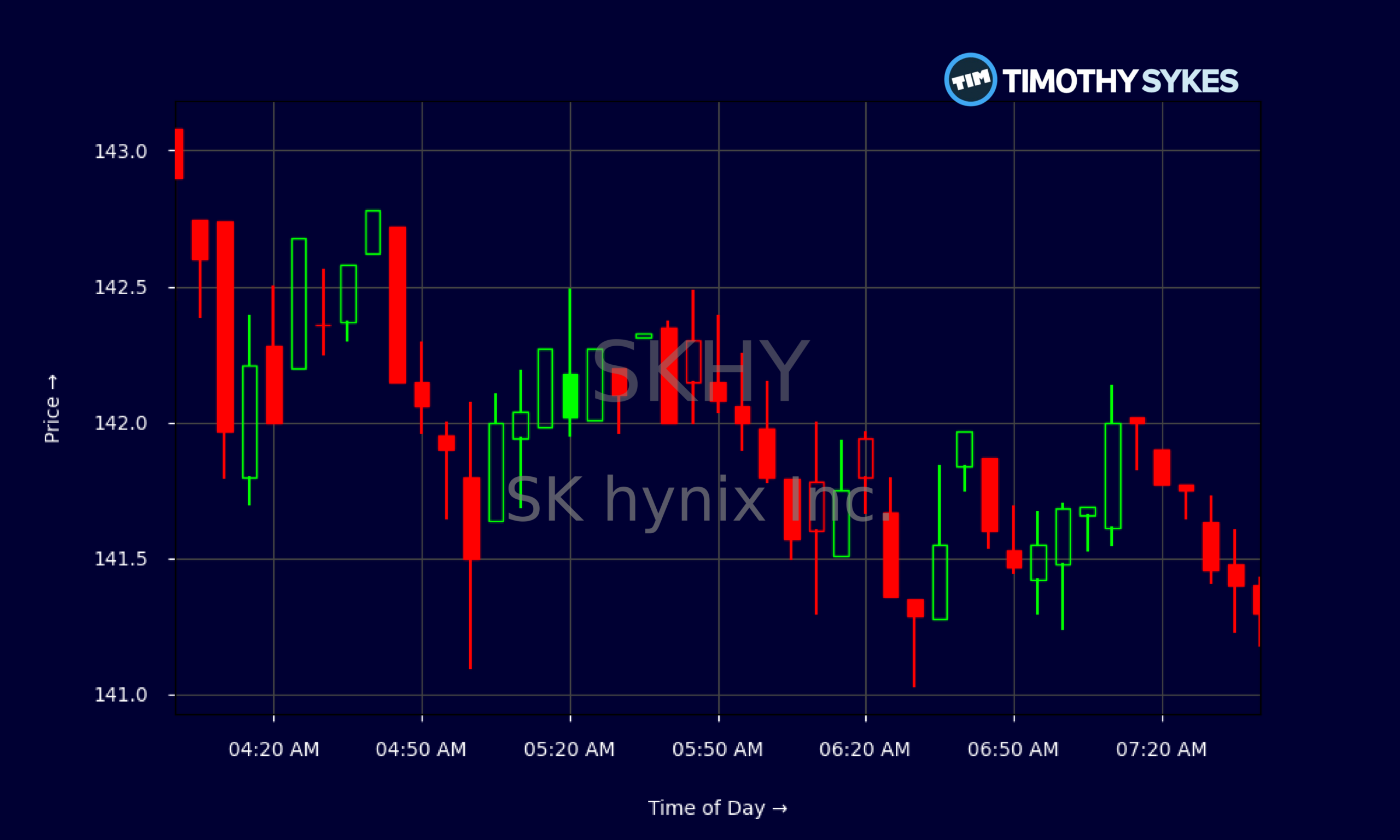
Live Update At 07:47:32 EDT: On Friday, October 16, 2026 SK hynix Inc. stock [NASDAQ: SKHY] is trending down by -3.27%! Discover the key drivers behind this movement as well as our expert analysis in the detailed breakdown below.
Quick Financial Overview
SKHY has gone from market darling to caution flag in a matter of sessions. The daily chart shows a clear rollover: after trading near the mid‑$190s, SKHY now sits in the mid‑$140s, a drawdown of roughly 25% from recent highs. That is a serious reset for any large memory name.
The intraday 5‑minute action around 04:00–07:45 shows SKHY pinned in a tight band between roughly $141 and $143. That kind of compressed range after a major drop tells traders the stock is in a pause, not a full recovery. The downtrend is still the main story.
More Breaking News
Fundamentally, SK hynix Inc. is not a small player falling apart. Revenue sits near ₩97.1T, and SKHY posts a very low price‑to‑earnings ratio of about 3.76 with a rich price‑to‑sales near 17. That mix screams “high expectations on cyclic earnings,” not a cheap deep‑value setup. Return on invested capital above 70% over the last year shows SKHY can generate serious profits when the cycle cooperates. But the leverage ratio around 1.5 and a high price‑to‑book near 13.7 mean the market had priced in strong future DRAM demand and premium margins. Right now, traders are questioning both.
Why Traders Are Watching SKHY So Closely
SKHY is suddenly at the center of a DRAM storm. The first hit came when reports said Chinese rival CXMT claimed a major DRAM technology breakthrough. SK Hynix shares dropped more than 6% premarket on that headline alone, a clear sign that traders see CXMT as a real threat, not just another regional player. When the market opens that far down, it tells you sentiment has flipped.
The news did not just hit SKHY. Micron Technology fell about 4.8%, while SK Hynix slid 6.3% on reports that CXMT not only advanced its DRAM process, but also plans a new 4F2 data center chip design by year‑end. For traders, that phrase “data center” matters. This is the profit engine of the memory world. If CXMT starts pushing competitive data center DRAM, SKHY’s pricing power and high‑end market share come into question.
The selling did not stop with one headline. SK Hynix stock slid another 3.7% in sympathy with Micron as more CXMT headlines circulated, then another 4% on renewed talk of a DRAM breakthrough from the Chinese rival. That repetition is key. SKHY is now trading less on its own news and more as a proxy for “DRAM risk,” moving in tandem with Micron every time CXMT pops up. That correlation trade can magnify swings, especially when macro or geopolitical headlines hit chips as a group.
On top of that, SKHY has a cost problem building in the background. Reports show ASML plans about a 10% price hike on EUV and DUV replacement parts supplied into South Korea starting in 2027. SK Hynix shares fell roughly 2.3% on that news alone. Then came confirmation that SK hynix has accepted a 10% increase on ASML spare parts, including key consumables. That locks in structurally higher equipment operating costs for years. For traders, this combination — rising Chinese competition plus locked‑in cost inflation — is exactly the sort of “margin squeeze” narrative that can cap any bounce in SKHY, even if DRAM prices firm up.
Conclusion
For active traders, SKHY is now a classic battleground name. On one side, you have strong past profitability, massive revenue, and proven execution in high‑end memory. On the other, you have CXMT claiming a DRAM technology leap and a targeted 4F2 data center chip, all while SK hynix agrees to higher ASML spare‑parts costs that will pressure margins later this decade. The tape is voting on the risk side for now.
The key for SKHY traders is to respect the trend. The chart shows a sharp break from the $190s into the $140s, with intraday trading stuck in a narrow band as the market digests the news. That kind of pattern often leads to more volatility — either a short squeeze bounce or another leg down if fresh negative headlines hit the DRAM space. SKHY, Micron, and the broader memory group are now trading as a cluster around CXMT news flow, not as isolated stories.
This is where discipline matters. As Tim Sykes likes to say, “The market doesn’t care about your opinion, only your risk management.” As millionaire penny stock trader and teacher Tim Sykes, says, “The goal is not to win every trade but to protect your capital and keep moving forward.”. Traders watching SKHY should treat it as a fast‑moving educational case study in how sector news, cost shocks, and competition from China can reprice a crowded momentum trade in just a few days. This content is for educational and research purposes only and is not investment advice.
This is stock news, not investment advice. Timothy Sykes News delivers real-time stock market news focused on key catalysts driving short-term price movements. Our content is tailored for active traders and investors seeking to capitalize on rapid price fluctuations, particularly in volatile sectors like penny stocks. Readers come to us for detailed coverage on earnings reports, mergers, FDA approvals, new contracts, and unusual trading volumes that can trigger significant short-term price action. Some users utilize our news to explain sudden stock movements, while others rely on it for diligent research into potential investment opportunities.
Dive deeper into the world of trading with Timothy Sykes, renowned for his expertise in penny stocks. Explore his top picks and discover the strategies that have propelled him to success with these articles:
- Penny Stocks Trading Guide
- Best Penny Stocks Under $1 to Buy Today
- Top 8 Penny Stocks to Watch on Robinhood
Once you’ve got some stocks on watch, elevate your trading game with StocksToTrade the ultimate platform for traders. With specialized tools for swing and day trading, StocksToTrade will guide you through the market’s twists and turns.
Dig into StocksToTrade’s watchlists here:



Leave a reply