

Eos Energy Enterprises Inc. stocks have been trading down by -9.95 percent following bearish sentiment over its battery technology outlook.
Key Takeaways
- Multiple law firms have launched investigations into potential corporate wrongdoing at Eos Energy Enterprises tied to pre‑2025/11/05 share purchases.
- Legal probes cite possible securities fraud and governance issues at EOSE, raising questions about management oversight and disclosure quality.
- Class-action and derivative suit risk now hang over EOSE, adding legal and reputational overhang to an already loss-making business.
- The wave of announcements from 2026/09/17 through 2026/10/15 keeps EOSE in the legal headlines, amplifying volatility for active traders.
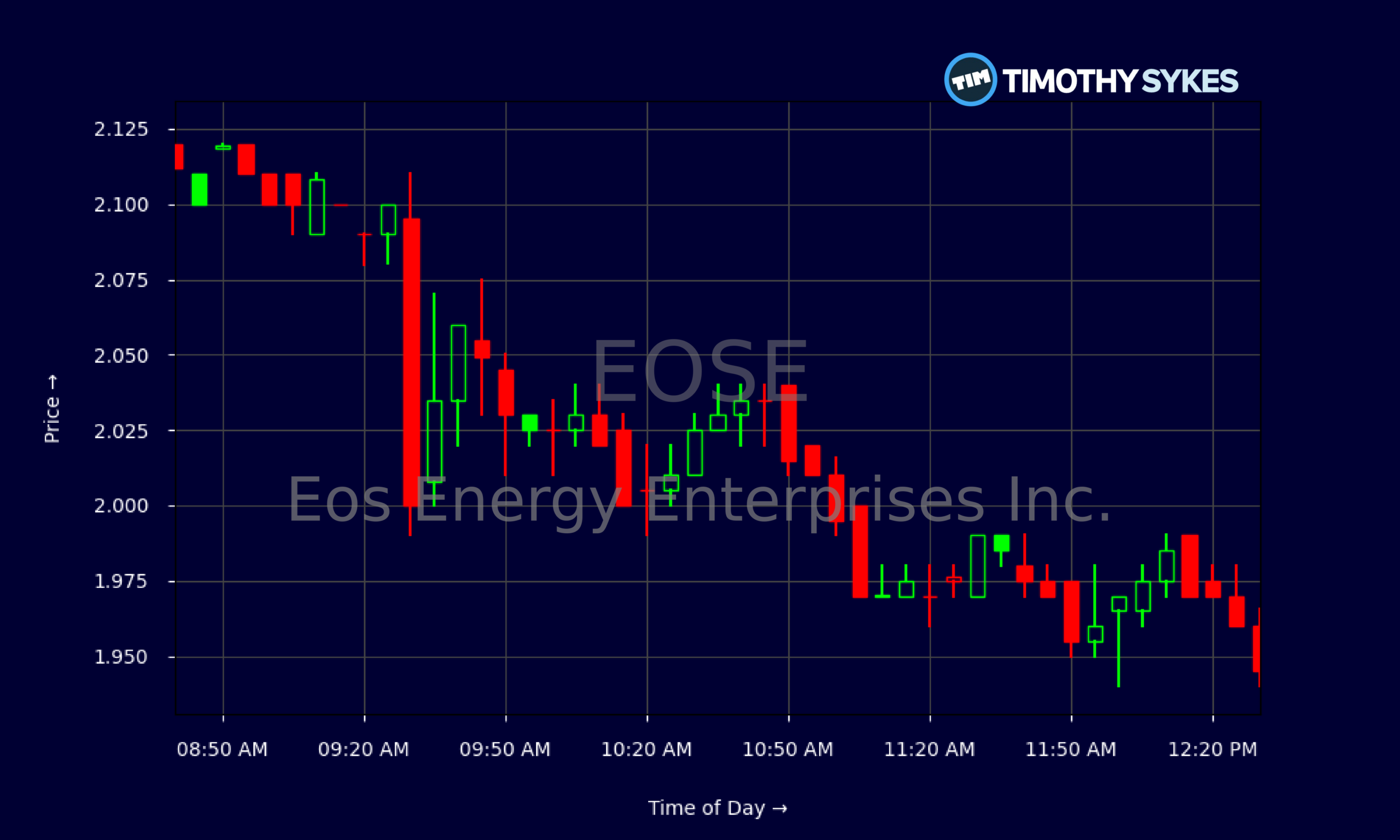
Live Update At 12:32:32 EDT: On Friday, October 16, 2026 Eos Energy Enterprises Inc. stock [NASDAQ: EOSE] is trending down by -9.95%! Discover the key drivers behind this movement as well as our expert analysis in the detailed breakdown below.
Quick Financial Overview
EOSE is trading like a classic story stock under stress. Over the past few weeks, Eos Energy Enterprises has slipped from the low-$4 area on 2026/09/21–2026/09/22 to under $2 on 2026/10/16. That is a steep drawdown, and it tells traders that sentiment has flipped hard from speculation to damage control.
On the fundamentals, EOSE remains deeply unprofitable. The latest quarterly report shows revenue of about $68.8M, but a net loss of roughly $275.7M and EBITDA of around -$256.9M. Profit margins are wildly negative across the board, with profit margin measures deep in triple-digit negatives. This is still an early-stage energy technology story, not a cash machine.
More Breaking News
There are positives: Eos Energy Enterprises reports a strong current ratio of 3.3 and quick ratio of 1.9, with about $305.5M in cash and equivalents. That gives EOSE runway, at least near term. But free cash flow is about -$107.4M, and cumulative negative equity over -$1.0B shows how much capital has already been burned. For traders, EOSE is a liquidity-rich but structurally weak balance-sheet play, primed for sharp trading swings rather than steady compounding.
Why Traders Are Watching EOSE Legal Headlines
EOSE is not just moving on charts; it is trading under a legal cloud. On 2026/10/15, a securities law firm announced an investigation into potential corporate wrongdoing at Eos Energy Enterprises on behalf of those who bought before 2025/11/05 and still hold. The firm flagged that this probe may pave the way for a class-action lawsuit. That language alone is often enough to spook weak hands and embolden shorts.
This was not a one-off headline. On 2026/10/13, another law firm opened a similar investigation into Eos Energy Enterprises, again focused on the same pre‑2025/11/05 shareholder group. On 2026/10/11, yet another firm linked its investigation to possible securities fraud or governance issues at EOSE. When multiple securities litigation shops circle the same company, traders pay attention. It signals real perceived smoke, even before anyone proves fire.
From 2026/10/08 and 2026/10/06, separate announcements stressed that potential misconduct by Eos Energy Enterprises officers and directors could trigger securities class actions or derivative suits. That is key. These are not just accounting questions; they are leadership and oversight questions. Repeated references to officers and directors tell the market that EOSE’s C‑suite and board are under direct scrutiny.
Layer that on top of a fast-falling chart and you get the current tape: EOSE dropping from $3–$4 into the high-$1s while liquidity remains high and intraday ranges widen. The steady stream of headlines from 2026/09/17, 2026/09/20, and 2026/09/22 through mid-October shows a persistent narrative, not a passing scare. Short-term traders in Eos Energy Enterprises now trade both price and headline risk, a volatile combination that rewards speed and punishes hesitation.
Conclusion
EOSE is a case study in why traders must track more than just revenue growth and new‑tech hype. Eos Energy Enterprises shows strong top-line expansion and a hefty cash pile, but also massive losses, negative equity, and now a growing ring of securities law firms probing alleged misconduct tied to pre‑2025/11/05 share purchases. Those investigations, and the talk of potential securities fraud, governance failures, and class-action or derivative suits, hang over every uptick in the stock.
For active traders, that means EOSE is strictly a trade, not a comfortable long-term hold to forget about. The recent slide from over $4 to under $2, combined with the tight intraday action near $2, tells you the market is repricing risk in real time. Any new filing, law firm update, or company response from Eos Energy Enterprises can trigger sudden spikes or air pockets.
This content is for educational and research purposes only, but the trading lesson is clear. As Tim Sykes loves to hammer home, “The market doesn’t care about your opinion, it cares about catalysts and risk.” As millionaire penny stock trader and teacher Tim Sykes, says, “It’s not about how much money you make; it’s about how much money you keep.”. With EOSE, those catalysts are now legal, not just technological. Traders who choose to engage this name need a plan, hard stops, and the discipline to cut losses fast when the headline tape turns against them.
This is stock news, not investment advice. Timothy Sykes News delivers real-time stock market news focused on key catalysts driving short-term price movements. Our content is tailored for active traders and investors seeking to capitalize on rapid price fluctuations, particularly in volatile sectors like penny stocks. Readers come to us for detailed coverage on earnings reports, mergers, FDA approvals, new contracts, and unusual trading volumes that can trigger significant short-term price action. Some users utilize our news to explain sudden stock movements, while others rely on it for diligent research into potential investment opportunities.
Dive deeper into the world of trading with Timothy Sykes, renowned for his expertise in penny stocks. Explore his top picks and discover the strategies that have propelled him to success with these articles:
- Penny Stocks Trading Guide
- Best Penny Stocks Under $1 to Buy Today
- Top 8 Penny Stocks to Watch on Robinhood
Once you’ve got some stocks on watch, elevate your trading game with StocksToTrade the ultimate platform for traders. With specialized tools for swing and day trading, StocksToTrade will guide you through the market’s twists and turns.
Dig into StocksToTrade’s watchlists here:




Leave a reply