

Cerebras Systems Inc. stocks have been trading down by -16.82 percent amid reports of weakening AI chip demand and investor concern.
Key Takeaways
- CBRS has ripped from $176.88 to $262.06 in weeks, putting Cerebras Systems Inc. firmly on AI momentum screens.
- Recent intraday trading shows CBRS grinding higher with tight ranges, signaling consolidation after a strong push.
- Cerebras Systems Inc. is burning cash and running negative margins, but holds over $6.7B in cash for runway.
- CBRS relies heavily on stock issuance to fund growth, a key risk for dilution-minded traders.
- Active traders are watching CBRS around the $250–$270 zone as a potential make-or-break level.

Live Update At 09:18:49 EDT: On Thursday, August 13, 2026 Cerebras Systems Inc. stock [NASDAQ: CBRS] is trending down by -16.82%! Discover the key drivers behind this movement as well as our expert analysis in the detailed breakdown below.
Quick Financial Overview
CBRS is trading like a classic high-growth, high-burn AI name. Over the last few weeks, Cerebras Systems Inc. has run from a close of $176.88 to $262.06, a huge percentage move in a short window. That kind of CBRS rally usually signals aggressive momentum trading, not quiet long-term positioning.
The financials back that picture. In the latest quarter, Cerebras Systems Inc. posted about $180.11M in revenue but booked a net loss of roughly $450.53M. That’s a deep red number and shows CBRS is still in heavy build-out mode. Research and development alone ran around $320.15M, telling traders the company is spending big to stay relevant in AI.
More Breaking News
The balance sheet is strong on cash, with about $6.74B in cash and $7.92B including short-term investments. CBRS also carries roughly $662.61M in long-term debt and about $824.46M in current debt and capital lease obligations. The big flag for traders: Cerebras Systems Inc. just raised over $6.23B via stock issuance, which powers growth but also means dilution risk if CBRS stalls.
Why Traders Are Watching CBRS Price Action
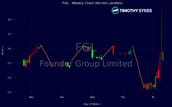
CBRS has become a textbook momentum chart in the AI hardware space. On the daily timeframe, Cerebras Systems Inc. printed a strong uptrend: from the $170s and $180s up through $200, and then into the $260s. That staircase pattern, with higher lows from $176.88 to $198.71 to $211.30 and then $234.76, is what momentum traders hunt for. CBRS is delivering that structure.
The latest close at $262.06 after tagging a high of $265.63 shows buyers still in control, but the range is getting wider. That means volatility is picking up. For intraday traders, the 5‑minute candles tell the story. Early premarket prints on CBRS cluster around $214–$216, then grind higher toward $220, with repeated rejections around $221–$223. Cerebras Systems Inc. price action here looks like consolidation after a strong leg up, not full-on exhaustion yet.
At the same time, the fundamentals remind traders what they’re dealing with. Cerebras Systems Inc. is posting negative pretax margins near -6.5% and negative return on assets around -0.28. The valuation metrics are extreme: a price-to-sales ratio around 270.5 and price-to-cash-flow above 1,060. That tells traders CBRS is priced for massive future success, not current profits.
In practice, that means CBRS can move sharply on sentiment and macro AI themes alone. When growth is in favor, Cerebras Systems Inc. can squeeze higher fast. When the market gets nervous about overpriced AI names, this type of chart can unwind violently. Active traders watching CBRS are respecting both sides of that coin.
Conclusion
CBRS sits at the crossroads of hot AI hype and heavy financial risk. On one side, the chart is exactly what momentum traders want: a clean multi-week uptrend, strong closes near the highs, and orderly intraday consolidation. Cerebras Systems Inc. has the cash — more than $6.7B — and a big R&D budget to keep pushing its AI systems story. That gives CBRS plenty of fuel for narrative-driven runs.
On the other side, the income statement is a warning label. Cerebras Systems Inc. is losing around $450.53M for the quarter on $180.11M in revenue, and funding itself through massive equity issuance. At current valuation levels, CBRS leaves almost no room for operational missteps or sentiment shifts. Traders who chase these moves without a plan can get punished quickly.
For the disciplined, CBRS is a live-fire training ground. You have volatility, clear levels, and a company that the market cares about. As millionaire penny stock trader and teacher Tim Sykes says, “It’s not about how much money you make; it’s about how much money you keep.”. That’s why veteran traders like Tim Sykes always hammer the same point: “Patterns repeat, but you’ve got to manage risk first — cut losses quickly and never fall in love with a stock.” Cerebras Systems Inc. and CBRS give traders opportunity, but the edge only belongs to those who treat it as a trading vehicle, study the price action, and stick to their rules.
This is stock news, not investment advice. Timothy Sykes News delivers real-time stock market news focused on key catalysts driving short-term price movements. Our content is tailored for active traders and investors seeking to capitalize on rapid price fluctuations, particularly in volatile sectors like penny stocks. Readers come to us for detailed coverage on earnings reports, mergers, FDA approvals, new contracts, and unusual trading volumes that can trigger significant short-term price action. Some users utilize our news to explain sudden stock movements, while others rely on it for diligent research into potential investment opportunities.
Dive deeper into the world of trading with Timothy Sykes, renowned for his expertise in penny stocks. Explore his top picks and discover the strategies that have propelled him to success with these articles:
- Penny Stocks Trading Guide
- Best Penny Stocks Under $1 to Buy Today
- Top 8 Penny Stocks to Watch on Robinhood
Once you’ve got some stocks on watch, elevate your trading game with StocksToTrade the ultimate platform for traders. With specialized tools for swing and day trading, StocksToTrade will guide you through the market’s twists and turns.
Dig into StocksToTrade’s watchlists here:




Leave a reply